
Main Courses
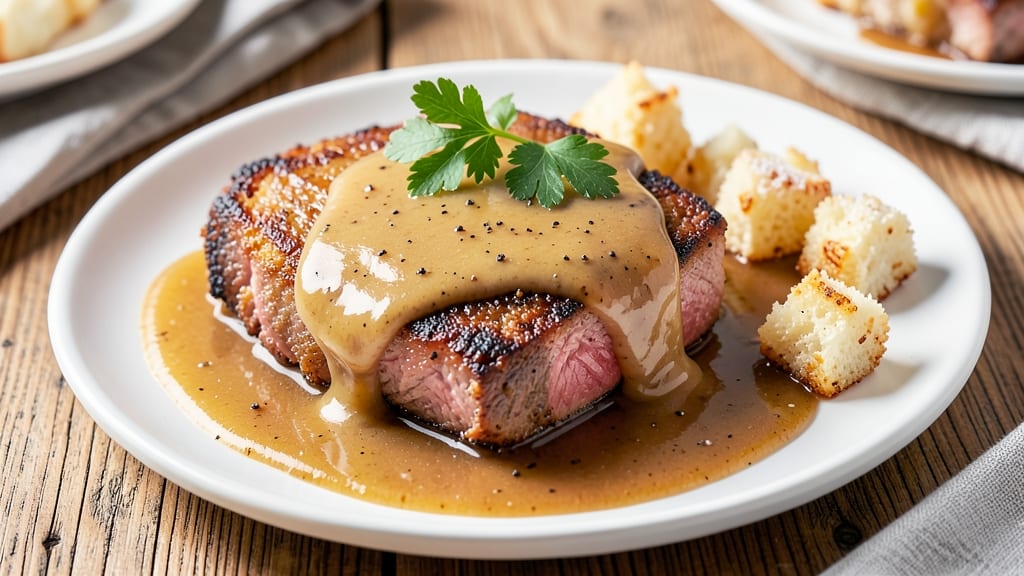
Alton Brown's chicken fried steak recipe transforms simple ingredients into a restaurant-worthy Southern classic with crispy, golden perfection. The secret lies in a buttermilk brine that tenderizes the steak overnight, paired with a foolproof double-dredge method that guarantees a shatteringly crisp crust.
This isn't just comfort food—it's a masterclass in balancing textures and flavors, where each bite delivers melt-in-your-mouth tenderness topped with a crackling golden coating.
What sets this recipe apart is Alton's signature foil-sealing technique, which locks in moisture while creating that signature crispy exterior. The gravy—rich, velvety, and perfectly seasoned—ties everything together, transforming a humble steak into a showstopping main course.
Every step is designed for success, from precise measurements to clear instructions that eliminate guesswork.
The result is a dish that rivals your favorite diner's version, complete with all the comforting elements you love: tender steak, crispy breading, and a gravy so good you'll want to pour it on everything.
Serve it with classic sides like creamy mashed potatoes and buttery green beans for the full Southern experience.
This recipe delivers on Alton's promise of balanced flavors and professional results without requiring advanced skills. The buttermilk brine does the heavy lifting while you sleep, and the double-dredge method ensures that crispy texture even home cooks can achieve. Let's get started on creating your own restaurant-quality chicken fried steak.
Ingredients for alton brown chicken fried steak
Buttermilk-brined pork chops, crispy golden crust, and velvety gravy—this is comfort food at its finest.
| Ingredient | Amount | Notes |
|---|---|---|
| Center-Cut Pork Chops 🥩 | 1 ½ lb | 1-inch thick, bone-in preferred |
| Buttermilk 🥛 | 2 cups | Full-fat for best flavor |
| All-Purpose Flour 🌾 | 3 cups | White or bread flour works |
| Cornstarch 🌽 | ½ cup | For extra crispiness |
| Diamond Crystal Kosher Salt 🧂 | 2 tbsp | Adjust to taste |
| Ground Black Pepper 🌶️ | 1 tbsp | Freshly cracked preferred |
| Garlic Powder 🧄 | 1 tbsp | Not garlic salt |
| Onion Powder 🧅 | 1 tbsp | For depth of flavor |
| Paprika 🌶️ | 1 tbsp | Smoked for color |
| Unsalted Butter 🧈 | ½ cup | Cold for frying |
| Vegetable Oil 🫒 | 1 cup | For frying |
| Beef Broth 🍲 | 1 ½ cups | Low-sodium preferred |
| All-Purpose Flour 🌾 | ¼ cup | For gravy thickening |
| Whole Milk 🥛 | ¼ cup | For gravy richness |
| Heavy Cream 🥛 | ¼ cup | For gravy silkiness |
The pork chops are the star, so don't skimp on quality. Look for center-cut, bone-in chops at your local butcher—they hold up better to the brine and add depth of flavor. If you're buying pre-packaged at Whole Foods or Kroger, check the thickness—1-inch is ideal. The buttermilk? Full-fat is a must—it's what gives that signature tang and tenderness. I usually grab the Great Value brand from the store, but if you're feeling fancy, Horizon Organic is worth the extra buck. Let the chops sit in the brine overnight for maximum tenderness—trust me, it's worth the wait.
No buttermilk? Substitute with milk plus 1 tbsp vinegar or lemon juice, let it sit 10 minutes. Running low on cornstarch? All-purpose flour works at the same amount, though the crust won't be quite as crispy. The gravy is where the magic happens—if you're short on beef broth, chicken broth plus a splash of Worcestershire sauce gets you close. For the spices, Penzeys or the bulk bins at natural grocery stores have the freshest ground spices. And if you're feeling adventurous, swap half the paprika for smoked paprika—it adds a whole new depth of flavor. The key is balancing the spices so they don't overpower the steak's natural taste.
Here's the secret to success: Keep everything cold until frying. Store the brined chops in the fridge until ready to cook, and chill the butter and oil mixture for 30 minutes before frying. The gravy can be made ahead and reheated—it actually tastes better the next day as the flavors meld. Portion it into glass jars for easy reheating, and it'll keep in the fridge for 5 days or frozen for 3 months. Leftovers? Wrap them tightly in foil and reheat in a skillet with a splash of milk to restore that crispy texture—game changer.
Why You'll Love This Recipe
- One-Pan Magic: I swear by this method—just the pork chops, buttermilk marinade, and that golden flour-cornstarch crust. No extra pans, no mess, and honestly? The crispy bits stick to the pan like they’re auditioning for a leading role.
- Buttermilk Secret Weapon: That overnight soak in buttermilk? It’s not just tenderizing—it’s turning tough pork chops into melt-in-your-mouth perfection. The crust clings like a hug, and the salt in the buttermilk? It wakes up every bite.
- Weeknight Workhorse: Between us, this is my go-to when I’m staring at a fridge full of veggies and thinking, “What now?” Double the batch, freeze half, and boom—you’ve got a dinner for another night when you’re too tired to plan.
- Crispy Leftovers: Yes, even fried food gets better the next day. Reheat in a skillet for 2 minutes, and that crust goes from sad to chef’s kiss again. My kids argue over who gets the last piece—proof it’s not just good, it’s reliable.
Step-by-step instructions for Alton Brown's buttermilk brine chicken fried steak
This method delivers restaurant-style crispy steaks with a tender, juicy interior—no shortcuts, just Alton Brown's foolproof technique.
Brine the Pork Chops for Maximum Tenderness
In a large resealable plastic bag, combine the 2 cups buttermilk, 2 tablespoons Diamond Crystal kosher salt, 1 tablespoon ground black pepper, 1 tablespoon garlic powder, and 1 tablespoon onion powder. Seal the bag and gently massage it to dissolve the salt completely. Add the 1.5 lb center-cut pork chops and submerge them fully in the marinade.
Seal the bag tightly, pressing out all air, and refrigerate for at least 4 hours or up to 12 hours. The buttermilk will penetrate the meat, breaking down tough fibers while adding moisture. You'll know it's working when the chops develop a slightly sticky surface and the marinade turns cloudy. This step is non-negotiable—it's what makes the final result truly tender.
Create the Foil-Sealed Crisp Coating
In a large bowl, whisk together the 3 cups all-purpose flour, 0.5 cup cornstarch, 1 tablespoon paprika, and 1 tablespoon onion powder. The cornstarch is key here—it creates that signature crispy texture we're after. Remove the chops from the brine, letting any excess drip off, and pat them dry with paper towels. This step is crucial because moisture in the coating will prevent proper browning.
Working quickly, dredge each chop in the flour mixture, pressing gently to adhere the coating evenly. Place each coated chop on a wire rack set over a baking sheet lined with parchment paper. This rack method ensures air circulates around the chops, preventing soggy spots. Now, here's the Alton Brown magic: cut a large sheet of heavy-duty foil and fold it into a 12x12-inch square. Place one coated chop in the center and fold the foil into a tight package, sealing it completely. Repeat with remaining chops.
Fry to Golden Perfection with Foil-Sealed Crisp
In a large skillet, heat 1 cup vegetable oil and 0.5 cup unsalted butter over medium-high heat until the butter foams and the oil registers 350°F on a deep-fry thermometer. The butter adds richness and helps create that golden crust. Working in batches to avoid crowding, carefully remove one foil package and slide the chop into the hot oil. Fry for 3-4 minutes per side, turning gently with tongs, until the foil package is deep golden brown and the internal temperature reaches 145°F.
This foil-sealing technique is what sets this recipe apart. The foil traps steam during the initial fry, creating an ultra-crispy exterior while keeping the interior moist. As you fry, keep the heat steady—too hot and you'll burn the coating before the meat cooks through. Transfer the fried chops to a wire rack and tent loosely with foil to keep warm while you fry the remaining batches.
Prepare the Rich Beef Broth Gravy
In the same skillet, reduce heat to medium and add 1.5 cups beef broth, scraping up all the browned bits from the bottom with a wooden spoon. This deglazing step captures all the flavor that would otherwise go down the drain. Bring the broth to a simmer and let it reduce by half, about 5-6 minutes, until it thickens slightly and coats the back of a spoon.
In a small bowl, whisk together 0.25 cup all-purpose flour, 0.25 cup whole milk, and 0.25 cup heavy cream until smooth. Slowly pour this mixture into the simmering broth while whisking constantly to prevent lumps. The gravy should thicken to a velvety consistency, coating the back of a spoon. If it's too thick, add a splash of hot beef broth to reach your desired pouring consistency. Season with additional salt and pepper if needed—this gravy should be rich but not overpowering.
Pro Tips For Making Alton Brown Chicken Fried Steak
- USE 3/4 CUP FLOUR MIX: The Alton Brown recipe calls for a 3:1 ratio of flour to cornstarch (3/4 cup flour + 1/4 cup cornstarch) in the dredge. I learned this the hard way—using all-purpose flour alone gives a crust that’s too dense and gummy. The cornstarch adds that perfect crispy texture without making the steak soggy.
- PAT DRY THE CHOPS TWICE: After buttermilk marinating, pat the chops dry with paper towels—then let them sit uncovered on a wire rack for 10 minutes. This isn’t just about moisture; it’s about letting the surface firm up so the flour sticks properly. I used to skip this, and my crusts would clump like sad breadcrumbs.
- FRIES IN 350°F OIL: The oil should be smoking just a little when you add the steaks—around 350°F. Too hot, and you’ll burn the crust before the meat cooks through. Too cool, and you’ll end up with greasy, limp steaks. Use a thermometer if you’re unsure; I’ve ruined batches both ways.
- REST THE STEAKS 5 MINUTES: Let the steaks rest under foil for 5 minutes after frying. This isn’t optional—it’s the only way to keep them from falling apart when you slice. I know, I know, you’re eager to eat, but trust me: cutting into them too soon turns that perfect crust into a sad, crumbly mess.
Troubleshooting this dish
Uneven Breading Fix
If your breading clumps or falls off during frying, the chops weren't dry enough after brining. Pat them thoroughly with paper towels—don't skip this step! For extra adhesion, dip each chop in buttermilk again after the first flour coating, then re-dredge.
I also recommend using a wire whisk to fluff the flour mixture before dredging, which prevents clumping. 💡
Soggy Crust Solutions
Foil-sealing is key, but if your crust still feels soft, your oil temperature might be too low. Use a deep-fry thermometer to maintain 350°F—any lower and the coating absorbs oil instead of crisping.
Another trick? Chill the foil-wrapped chops in the fridge for 15 minutes before frying to firm up the coating. I've also had success adding 1 tablespoon cornstarch to the flour mixture for extra crunch.
Gravy Too Thin?
If your gravy separates or stays runny, you likely rushed the thickening process. Always simmer the broth for 5-6 minutes to reduce it properly before adding the milk-cream slurry.
For extra insurance, whisk 1 tablespoon cornstarch into the milk mixture. Pro tip: If the gravy splits, whisk in 1 tablespoon cold butter to emulsify it. 🍲
Steak Not Tender Enough
Underbrining is the most common culprit. The 4-hour minimum is non-negotiable—any less and the meat won't tenderize properly. For extra insurance, add 1 tablespoon baking soda to the buttermilk brine (discard after 4 hours).
I also recommend using bone-in chops—they stay juicier than boneless cuts. If you're short on time, brine for 8 hours instead of overnight for comparable results.
Foil Package Leaks
If your foil packages open during frying, the heat is too intense. Reduce to medium heat and let the oil come to temperature gradually. For extra security, double-wrap the chops in foil or use heavy-duty Reynolds Wrap.
I've also had success sealing the edges with a kitchen torch for a temporary seal before frying.
Gravy Too Thick?
Over-thickening happens when the milk slurry cooks too quickly. Always whisk the slurry into the simmering broth gradually, and keep the heat at medium-low. For adjustments, add 1 tablespoon hot broth at a time until you reach a pourable consistency.
Remember, gravy should coat the back of a spoon but still flow easily—think "velvety," not "glued." 🥄
Nutrition facts
Frequently asked questions
Why does Alton Brown use foil for frying chicken fried steak?
The foil-sealing technique creates that signature crispy exterior while locking in moisture. The foil traps steam during frying, ensuring an ultra-crisp crust without drying out the steak inside. It's what makes this recipe stand out from traditional versions!
Can I substitute buttermilk in the brine?
Yes! Mix 2 cups milk with 1 tablespoon vinegar or lemon juice, let it sit 10 minutes to curdle, then use as a 1:1 substitute. The acidity is key for tenderizing the meat. Just don't skip the 4-hour minimum brining time.
How do I fix runny gravy?
Simmer the beef broth longer (5-6 minutes) to reduce it properly before adding the milk mixture. For extra thickness, whisk 1 tablespoon cornstarch into the cold milk. If it separates, whisk in 1 tablespoon cold butter to emulsify. Gravy should coat a spoon but still flow smoothly.
What's the best way to reheat leftovers?
Wrap steaks in foil and reheat in a 350°F oven for 10-15 minutes, or warm in a skillet with 1 tablespoon butter over medium heat. For gravy, reheat on the stove over low heat, stirring constantly. Add a splash of milk if it thickens too much.
Can I make this ahead of time?
Brine the chops up to 12 hours ahead. Prepare the gravy in advance and store it in the fridge for 5 days or freeze for 3 months. Reheat gravy gently on the stove, adding a splash of broth if needed. Fry the steaks fresh for best texture, but you can bread them ahead and refrigerate (up to 4 hours) before frying.