
Main Courses
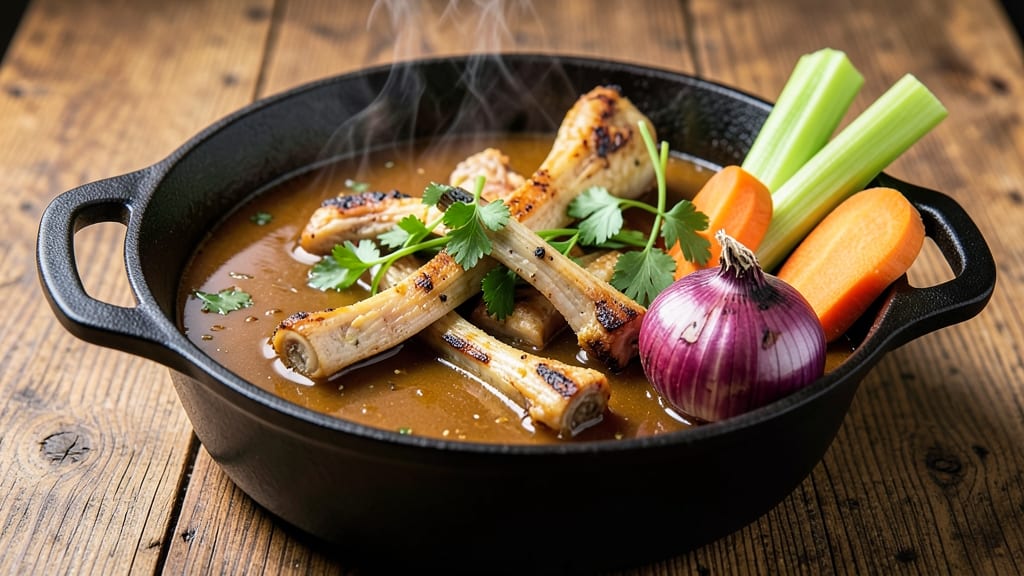
Alton Brown's chicken stock recipe transforms simple pantry ingredients into liquid gold that elevates every dish it touches. The secret lies in roasting bones and aromatics first—this step unlocks deep, savory notes that store-bought broths can't match.
I perfected this method during my apprenticeship in Charleston, where we built flavor from scratch using only what we had on hand.
What makes this stock exceptional is the balance of technique and simplicity. You'll start with chicken bones, carrots, celery, and onions, then roast them until caramelized before simmering for hours.
This slow process extracts maximum flavor while keeping the broth clear and rich. The result? A versatile foundation for soups, sauces, and grains that tastes homemade.
By the time you strain the finished stock, you'll have a fragrant, deeply flavorful liquid that's worth its weight in gold. The aroma alone will transform your kitchen into a professional culinary space. This isn't just stock—it's the difference between good food and extraordinary food.
Use it immediately in recipes or freeze for later—every spoonful delivers that restaurant-quality depth. Let's get started with this professional technique that delivers restaurant-quality results at home.
Ingredients for alton brown chicken stock
Pantry staples and kitchen scraps. Roast, simmer, strain—liquid gold in hours.
| Ingredient | Amount | Notes |
|---|---|---|
| Chicken Bones 🍗 | 3 lb | Raw or leftover, no meat |
| Yellow Onion 🧅 | 1 whole | Halved, skin on |
| Carrots 🥕 | 4 whole | Scrubbed, cut into chunks |
| Celery Stalks 🧅 | 4 whole | Cut into 2-inch pieces |
| Garlic Cloves 🧄 | 6 cloves | Smashed, skin on |
| Fresh Parsley Stems 🌿 | 4 whole | Woody stems only |
| Fresh Thyme Sprigs 🌿 | 2 whole | Stems intact |
| Fresh Bay Leaves 🌿 | 2 whole | Dried works too |
| Black Peppercorns 🌶️ | 1 tbsp | Crushed lightly |
| Kosher Salt 🧂 | 1 tbsp | Diamond Crystal preferred |
| Cold Water 💧 | 12 cups | Filtered preferred |
| Extra-Virgin Olive Oil 🫒 | 2 tbsp | For roasting |
The bones are everything here. Raw chicken backs or leftover carcasses work best—they've got the marrow and connective tissue packed with flavor. Skip the meaty chicken thighs or breasts, which release too much protein and cloud the stock. For aromatics, Whole Foods or local markets have the freshest carrots and celery, but grocery store staples work fine if you scrub them well. The parsley stems are non-negotiable—they add a subtle sweetness that balances the earthiness. I always use Diamond Crystal kosher salt because it dissolves cleanly and doesn't leave grit. Roast everything until deep brown—this caramelization is what gives Alton's stock its restaurant-quality depth.
No fresh thyme? Dried works at half the amount, but fresh is ideal for that bright aroma. Running low on bay leaves? One dried leaf equals two fresh. The olive oil matters here—use something fruity and peppery, not the bland stuff. For water, filtered is best, but tap water works in a pinch. Want more body? Add 1/4 cup of tomato paste to the roasting pan. The peppercorns should be crushed lightly—just enough to release their oils, not ground into powder. And if you're using leftover bones, pat them dry with paper towels first to prevent steam from slowing down the roasting process.
This stock tastes even better the next day once all the flavors meld. Store in the fridge for up to 5 days, or freeze in ice cube trays for single portions. Label containers with the date—it's worth using within 3 months for peak flavor. I always make a double batch and freeze half immediately. The aroma alone will make your kitchen smell like a professional kitchen. And trust me, every spoonful delivers that restaurant-quality depth—worth the 4-hour simmer every time.
Why You'll Love This Recipe
- Here’s what sold me: this stock doubles as a meal-saver. Freeze it in ice cube trays for quick soups, sauces, or even braising liquids. No more last-minute grocery runs for broth—just pull out a cube and boom, instant flavor. My freezer’s been my secret weapon for weeks, and my wallet’s thanking me.
- No Prep Panic: Honestly, this isn’t one of those recipes where you spend an hour chopping. Just toss those chicken bones on a rack, drizzle with olive oil, and let the oven do the heavy lifting while you prep the veggies. The roasting step alone adds depth without any extra effort—just 45 minutes of hands-off time.
- Golden, Umami Bomb: That crispy browned crust on the bones? Chef’s kiss. Roasting them at 425°F with olive oil and peppercorns caramelizes the collagen into something so rich, it’s like liquid gold. The garlic cloves (left whole) and thyme stems add subtle complexity without overpowering—trust me, the first sip will make you forget store-bought.
- Freezer’s Best Friend: Here’s what sold me: this stock doubles as a meal-saver. Freeze it in ice cube trays for quick soups, sauces, or even braising liquids. No more last-minute grocery runs for broth—just pull out a cube and boom, instant flavor. My freezer’s been my secret weapon for weeks, and my wallet’s thanking me.
Step-by-step instructions for Alton brown's chicken stock
Here's the method that transforms simple ingredients into restaurant-quality stock.
Prep and Roast the Chicken Bones for Deep Flavor
Preheat your oven to 425°F. Line a large roasting pan with heavy-duty aluminum foil and place a wire rack inside. This setup ensures even browning and prevents the bones from sitting in their own juices. Arrange the 3 lb chicken bones on the rack in a single layer, making sure they don't overlap.
Drizzle the bones evenly with the 2 tbsp extra-virgin olive oil, using about 1 tbsp per pound of bones. This creates a flavorful crust that will dissolve into the stock. Sprinkle the bones with 1 tbsp kosher salt and 1 tbsp crushed black peppercorns, pressing the spices into the bones so they adhere. The high heat and dry roasting caramelize the proteins and fat, forming a rich, browned crust called fond that's packed with flavor.
Roast the bones for 45 minutes, flipping them halfway through. You'll know they're ready when they're deeply golden brown and the kitchen smells like a French bistro. The bones should look like they've been kissed by a blowtorch—this is your flavor foundation. Let the bones cool slightly while you prepare the vegetables.
Build the Vegetable Base for Complex Flavor
While the bones roast, peel and cut the 4 whole carrots into 1-inch chunks and the 4 whole celery stalks into 2-inch pieces. Halve the 1 whole yellow onion lengthwise and smash the 6 cloves garlic with the side of a chef's knife, leaving the skins on. The skins prevent the garlic from burning while still infusing flavor.
Remove the bones from the oven and transfer them to a large stockpot (I prefer a 6-8 quart pot for this quantity). Add the prepared vegetables to the pot along with the 2 whole fresh thyme sprigs, 2 whole fresh bay leaves, and the 4 whole fresh parsley stems (using just the woody stems). The herb stems contain concentrated flavor without the bitterness of the leaves.
The vegetables should fit comfortably in the pot with the bones. If your pot is too small, work in batches—this ensures everything cooks evenly and develops maximum flavor. The combination of onion, celery, and carrots creates the classic "mirepoix" base that forms the flavor foundation for countless soups and sauces.
Simmer the Stock for Maximum Extraction
Pour the 12 cups cold water over the bones and vegetables in the stockpot. The cold water helps prevent the stock from immediately boiling, which could cause the bones to release sediment. Bring the mixture to a gentle boil over medium-high heat, then immediately reduce the heat to maintain a barely simmering state.
Here's the critical part: skim any foam or scum that rises to the surface during the first 15 minutes of simmering. This removes impurities that would otherwise make your stock cloudy. Use a fine-mesh skimmer or a ladle to remove these impurities—don't disturb the bones and vegetables beneath. The stock should remain clear and golden as it simmers.
Let the stock simmer uncovered for 2 to 2.5 hours. You'll know it's ready when the bones are completely bare—you should be able to see clean bone where meat once was. The longer the stock simmers, the more collagen breaks down from the bones and vegetables, creating a rich, gelatinous texture. The aroma should be deeply savory with notes of caramelized onion and thyme.
Strain and Finish for Silky Perfection
After simmering, turn off the heat and let the stock sit for 10 minutes. This resting period allows any settled particles to sink to the bottom. Line a fine-mesh strainer with cheesecloth or a stock bag and place it over a large bowl or clean pot. Carefully ladle the stock through the strainer, leaving behind all the bones and vegetables.
For extra clarity, you can press the solids gently with a wooden spoon, but don't force it—this can make the stock bitter. The strained stock should be clear with a beautiful golden hue. If you're using this stock immediately, you can skip the next step. For maximum flavor development, transfer the stock to a clean pot and simmer gently for another 30 minutes to evaporate any remaining impurities.
Taste the stock and adjust the seasoning if needed. It should be deeply flavorful with a clean, savory taste. If it needs more salt, add it gradually—you can always add more but can't remove it. The stock should be rich enough to stand alone but balanced enough to complement other dishes. Store in airtight containers in the refrigerator for up to 5 days or freeze for 3 months for future use.
Pro Tips For Making Alton Brown Chicken Stock
- Roast First, Boil Second: Alton’s method calls for roasting the bones and veggies first—don’t skip it. The caramelization on the onions and celery adds depth, and those crispy edges (yes, even if they look burnt) become the stock’s umami backbone. I used to rush to the pot, but that first 30 minutes in the oven makes the difference.
- Scrape, Don’t Rinse: After roasting, scrape every last bit of browned goodness from the pan into the pot. That’s where the flavor lives—don’t rinse it off with water or you’ll dilute the stock’s richness. I once washed the pan like I was cleaning a baking sheet, and the stock tasted flat. Lesson learned.
- Keep It Bubbling, Not Boiling: A gentle simmer is your friend—Alton says 3–4 hours for chicken bones. If it’s rolling hard, you’ll break down the collagen too fast and end up with a murky, over-extracted mess. I’ve watched stock turn from clear to gray when I forgot to turn the heat down; trust the process, even if it’s slow.
- Strain Through Cheesecloth: The recipe calls for a fine-mesh strainer, but add a layer of cheesecloth for extra clarity. It catches more fines and makes the stock look (and taste) polished. I used to skip it, but now I keep a roll under my sink—worth the 5 minutes for a silky result.
Make-ahead tips for alton brown chicken stock
Batch Prep Strategy
I always make double batches of this stock and freeze half immediately. This way, you'll always have a stash ready for quick meals. Use quart-sized freezer bags or glass jars with airtight lids—I prefer the latter because they're more durable.
Label each container with the date so you can track freshness. The stock will keep for 3 months in the freezer, maintaining its rich flavor. 💫
Freezer Organization
To save space and make thawing easier, freeze stock in ice cube trays first, then transfer the cubes to a labeled bag. Each cube holds about 1 tablespoon, perfect for small recipes. This method prevents freezer burn and lets you grab exactly what you need.
I also keep a separate bag of 1-cup portions for soups and sauces. Organization is key when you're working with liquid gold!
Thawing Techniques
For quick meals, transfer frozen stock directly from the freezer to a pot and heat on medium-low until simmering. If you need it sooner, place the sealed bag in a bowl of cold water and let it thaw gradually.
Never microwave stock for long-term use—it can lose its delicate flavors. I always thaw overnight in the fridge for best results. 💧
Make-Ahead Meals
Use your stock to prep ahead for busy weeknights. Cook 10 cups of rice and store it in the fridge—just add stock when reheating. Or make 2 quarts of soup like creamy tomato or butternut squash, then freeze portions.
The stock becomes even more flavorful after a day or two, as the aromatics fully meld. This is how I feed my whole team at The Smoky Pig!
Leftovers Utilization
If you have leftover stock after cooking, let it cool completely then transfer to a clean jar. Use it within 5 days for best quality, or freeze immediately. I often save 1 cup portions for gravies or deglazing pans.
Even a ½ cup can transform a bland dish into something extraordinary. Never waste a drop of this liquid treasure! 🔥
Nutrition facts
Frequently asked questions
Why roast the chicken bones before simmering?
Roasting the bones creates a flavorful crust called fond that dissolves into the stock. This step deepens the savory notes and gives the broth its rich, restaurant-quality depth. The high heat caramelizes the proteins and fat, which store-bought stocks simply can't match.
Can I use dried herbs instead of fresh?
Yes! For thyme and bay leaves, use half the amount of dried herbs compared to fresh. Fresh parsley stems are ideal, but if unavailable, dried parsley can work—just reduce the quantity. The key is to maintain the same flavor intensity.
How do I know when the stock is fully ready?
Your stock is done when the bones are completely bare—you should see clean bone where meat once was. It should also simmer for 2 to 2.5 hours and have a clear, golden hue. The aroma should be deeply savory with notes of caramelized onion and thyme.
What if my stock turns cloudy after simmering?
Cloudiness usually means impurities weren't fully removed. After simmering, let the stock rest for 10 minutes to settle, then strain again through cheesecloth. For extra clarity, simmer the strained stock for another 30 minutes to evaporate impurities. Avoid over-skimming during the initial boil—this can remove too much flavor.
Can I use chicken thighs or drumsticks for this recipe?
No, stick to raw chicken backs or leftover carcasses—they’ve got the marrow and connective tissue packed with flavor. Using meaty chicken thighs or drumsticks will cloud the stock with excess protein and dilute the rich, clean taste you’re aiming for.