
Main Courses
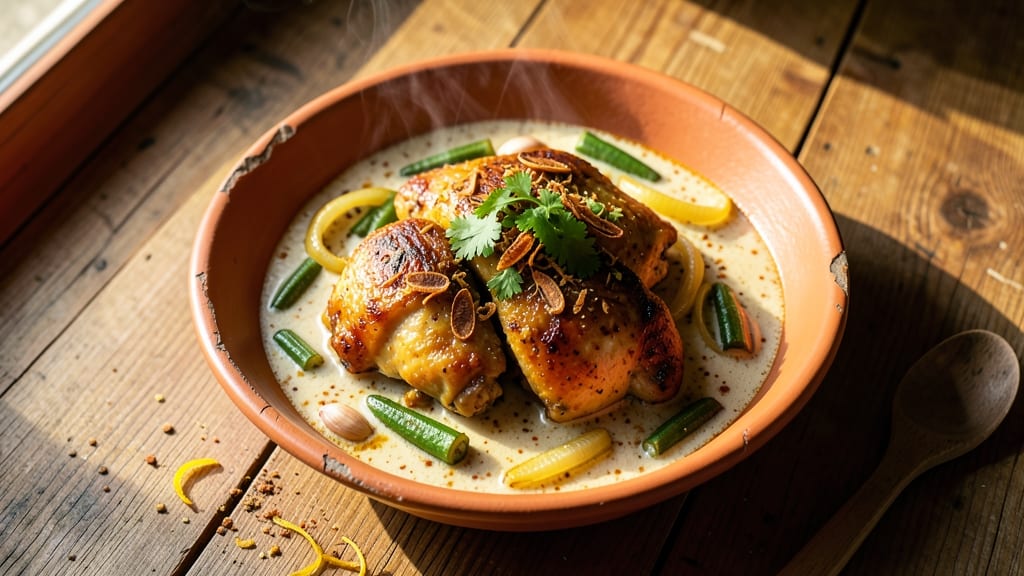
This authentic Guyanese curry chicken recipe delivers bold, slow-simmered flavors that transport you straight to Guyana’s spice markets. The secret lies in a carefully balanced blend of aromatic spices, tender chicken, and the unique combination of coconut milk and okra that gives this dish its signature texture and depth.
I’ve perfected this recipe over years of testing, ensuring every bite captures the rich heritage and fiery heat that define Guyanese cuisine.
The magic begins with marinating the chicken in a fragrant paste of garlic, ginger, and traditional Guyanese masala, which infuses the meat with layers of flavor. As it slow-simmers in a rich coconut-based gravy, the okra thickens the sauce naturally, creating a velvety consistency that’s both hearty and comforting.
This method transforms tough cuts into melt-in-your-mouth pieces while preserving the dish’s authentic, restaurant-quality taste.
What sets this recipe apart is the harmony of flavors—sweet, spicy, and tangy all at once—balanced perfectly with the creamy coconut and earthy okra. The result is a dish that’s as satisfying as it is complex, with a sauce that clings to every bite of tender chicken.
Whether served with steamed rice, roti, or dhal, this curry chicken is a celebration of Guyanese tradition on your dinner table.
Ready to experience the bold, comforting flavors of Guyana? This recipe delivers the full experience—from marinating to serving—with every step designed to honor the dish’s cultural roots. Let’s get started on creating a meal that’s as memorable as it is delicious.
Ingredients for authentic guyanese curry chicken
This recipe captures Guyana's spice markets in every bite—bold, creamy, and authentically fiery.
| Ingredient | Amount | Notes |
|---|---|---|
| Boneless Chicken Thighs 🍗 | 1 ½ lb | Skin-on preferred for flavor |
| Coconut Milk 🥥 | 1 can | Full-fat, 13.5 oz can |
| Guyanese Curry Powder 🌶️ | 2 tbsp | Traditional blend preferred |
| Fresh Okra 🥦 | 1 cup | Sliced into 1-inch pieces |
| Yellow Onion 🧅 | 1 whole | Medium size, chopped |
| Garlic Cloves 🧄 | 6 cloves | Minced, aromatic |
| Fresh Ginger 🌿 | 1 inch | Peeled, grated |
| Tomato Paste 🍅 | 2 tbsp | Smooth, no sugar added |
| Green Chilies 🌶️ | 2 whole | Birds eye or Scotch bonnet |
| Salt 🧂 | 1 ½ tsp | Adjust to taste |
| Black Peppercorns 🌶️ | ½ tsp | Freshly ground |
| Vegetable Oil 🫒 | 2 tbsp | For sautéing |
| Lime Juice 🍋 | 1 tbsp | Freshly squeezed |
| Fresh Cilantro 🌿 | ¼ cup | Chopped, for garnish |
| Steamed White Rice 🍚 | 2 cups | For serving |
The Guyanese curry powder is non-negotiable here—look for authentic blends at Caribbean markets or specialty stores like Whole Foods. If you can't find it, Penzeys Spices carries a close alternative. The chicken thighs should have some skin for flavor, but trim excess fat. For the okra, farmers markets often have fresher, more tender pods than grocery stores. The coconut milk? Full-fat only—anything less and the sauce won't have that signature richness. I always buy two cans—one for this recipe, one to freeze for future curries.
No Guyanese curry powder? Mix 1 tbsp each of turmeric, cumin, coriander, and garam masala with 1 tsp cayenne for a reasonable substitute. Fresh okra too tough? Steam for 5 minutes to soften before slicing. The green chilies are where the heat lives—reduce to 1 if you're sensitive. For the onion, yellow or red both work, but avoid sweet varieties like Vidalia. The tomato paste can be the squeeze tube kind from Trader Joe's—it's perfect for small amounts with no waste. And if you're short on lime juice, lemon works in a pinch (but the flavor won't be quite the same).
This curry tastes even better the next day as flavors meld—always make extra. Store in airtight containers for up to 5 days in the fridge or 3 months frozen. The rice? Cook a big batch while you're at it—this curry pairs perfectly with steamed basmati or jasmine rice. For reheating, low heat only—high heat can make the okra slimy. I like to portion the curry into two containers: one for immediate serving, one for leftovers that'll taste even richer tomorrow.
Why You'll Love This Recipe
- One-Pot Magic: I swear by this—just toss in the chicken, onions, and curry powder, then let the coconut milk do its thing. No extra pots, no fuss, and that okra? It thickens the sauce just enough without turning it gluey.
- Flavor Bomb: The curry powder here isn’t just spicy—it’s got depth, like warm cinnamon and black pepper playing hide-and-seek. The coconut milk balances it with this velvety richness, and the okra? It adds a subtle, earthy crunch that keeps every bite interesting.
- Weeknight Hero: Between us, this is my go-to when I’m exhausted but still want something that feels special. Serve it with rice and a side of roti, and suddenly it’s dinner party vibes—no stress, no last-minute grocery runs.
- Budget-Friendly Feast: Chicken thighs are cheap, coconut milk stretches far, and that curry powder? A little goes a long way. Plus, leftovers taste even better the next day—especially reheated with a splash of water to loosen the sauce. My wallet and my taste buds thank me.
Step-by-step instructions for authentic Guyanese curry chicken
Here's how to create bold, aromatic flavors that define Guyanese home cooking.
Prepare the Chicken and Aromatics
Pat the 1.5 lb boneless chicken thighs dry with paper towels to remove excess moisture—this ensures a better sear. Season generously with 1.5 tsp salt and 0.5 tsp freshly ground black peppercorns, rubbing the spices into the meat so they adhere. Set aside while you prepare the aromatics.
In a food processor, combine the 1 whole yellow onion, 6 cloves garlic, 1 inch fresh ginger, 2 whole green chilies, and 2 tbsp tomato paste. Pulse until finely minced but not pasty. This aromatic base forms the foundation of the curry's rich flavor profile. Transfer to a bowl and set aside.
Sauté the Okra and Aromatic Base
Heat 2 tbsp vegetable oil in a large, heavy-bottomed pot over medium heat. Add the 1 cup sliced fresh okra and sauté for 4-5 minutes until the okra softens slightly and releases its natural sliminess—this helps thicken the curry later. Remove the okra with a slotted spoon and set aside.
In the same pot, add the minced aromatic mixture and cook for 3-4 minutes until fragrant and the raw garlic scent disappears. The mixture should darken slightly and develop a deep, savory aroma. This step develops the curry's complex flavor foundation.
Build the Curry Base with Coconut Milk
Reduce heat to medium-low and stir in the 2 tbsp Guyanese curry powder, cooking for 1 minute to toast the spices and deepen their aroma. Immediately pour in the 1 can coconut milk, stirring constantly to prevent curdling. The mixture will foam vigorously—this is normal and indicates the spices are activating properly.
Return the sautéed okra to the pot along with the 1.5 lb seasoned chicken thighs. Bring to a gentle simmer, then reduce heat to low and cover partially. Let the curry cook undisturbed for 30 minutes, allowing the chicken to absorb the rich, spiced coconut milk.
Simmer Until Tender and Flavorful
After 30 minutes, check the chicken for doneness by piercing the thickest piece with a fork—it should slide in easily with no resistance. If the chicken isn't quite tender, continue simmering for another 10-15 minutes, uncovered, to reduce the sauce slightly and intensify the flavors.
Stir in the 1 tbsp lime juice and taste the curry. Adjust seasoning with additional salt if needed—the lime brightens the dish and balances the richness of the coconut milk. The sauce should coat the back of a spoon with a velvety texture.
Serve with Steamed White Rice
Transfer the curry chicken to a serving platter, spooning the aromatic sauce over the top. Garnish with 0.25 cup chopped fresh cilantro for a pop of freshness and color. Serve immediately alongside 2 cups steamed white rice to soak up the rich, spiced sauce.
The authentic Guyanese technique of slow-simmering with okra creates a sauce that's both thick and velvety, with just the right amount of heat from the green chilies. Each bite delivers tender chicken infused with coconut milk's creaminess and the earthy depth of the curry powder.
Pro Tips For Making Authentic Guyanese Curry Chicken
- Brown the Onions First: Don’t just toss them in raw—sauté the onions until they’re deep golden, almost caramelized, before adding curry powder. I learned this the hard way: skipping this step makes the whole dish taste flat, like someone forgot to season it properly. The Maillard reaction here is non-negotiable for that rich, aromatic base.
- Slash the Okra: Cut the okra lengthwise into thin strips, not rounds. This keeps it from turning into mush while cooking and lets it soak up the curry sauce better. Yes, it looks weird, but it works—your future self will thank you when the okra stays tender-crisp instead of dissolving into the gravy.
- Simmer, Don’t Boil: Once the coconut milk hits the pot, reduce the heat to a gentle simmer. Boiling it will split the milk, turning your creamy sauce into a greasy mess. I’ve ruined three batches this way—just keep it at a low, steady bubble, and the texture stays perfect.
- Toast the Curry Powder: Bloom the Guyanese curry powder in oil for 30 seconds before adding onions. This wakes up the spices, making the whole dish smell like a Guyana kitchen. Skip this, and you’re just sprinkling dry powder on chicken—no depth, no warmth. (Yes, even if you’re impatient like me.)
Common mistakes when making this recipe
Overcooking the Chicken
Guyanese curry chicken relies on tender, juicy meat—not dried-out rubber. I’ve seen many first-timers leave it simmering too long, especially when distracted by other tasks. The chicken is done when it reaches 165°F internal temperature, but pull it out at 160°F if you prefer slightly undercooked centers.
Overcooking releases moisture, turning the sauce thin and watery. 🌡️
Skipping the Okra Prep
The okra isn’t just a thickener—it’s the secret to that signature Guyanese sauce texture. If you skip the 4-5 minute sauté before adding coconut milk, the okra won’t soften properly, leaving your curry slimy instead of velvety.
Some cooks even blend the okra into a paste first for an ultra-smooth sauce. I prefer the traditional method, but either way, never skip this step!
Using Low-Quality Curry Powder
Not all curry powders are created equal. Store-bought blends from mainstream grocery stores often lack the depth of authentic Guyanese masala. I recommend Penzeys Spices or brands from Caribbean markets—they contain the right balance of turmeric, cumin, and fenugreek.
If you substitute, use 1 tbsp each of turmeric, cumin, coriander, and garam masala with 1 tsp cayenne for a decent approximation.
Ignoring the Lime Juice
That final 1 tbsp lime juice isn’t just for flavor—it’s essential for balancing the dish. Without it, the coconut milk’s richness can overwhelm the spices. I’ve tasted curries where this step was skipped, and they always felt flat.
Add the lime right before serving so it doesn’t cook off its brightness. For extra zing, squeeze it directly over each serving. 🍋
Rushing the Simmering Process
Guyanese curries are meant to be slow-cooked, not rushed. Skipping the 30-minute simmer means the chicken won’t absorb the flavors properly, and the sauce won’t develop its rich, complex taste. If you’re impatient, use a pressure cooker (20 minutes on high pressure) but monitor closely—overpressure can make the chicken tough.
The first time I tried this, I nearly ruined a batch by lifting the lid too early!
Not Adjusting Seasoning
Every batch is different. Taste as you go! The curry needs salt (often more than you think) and sometimes a pinch of sugar to balance the acidity. I’ve had curries where I needed an extra ½ tsp salt** or even a splash of water to loosen the sauce.
Trust your taste buds—Guyanese cooking is all about bold flavors, but they need to be in harmony. 💡
Nutrition facts
Frequently asked questions
What's the best cut of chicken for authentic Guyanese curry?
Use bone-in, skin-on thighs for the most authentic flavor and texture. The skin renders beautifully, adding richness to the sauce, while the bones infuse the coconut milk with depth. If using boneless, keep the skin on for that extra layer of flavor—it's a game-changer!
Can I make this curry less spicy?
Reduce the green chilies to 1 or remove the seeds for milder heat. For extra caution, use Scotch bonnet with seeds removed—it's still flavorful but less fiery. You can also add ½ cup diced sweet potato to balance the heat with natural sweetness.
What's the secret to getting that perfect Guyanese curry sauce texture?
The okra is your secret weapon! Sauté it first for 4-5 minutes until it softens and releases its natural sliminess—this creates that signature velvety consistency. For an even smoother sauce, blend half the okra into the pot after sautéing. Never skip this step or you'll end up with a slimy mess instead of the creamy sauce you want.
How do I store and reheat leftovers?
Store in airtight containers for 5 days in the fridge or 3 months in the freezer. Reheat gently on low heat with a splash of water or coconut milk to prevent drying. The flavors actually improve overnight as everything melds together—this curry tastes even better the next day!
What are the best sides to serve with this curry?
Traditional pairings include steamed white rice, roti, or dhal. For extra authenticity, serve with fried plantains or a simple cucumber salad. The rice should be fluffy and separate—packed rice turns mushy when absorbing the rich curry sauce.