
Main Courses
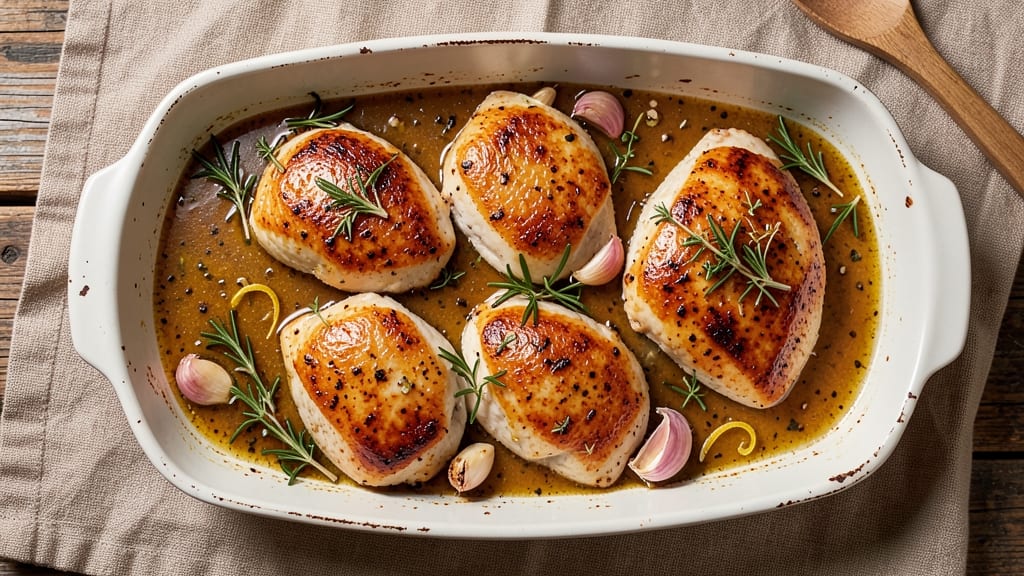
This baked chicken in white wine recipe transforms simple ingredients into a restaurant-worthy dish with just 45 minutes of hands-on time.
The secret lies in marinating the chicken in a bright white wine and herb mixture, which infuses every bite with herbaceous depth and a touch of acidity that cuts through the richness.
I developed this recipe after years of experimenting with wine-based marinades, and it consistently delivers tender, juicy chicken with a golden, crispy crust.
The white wine isn't just for flavor—it also tenderizes the meat while adding complexity that store-bought marinades can't match. You'll bake the chicken at 375°F until the internal temperature reaches 165°F, ensuring it stays moist and flavorful.
The best part? The same wine mixture doubles as a pan sauce, reducing into a glossy, aromatic glaze that ties everything together.
What you'll end up with is perfectly golden chicken, crispy on the outside and tender on the inside, bathed in a velvety white wine sauce that's bright, slightly tangy, and packed with herby notes.
The crust stays intact, holding up to every bite, while the meat remains juicy and full of flavor. This dish is elegant enough for dinner parties but simple enough for a weeknight.
Serve it with roasted vegetables, a simple green salad, or crusty bread to soak up every last drop of that delicious sauce. The wine's acidity makes it a perfect match for richer sides, balancing the meal beautifully.
Let's get started on this foolproof recipe that will impress even the most discerning guests.
Ingredients for baked chicken white wine
Fourteen simple ingredients create restaurant-quality chicken with crispy crust and velvety wine sauce.
| Ingredient | Amount | Notes |
|---|---|---|
| Boneless, Skinless Chicken Breasts 🍗 | 1 ½ lb | Pounded to even thickness |
| Dry White Wine 🍷 | 1 cup | Sauvignon Blanc or Pinot Grigio |
| Extra-Virgin Olive Oil 🫒 | ½ cup | For marinade and crust |
| Fresh Rosemary 🌿 | ¼ cup | Chopped, stems removed |
| Fresh Thyme 🌿 | ¼ cup | Leaves only, stems removed |
| Garlic Cloves 🧄 | 6 cloves | Minced for marinade |
| Diamond Crystal Kosher Salt 🧂 | 1 ½ tsp | For seasoning and crust |
| Ground Black Pepper 🌶️ | 1 tsp | Freshly ground preferred |
| All-Purpose Flour 🌾 | ½ cup | For breading crust |
| Fresh Lemon Juice 🍋 | 2 tbsp | Brightens the sauce |
| Unsalted Butter 🧈 | 2 tbsp | For pan sauce |
| Fresh Parsley 🌿 | ⅛ cup | Chopped for garnish |
The chicken breasts should be even thickness—pound them to about 1/4-inch if uneven. Trader Joe's and Whole Foods carry pre-pounded cuts, but pounding yourself ensures consistent cooking. For the white wine, avoid cooking wines—pick a dry, crisp Sauvignon Blanc or Pinot Grigio from the store's wine section. The herbs matter here: fresh rosemary and thyme from the grocery store's produce section will give you that restaurant-quality depth. If you're using dried, double the amount but expect less intensity. The olive oil should be extra-virgin—anything less will taste flat in the marinade.
No white wine? Substitute with chicken broth plus 1 tbsp lemon juice—it won't be identical but works in a pinch. Short on fresh herbs? Dried rosemary and thyme at half the amount will do, though fresh is ideal. The flour is just for the crust—skip it if you prefer a softer finish, but it adds that satisfying crunch. For the butter in the sauce, don't use margarine—the flavor difference is noticeable. If you're serving this for a crowd, double the marinade and let the chicken sit for up to 4 hours before baking for maximum flavor infusion.
Marinate the chicken for at least 30 minutes—overnight is even better. Store any leftover marinade in an airtight container for up to 3 days in the fridge. The cooked chicken reheats beautifully—350°F for 10-12 minutes covered with foil. The sauce thickens as it cools, so warm it gently before serving. Fresh parsley wilts fast, so store it wrapped in damp paper towels in the fridge. This dish tastes even better the next day as flavors meld—make extra for leftovers and portion into containers for quick lunches.
Why You'll Love This Recipe
- No Wine Waste: I use the leftover wine from cooking—just a splash in my morning coffee or a quick pan sauce for veggies. No fancy decanter needed, just a simple, flavorful upgrade for whatever’s on the menu.
- One-Pan Magic: Honestly, this is my go-to when I’m too tired to scrub pots. The chicken bakes right alongside the wine and herbs, and the pan’s basically clean after one wipe-down. Minimal effort, maximum result.
- Herb-Packed Perfection: That rosemary and thyme? They infuse the chicken like a hug—bright, earthy, and just enough to make every bite feel special. I swear, the first time I tried it, my partner asked for seconds before I even finished plating.
- Budget-Friendly Feast: Between us, this is how I feed my family without breaking the bank. A bottle of cheap white wine goes a long way, and the chicken stays juicy without needing fancy cuts. Leftovers? They’re even better reheated for lunch the next day.
Step-by-step instructions for baked chicken in white wine
Here's how to create tender chicken with a crispy herbed crust and a bright, flavorful wine sauce.
Prepare the Herbed Crust Mixture
In a small bowl, combine the 0.5 cup extra-virgin olive oil, 0.25 cup chopped fresh rosemary, 0.25 cup fresh thyme leaves, 6 minced garlic cloves, 1.5 teaspoons diamond crystal kosher salt, and 1 teaspoon ground black pepper. Mix thoroughly until the herbs are evenly distributed and the oil takes on a vibrant green hue. This mixture will create the signature crust that seals in moisture and adds incredible flavor.
I like to press the herbs between my fingers to release their essential oils before mixing. This ensures maximum aroma and flavor infusion into the oil. Set this mixture aside for now—it'll be used to coat the chicken before baking.
Season and Coat the Chicken
Place the 1.5 lb boneless, skinless chicken breasts between two sheets of plastic wrap and pound them gently to an even ½-inch thickness using a meat mallet. This ensures even cooking throughout. Pat the chicken dry with paper towels—this step is crucial for achieving a crispy crust.
Generously rub the herbed oil mixture all over the chicken, pressing it into the surface so it adheres well. Then, lightly coat each piece with the 0.5 cup all-purpose flour, shaking off any excess. The flour creates a light, crispy crust that contrasts beautifully with the tender chicken. Let the floured chicken rest for 10 minutes while you preheat the oven to 375°F.
Bake to Golden Perfection
Arrange the floured chicken breasts on a parchment-lined baking sheet, spacing them about 1 inch apart to allow for even browning. Bake in the preheated oven for 20-25 minutes, or until the internal temperature reaches 165°F and the edges are golden brown. I check for doneness by inserting a meat thermometer into the thickest part of the breast—this ensures perfect juiciness without overcooking.
During the last 5 minutes of baking, you'll want to broil the chicken for 2-3 minutes to achieve that deep golden color on top. Keep a close eye on it to prevent burning. Once done, transfer the chicken to a cutting board and let it rest for 5 minutes before slicing. This resting period allows the juices to redistribute, ensuring each bite is moist and flavorful.
Create the White Wine Sauce
While the chicken rests, place the same baking sheet over medium heat on the stovetop. Add the 2 tablespoons unsalted butter and let it melt, scraping up any browned bits from the bottom of the pan—these contain concentrated flavor. Pour in the 1 cup dry white wine and bring to a gentle simmer, allowing the alcohol to cook off for about 3-4 minutes until the liquid reduces by half and becomes aromatic.
Stir in the 2 tablespoons fresh lemon juice and simmer for another 2 minutes until the sauce thickens slightly. Season with a pinch of diamond crystal kosher salt and ground black pepper to taste. The sauce should coat the back of a spoon with a glossy, velvety consistency. If it's too thick, add a splash of chicken juices from the baking sheet to loosen it.
Serve with Fresh Herbs
Slice the rested chicken into ½-inch thick portions and arrange on a serving platter. Spoon the white wine sauce generously over the top, allowing it to cascade down the sides. Garnish with the 0.125 cup chopped fresh parsley for a pop of color and freshness. The contrast of the crispy herbed crust, tender chicken, and bright acidic sauce makes this dish truly special.
Serve immediately with crusty bread or roasted vegetables to soak up every last drop of that flavorful sauce. The combination of the herbed crust and white wine sauce creates a harmonious balance of flavors that's both elegant and satisfying.
Pro Tips For Making Baked Chicken White Wine
- SEAR FIRST, BAKE SECOND: I used to skip this step and wondered why my chicken tasted bland—it needs that quick sear in olive oil before the wine hits. Hit 425°F (220°C) for 3-4 minutes per side until golden, then pour in the wine and herbs. That crust locks in flavor and keeps the meat juicy.
- DON’T DROWN THE CHICKEN: White wine evaporates fast, but I’ve seen recipes call for way too much—just enough to coat the pan, about ½ cup for 2 breasts. If it’s swimming, the chicken steams instead of browning. Simmer uncovered for 2 minutes first to reduce slightly before adding chicken.
- SALT THE CHICKEN WET: Seasoning dry chicken before baking is a rookie move—it just makes your pan messy. Pat the breasts dry first, then sprinkle salt directly on the wet surfaces (from any marinade or wine reduction). The salt sticks better and seasons deeper, especially with skinless breasts that dry out fast.
- USE STEMMED HERBS: Fresh rosemary and thyme lose their punch when you toss the whole sprig in. Strip the leaves from the stems and scatter them evenly over the chicken—this way, every bite gets flavor, not just the top. (Yes, it’s a pain, but your taste buds will notice.)
Pro cooking tips for this dish
Marinade Magic
The white wine marinade does more than flavor—it tenderizes the chicken while adding depth. I always use dry white wine like Sauvignon Blanc or Pinot Grigio because their acidity breaks down muscle fibers.
Let the chicken soak for at least 30 minutes, but overnight is ideal for maximum flavor infusion. Pro tip: Use a glass bowl to store the marinade—it won’t absorb odors like plastic. 🍷
Crust Perfection
For that golden, crispy crust, the flour coating is key—but don’t skip the herbed oil first! The extra-virgin olive oil mixed with rosemary, thyme, and garlic creates a flavorful barrier. After coating with flour, let the chicken rest for 10 minutes before baking.
This allows the flour to adhere better, preventing clumping. I like to lightly dust the baking sheet with flour too—it keeps the chicken from sticking. ✨
Temperature Control
Bake at a steady 375°F—any hotter, and the chicken will dry out before the crust browns. Use a meat thermometer to check the internal temp at 165°F in the thickest part.
The last 5 minutes on broil give that caramelized finish, but watch closely—2-3 minutes max to avoid burning. I find a parchment-lined sheet makes cleanup effortless. 🌡️
Sauce Secrets
The wine sauce is where the magic happens! After baking, scrape up those browned bits from the pan—they’re packed with flavor. Let the wine reduce by half before adding lemon juice, which brightens the sauce.
If it gets too thick, add 1-2 tbsp chicken juices from the pan. A splash of chicken broth works in a pinch. Taste and adjust seasoning—salt and pepper are your friends here. 💡
Resting Matters
Never skip the 5-minute rest after baking! This lets juices redistribute, keeping the chicken moist and flavorful. I like to tent it loosely with foil while resting. Slice against the grain for tender bites—this shortens muscle fibers, making each piece easier to chew.
Garnish with fresh parsley right before serving to keep it vibrant. 🌿
Make-Ahead Tips
Prep the marinade a day ahead and store it in an airtight container in the fridge. Cooked chicken reheats well—350°F for 10-12 minutes covered with foil. The sauce can be made ahead too—store it in a jar and reheat gently on the stove.
Leftovers keep for 3 days in the fridge or 3 months in the freezer. Perfect for meal prep! ⏰
Nutrition facts
Frequently asked questions
Can I use red wine instead of white wine in this recipe?
While you can substitute red wine, it will change the flavor profile significantly. Red wine adds tannins that may make the sauce bitter and overpower the delicate chicken. For a similar effect, use 1/4 cup red wine plus 3/4 cup dry white wine to balance the intensity. The dish will still work, but the sauce will have a deeper, bolder character.
What's the best way to store leftover chicken and sauce?
Store the chicken and sauce separately in airtight containers in the fridge for up to 3 days. Reheat the chicken in the oven at 350°F for 10-12 minutes covered with foil, then warm the sauce separately on the stovetop over medium-low heat. For longer storage, freeze both components for up to 3 months. Thaw overnight in the fridge before reheating.
Why does my chicken turn out dry even though I followed the recipe?
Dry chicken usually happens from overcooking or skipping the resting time. Always check the internal temperature with a meat thermometer—it should read 165°F. Also, never cut into the chicken immediately after baking; let it rest for 5 minutes before slicing. If using thicker cuts, reduce the oven temperature to 350°F and bake for 5-10 minutes longer.
Can I make this recipe with chicken thighs instead of breasts?
Chicken thighs are more forgiving and stay juicier. Increase the baking time to 30-35 minutes at 375°F until the internal temperature reaches 165°F. Since thighs have more fat, you may want to reduce the olive oil in the marinade by 1 tablespoon to balance the richness. The crust will be even more flavorful with the extra fat.
How do I adjust the recipe for a crowd?
Double the marinade ingredients and increase the chicken to 3-4 lbs. Use two baking sheets for even browning. For the sauce, use 2 cups white wine and 4 tablespoons butter. Divide the chicken into portions and bake in batches if needed. The total cooking time remains similar, but you may need 5-10 minutes extra depending on your oven.