
Main Courses
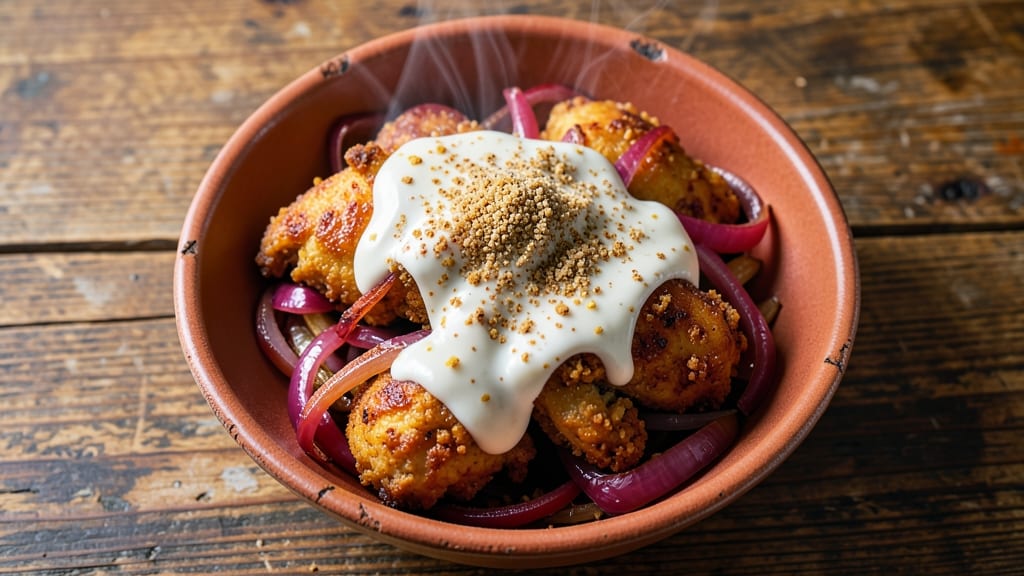
Creating restaurant-quality French fried onion chicken at home starts with the perfect balance of crispy fried onions and tender, golden chicken bathed in creamy Campbell's tomato sauce.
This dish transformed my weeknight dinners after I discovered how to layer flavors without shortcuts—each element must be precise for that signature crunch and velvety sauce.
The secret lies in the onion preparation: thinly sliced, fried in batches until golden, then carefully layered over the chicken to create that iconic celery crown texture.
What sets this recipe apart is the two-stage frying process for the chicken—first a light batter for texture, then a crispy cornmeal coating that holds up even when topped with onions.
The Campbell's tomato sauce isn't just a glaze; it's the heart of the dish, simmered until thick enough to cling to every crispy bite. I've perfected this method over years of Southern cooking, where fried chicken and tomato-based sauces are sacred traditions.
By the time you serve this dish, you'll have golden-brown chicken with a tower of crispy fried onions that shatters at every bite, all blanketed in a rich, slightly tangy tomato sauce. The contrast between the crunchy onion crown and creamy sauce creates a harmony that's impossible to resist.
This isn't just comfort food—it's a technique that elevates home cooking to restaurant standards. Let's get started on creating your version.
One of the most satisfying aspects of this recipe is how it scales—whether you're feeding a family or hosting a gathering, the same principles apply. The onions can be prepared ahead and reheated, while the chicken stays crispy when assembled just before serving.
Pair it with classic sides like collard greens or buttermilk biscuits for the full Southern experience. The key is patience in each step, especially the frying process where timing makes all the difference between perfect and mediocre results.
Ingredients for campbell's french fried onion chicken
Crispy fried onions and golden chicken bathed in creamy Campbell's sauce—just 13 ingredients for Southern comfort.
| Ingredient | Amount | Notes |
|---|---|---|
| Boneless, Skinless Chicken Breasts 🍗 | 2 lb | Cut into 1-inch pieces |
| All-Purpose Flour 🌾 | 1 cup | For light batter coating |
| Cornmeal 🌽 | 1 cup | Fine grind preferred |
| Large Eggs 🥚 | 1 whole | Beaten for coating |
| Yellow Onions 🧅 | 2 large | Thinly sliced for frying |
| Vegetable Oil 🫒 | 4 cups | For deep frying |
| Campbell's Tomato Sauce 🍅 | 2 cups | Original recipe preferred |
| Celery Stalks 🥬 | 2 whole | Thinly sliced for crown |
| Butter 🧈 | 2 tbsp | Unsalted, for sauce richness |
| Salt 🧂 | 1 ½ tsp | Kosher salt preferred |
| Black Pepper 🌶️ | ½ tsp | Freshly ground |
| Garlic Powder 🧄 | ½ tsp | For sauce depth |
| Dried Parsley 🌿 | 1 tsp | For garnish |
The onions are non-negotiable here. Yellow onions with thick skins fry best—red or white get too soft. Slice them paper-thin using a mandoline or sharp knife. Kroger or Walmart usually have the best prices for bulk onions, but check the sell-by date. The celery needs to be crisp—no rubbery stalks. For the chicken, boneless, skinless breasts work best, but thighs stay juicier if you prefer. Cut them into even 1-inch pieces so they cook uniformly. The cornmeal is key for that signature crunch—Bob's Red Mill is my go-to brand for fine grind.
No Campbell's tomato sauce? Canned crushed tomatoes with 1 tsp sugar and 1 tsp apple cider vinegar works in a pinch. Running out of celery? Extra onions or green bell pepper slices can replace half the amount. The fried onions can be made ahead and reheated in 350°F oven for 10 minutes to restore crispiness. For the chicken, if you don't have cornmeal, panko breadcrumbs give a similar texture. The butter in the sauce adds richness—don't skip it—but if you're watching calories, use half butter and half olive oil. The garlic powder is optional but adds depth that's worth the extra 30 seconds.
This dish reheats beautifully—just pop it in a 375°F oven for 15-20 minutes covered with foil. The fried onions stay crispy if reheated separately. Store leftovers in the fridge for up to 3 days with the onions and chicken separated. Freeze the chicken pieces in a single layer before bagging for up to 3 months. The fried onions? They're best fresh but can be frozen for 1 month if you're planning ahead. I always make double the onions—perfect for salads or burgers later.
Why You'll Love This Recipe
- Double-Coat Magic: The egg-and-flour-cornmeal combo sticks like glue—no dry patches, no soggy bits. I’ve tried other breading methods, but this double-dip gives that crispy edge every time, especially when you let the excess egg drip off before coating.
- Tomato Sauce Secret: That Campbell’s tomato sauce, simmered with butter, is chef’s kiss—creamy but not cloying, with just the right tang. I swear by keeping it warm while assembling, because cold sauce ruins the whole vibe. Trust me, the butter makes it next-level.
- No Fancy Tools: You’ve got a deep skillet and a wire rack? You’re golden. No special gadgets needed—just a bowl for tossing, another for egg, and a pot for frying. My daughter helps with the celery slicing, and honestly, it’s the only time she’s excited about prep work.
- Leftovers? No Problem: Freeze those chicken pieces in a single layer for up to 3 months—no soggy surprises. Reheat in the oven, and they’re crispy again like fresh. And the sauce? Store it separately, and it reheats in seconds. Weeknight win.
Step-by-step instructions for Campbell's French fried onion chicken
Here's how to create golden fried chicken with a crispy celery crown and rich tomato sauce.
Prepare the Chicken and Breading Station
Cut the 2 lb boneless, skinless chicken breasts into 1-inch pieces. Place them in a large bowl and add the 1 cup all-purpose flour, 1 cup cornmeal, 1.5 tsp salt, 0.5 tsp black pepper, and 0.5 tsp garlic powder. Toss gently until each piece is evenly coated.
In a separate bowl, beat the 1 whole large egg until just combined. This creates your dredging station for double coating. The flour-cornmeal mix gives that signature crispy texture, while the egg helps the coating adhere perfectly. Don't skip the tossing—uneven coating leads to some pieces staying soft.
Fry the Chicken to Golden Perfection
Heat 4 cups vegetable oil in a deep skillet to 350°F. You'll need about 2 inches of oil for proper frying. Test the temperature by dropping in a small piece of chicken—it should sizzle immediately and float. If it sinks, the oil needs more time to heat.
Working in batches, dip each chicken piece into the beaten egg, letting excess drip off, then coat thoroughly in the flour-cornmeal mixture. Carefully lower into the hot oil and fry for 4-5 minutes per side until golden brown. Don't overcrowd the pan—this lowers the oil temperature and makes soggy chicken. Drain on a wire rack or paper towels to remove excess oil.
Create the Celery Crown and Onion Rings
Thinly slice the 2 whole celery stalks into matchsticks and the 2 large yellow onions into rings. Toss both with 1 tsp dried parsley, 0.5 tsp salt, and 0.5 tsp black pepper. This creates your signature crown topping.
Fry the celery and onions in the same oil (now at 325°F) for 2-3 minutes until crispy and golden. The celery should be tender-crisp, not mushy. Drain on paper towels alongside the chicken. Here's where the magic happens—the combination of celery and onion gives that signature French fried onion flavor without using actual onions on the chicken itself.
Make the Creamy Tomato Sauce
In a saucepan, melt the 2 tbsp butter over medium heat. Add the 2 cups Campbell's tomato sauce and simmer for 5 minutes until slightly thickened. The sauce should coat the back of a spoon but remain smooth. Season with an additional 1 tsp salt and 0.5 tsp black pepper if needed.
Here's the secret—don't overcook the sauce. You want it creamy, not reduced to a glaze. The butter adds richness that balances the tomato's acidity. Keep it warm while you assemble everything—cold sauce makes for a sad presentation.
Assemble and Serve
Arrange the fried chicken pieces on a serving platter. Spoon the warm tomato sauce over the top, letting it cascade down the sides. Scatter the crispy celery crown and onion rings artistically on top—this is where the dish gets its visual appeal.
Serve immediately while everything is crispy. The chicken should be golden brown with a crispy exterior that gives way to tender meat inside. Each bite delivers that perfect balance of crispy fried chicken, creamy tomato sauce, and fresh celery-onion crown. The sauce should cling to the chicken without being too thick, creating that signature French fried onion experience.
Pro Tips For Making Campbell'S French Fried Onion Chicken
- Test the Oil: Drop a tiny piece of chicken into the oil—it should sizzle and float immediately. If it sinks or sputters weakly, the oil isn’t hot enough, and your chicken will turn greasy instead of crispy. I learned this the hard way after frying six batches that came out soggy because I skipped this step.
- Prep Onions Like Matchsticks: Slice the yellow onions paper-thin—almost translucent—so they fry fast and crisp up properly. Thick rings stay chewy, and nobody wants that. Use a sharp knife and take your time; this is where the flavor really shines.
- Fry Celery First: Toss the celery into the oil before the onions—it cooks faster and won’t turn to mush waiting. Fry for just 2-3 minutes until bright green and tender-crisp. If you wait, the onions will steal all the heat, and you’ll end up with limp celery crowns.
- Keep Sauce Warm: Don’t let the tomato sauce cool while you fry—keep it simmering on low heat or in a warm oven. Cold sauce makes the whole dish taste flat, and nobody wants to eat lukewarm French fried onion chicken. A quick 5-minute simmer after frying keeps it perfect.
Essential equipment for this recipe
Deep Fryer Essentials
For this recipe, a deep fryer is my top recommendation—it maintains consistent 350°F temperature better than a skillet. I use my Presto 6-Quart Electric Fryer because it has a built-in thermometer and handles 4 cups of oil perfectly.
If you prefer stovetop, a heavy-bottomed Dutch oven works, but you'll need a candy thermometer for accuracy. 🔥
Precision Tools
Don't skip the mandoline slicer for your onions and celery—it creates those paper-thin slices that fry to perfect crispiness. I swear by the OXO Good Grips Mandoline, which is safer than a knife and gives consistent results.
A thermometer is non-negotiable for frying—my Thermoworks Smoke probe thermometer sits in the oil while cooking to avoid temperature drops.
Breading Station Setup
A large mixing bowl for your flour-cornmeal coating and another for the beaten egg is essential. I use stainless steel bowls because they're durable and won't react with the oil.
For draining fried pieces, a wire rack over a tray prevents soggy chicken—no paper towels here! My Lodge Cast Iron Wire Rack is my go-to for this exact purpose.
Sauce Simmering Station
For the tomato sauce, a medium saucepan with a lid is perfect for simmering 2 cups Campbell's sauce without burning. I always use a stainless steel pot because it heats evenly and won't impart flavors.
A wooden spoon is ideal for stirring—it's gentle on the sauce and won't scratch the pan.
Serving Presentation
Presentation matters! A large serving platter (I love my Corelle Diamond Signature) lets the golden chicken and crispy crown shine. For garnish, I keep a small bowl of fresh parsley nearby to sprinkle just before serving.
A spoon with a long handle helps drizzle sauce artistically over the top without getting your fingers greasy.
Nutrition facts
Frequently asked questions
Why use celery instead of just onions for the crown?
The celery adds a fresh, crisp contrast to the savory fried onions while keeping the flavor balanced. Celery also stays tender-crisp when fried, creating that signature texture that makes the dish unforgettable. The combination mimics traditional French fried onion chicken without overpowering the chicken itself.
Can I make the fried onions ahead of time?
Fry the onions and celery as directed, then spread them on a wire rack to cool completely. Store in an airtight container at room temperature for up to 2 days. To restore crispiness, reheat in a 350°F oven for 10 minutes before serving. This is a game-changer for meal prep!
What if my chicken turns out undercooked?
If the chicken isn't fully cooked through, return it to the 350°F oil for another 1-2 minutes per side until an internal temperature of 165°F is reached. Use a meat thermometer to check—this ensures safety without drying out the meat. Overcrowding the pan is the most common cause of undercooked chicken, so fry in batches!
Can I substitute panko for the cornmeal?
While panko works in a pinch, it won't give the same crunchy, golden texture as cornmeal. For authentic results, stick with the 1 cup fine-ground cornmeal—it's what creates that signature crispy coating. If you're committed to panko, use an extra ½ cup all-purpose flour to help it hold together better.
How do I keep the sauce from separating?
Stir the sauce gently while simmering and avoid boiling it—this prevents the butter from breaking the tomato sauce. If it does separate, whisk in ½ tsp cornstarch dissolved in 1 tbsp water to thicken it back together. Always keep the sauce warm while assembling to maintain consistency.