
Main Courses
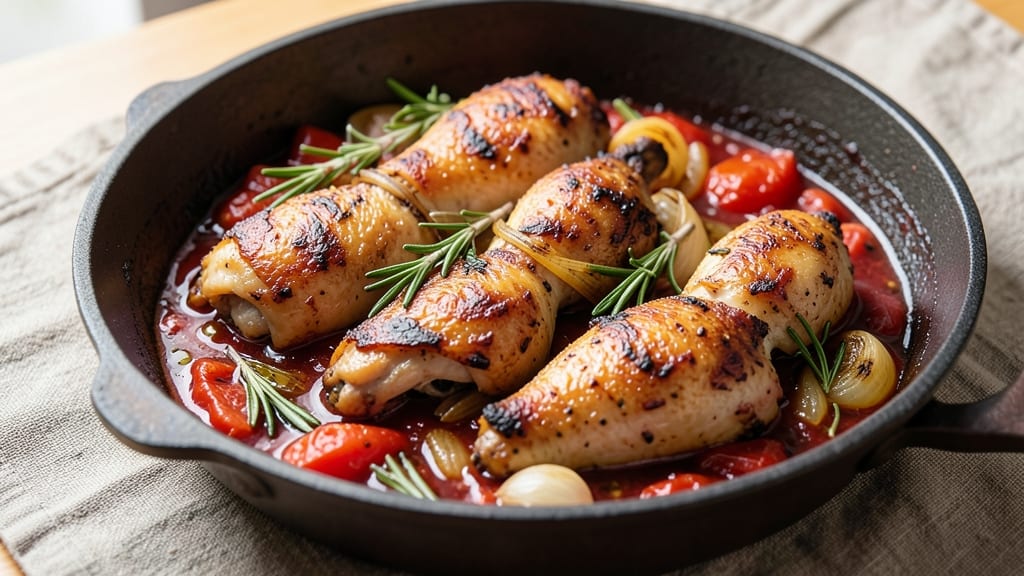
This one-pot chicken thighs with canned tomatoes recipe transforms simple ingredients into a deeply satisfying, restaurant-worthy meal with minimal effort. The secret lies in slow-braising the thighs until they're fork-tender while letting the canned tomatoes develop a rich, slightly sweet sauce that clings to every bite.
After years of perfecting this technique, I've found the right balance of spices and cooking time to create a dish that's both comforting and impressive.
The beauty of this recipe is its versatility—it works as a standalone main course or pairs perfectly with crusty bread, fluffy rice, or roasted vegetables.
You'll start with seasoned chicken thighs that develop a golden crust from pan-searing before being gently braised in tomatoes, garlic, and herbs until the meat falls apart. The sauce reduces naturally, concentrating flavors without needing elaborate reductions or special ingredients.
What you'll end up with is tender chicken thighs swimming in a velvety tomato sauce that's rich yet balanced, with just enough acidity to cut through the richness.
The aroma alone will have everyone gathering around the table, and the first bite delivers that perfect combination of caramelized edges and melt-in-your-mouth tenderness. This is the kind of weeknight dinner that feels like a celebration.
Ready in just 45 minutes with one-pot cleanup, this recipe proves you don't need fancy techniques or expensive ingredients to create a memorable meal. The canned tomatoes actually elevate the dish—no fresh produce required, just quality pantry staples and a little patience. Let's get cooking!
Ingredients for chicken thighs canned tomatoes
Pantry staples and a few fresh aromatics transform simple chicken thighs into restaurant-quality one-pot tenderness.
| Ingredient | Amount | Notes |
|---|---|---|
| Bone-In, Skin-On Chicken Thighs 🍗 | 1 ½ lb | Pre-cut into 4 even pieces |
| San Marzano Whole Canned Tomatoes 🍅 | 28 oz | Crushed by hand for texture |
| Extra-Virgin Olive Oil 🫒 | 2 tbsp | High-quality, fruity variety |
| Garlic Cloves 🧄 | 4 cloves | Fresh, peeled and smashed |
| Yellow Onion 🧅 | 1 whole | Diced, medium size preferred |
| Fresh Rosemary 🌿 | ½ tsp | Finely chopped, or 0.25 tsp dried |
| Fresh Thyme Leaves 🍃 | ½ tsp | Or 0.25 tsp dried thyme |
| Diamond Crystal Kosher Salt 🧂 | 1 ½ tsp | For seasoning and brining |
| Freshly Ground Black Pepper 🌶️ | ½ tsp | Coarsely cracked |
| Red Wine Vinegar 🍷 | 1 tbsp | For acidity balance |
| Unsalted Butter 🧈 | 1 tbsp | Full-fat for richness |
| Heavy Cream 🥛 | ¼ cup | Optional, for sauce finish |
| Fresh Parsley 🌿 | ¼ cup | Chopped, for garnish |
The chicken thighs are the foundation—bone-in, skin-on pieces develop the deepest flavor and stay juiciest during braising. Look for thighs with good marbling at specialty butchers or high-end grocery stores like Whole Foods or Eataly for optimal quality. If using frozen, thaw overnight in the fridge to maintain texture. The San Marzano tomatoes are non-negotiable here; their natural sweetness and low acidity create the perfect sauce base. Penzeys or local Italian markets carry them year-round, though most well-stocked supermarkets stock them during summer months. For the herbs, fresh is ideal, but dried works in a pinch—just remember to triple the amount when substituting.
No fresh rosemary or thyme? Dried Mediterranean herb blends from Trader Joe's or Penzeys provide a similar profile. Substituting red wine vinegar? Balsamic vinegar at half the amount works, though the flavor will be slightly sweeter. The butter adds richness that can't be replicated with margarine or plant-based alternatives. For a lighter version, omit the heavy cream and stir in an extra tablespoon of olive oil at the end. Freshly cracked black pepper makes a noticeable difference—pre-ground loses potency quickly. The onions can be swapped for shallots if you prefer a milder flavor, but yellow onions provide the perfect balance of sweetness and depth.
This dish reheats beautifully—simmer gently on the stove for 5-7 minutes until heated through. The sauce thickens as it cools, so adding a splash of water or broth when reheating helps restore its velvety texture. Store leftovers in an airtight container in the refrigerator for up to 4 days, though the flavor actually improves overnight as the tomatoes continue to break down. For longer storage, freeze portions in single-serving containers for up to 3 months. The parsley garnish is optional but adds a bright finish—if using dried, sprinkle it in during the last 5 minutes of cooking instead of garnishing at the end.
Why You'll Love This Recipe
- Here’s what sold me: the tomatoes get better the next day, deepening into something almost like a slow-cooked stew. That 1 tablespoon of red wine vinegar? It balances the richness so the dish never feels heavy—just satisfying.
- Skin-Crisp, Sauce-Loaded Magic: That golden, crackling skin on bone-in thighs? It’s worth the 10 minutes of searing—trust me, the contrast with the creamy tomato sauce is chef’s kiss. The secret’s in letting the fat render undisturbed while those edges curl perfectly.
- One-Pot, One-Spatula Dinner: I’ll never overcomplicate weeknights again. You’ve got the chicken, tomatoes, and aromatics all in one Dutch oven—no chopping marathon, no last-minute cleanup chaos. Just sear, simmer, and serve.
- Flavor That Grows on You: Here’s what sold me: the tomatoes get better the next day, deepening into something almost like a slow-cooked stew. That 1 tablespoon of red wine vinegar? It balances the richness so the dish never feels heavy—just satisfying.
Step-by-step instructions for chicken thighs with canned tomatoes
Here's the method for achieving perfectly tender, tomato-braised chicken thighs in a single pot.
Sear the Chicken Thighs for Maximum Flavor
Heat a large Dutch oven over medium-high heat. Add the 2 tablespoons extra-virgin olive oil and let it shimmer for 30 seconds—this ensures proper heat distribution before adding the chicken. Place the 1.5 lb bone-in, skin-on chicken thighs in the pot, skin-side down, and press gently to maintain contact with the pan.
Sear undisturbed for 5-6 minutes until the skin becomes deep golden brown and crispy, with the fat beginning to render. You'll notice the edges curl slightly—that's your signal to flip. Turn the thighs skin-side up and continue cooking for another 4-5 minutes until the skin is evenly browned. Remove the chicken and set aside on a plate, leaving the rendered fat in the pot. This step develops the deep, savory foundation for your braise.
Build the Aromatic Tomato Base
Reduce the heat to medium and add the 1 whole yellow onion, diced into even ¼-inch pieces. Cook for 4-5 minutes until softened and translucent, stirring occasionally to prevent burning. Add the 4 cloves garlic cloves, smashed with the side of your knife, and cook for 30 seconds until fragrant—this ensures you capture their full flavor without burning.
Pour in the 1 tablespoon red wine vinegar and scrape up any browned bits from the bottom of the pot. These bits, called fond, are packed with flavor. Add the 28 oz San Marzano whole canned tomatoes, crushed by hand to create a rustic texture. Stir in the 0.5 teaspoon fresh rosemary and 0.5 teaspoon fresh thyme leaves, then sprinkle with 1.5 teaspoons diamond crystal kosher salt and 0.5 teaspoon freshly ground black pepper. Bring the mixture to a gentle simmer, then reduce heat to low and let it cook uncovered for 10 minutes to allow the flavors to meld.
Braise the Chicken Until Fork-Tender
Return the chicken thighs to the pot, skin-side up, and pour in enough water to come about halfway up the thighs—approximately 1 cup. This liquid helps create steam, which tenderizes the meat. Bring the mixture to a gentle simmer, then cover the pot with a tight-fitting lid. The goal is to maintain a low, steady simmer rather than a rolling boil, which could toughen the chicken.
Simmer for 30-35 minutes until the chicken is fork-tender. You'll know it's ready when the meat easily separates at the bone with minimal resistance. If the liquid reduces too quickly, add ½ cup hot water to maintain the proper braising liquid level. The skin should be tender and slightly crispy, while the meat beneath should be juicy and falling-off-the-bone tender. This slow cooking process transforms the tough connective tissue into rich, gelatinous goodness that enhances the sauce.
Finish with Butter and Cream for Richness
Once the chicken is tender, remove the lid and increase the heat to medium. Add the 1 tablespoon unsalted butter and let it melt into the sauce, stirring occasionally. Then, stir in the ¼ cup heavy cream, allowing it to warm through and create a velvety texture. Simmer for 2-3 minutes until the sauce thickens slightly and coats the back of a spoon. Taste and adjust seasoning if needed—you may need an additional ¼ teaspoon salt or pinch of pepper to balance the flavors.
Garnish each serving with ¼ cup chopped fresh parsley just before serving. The parsley not only adds a pop of color but also brightens the rich tomato sauce with its fresh, herbal notes. Serve the chicken thighs immediately, spooning the sauce generously over each piece. The combination of tender meat and deeply flavorful sauce makes this dish a standout for any meal.
Pro Tips For Making Chicken Thighs Canned Tomatoes
- Crush Those Tomatoes: Skip the blender—your hands are the secret weapon here. San Marzano tomatoes are juicy, so crushing them by hand breaks them just enough to release flavor without turning the sauce into a watery mess. I used to puree them, and the result was always duller. A few firm presses with your knuckles or the back of a spoon does the trick.
- Salt the Chicken Early: Toss the thighs with the full 1.5 teaspoons kosher salt before searing—not after. This gives the salt time to work its magic, drawing out moisture and creating that crisp skin. I learned this the hard way when my first batch came out soggy because I waited until the end. Trust me, the skin will thank you.
- Don’t Crowd the Pan: If your Dutch oven looks packed with chicken thighs, you’re doing it wrong. Leave space between each piece so the fat can render properly and the skin gets that golden crust. I once stuffed four thighs into a small pot and ended up with greasy, pale skin. Work in batches if needed—your future self will notice the difference.
- Taste Before Cream: Hold off on adding the heavy cream until you’ve tasted the sauce first. The tomatoes and herbs can be subtler than they seem, and the cream might need balancing with an extra pinch of salt or a splash of red wine vinegar. I’ve ruined a batch by rushing this step—now I wait until the flavors are clear in my mind.
Essential equipment for this dish
Dutch Oven Essentials
The heart of this recipe lies in a heavy-bottomed Dutch oven, like the Le Creuset or Lodge cast iron. These pots distribute heat evenly, preventing hot spots that could burn your onions or undercook the chicken.
The 5-quart size works best for 1.5 lb bone-in thighs, giving you enough room for the sauce to develop without overcrowding. I always season my Dutch oven with oil and bake it at 450°F for 1 hour before first use to create a natural nonstick surface. 🔥
Precision Thermometer
A digital meat thermometer like the Thermoworks Smoke is non-negotiable for this dish. You'll use it to check the chicken's internal temperature—165°F is the safe zone for poultry.
I also recommend a candy thermometer for monitoring the sauce temperature when adding cream. These tools prevent guesswork and ensure perfect doneness every time.
Crushing Tool
For that perfect rustic tomato texture, I use a wooden spoon or potato masher to crush the 28 oz San Marzano tomatoes by hand. This creates bigger chunks than a food processor, adding visual appeal and bite to each spoonful.
If you're short on time, a fork works too, but the wooden spoon gives you better control over the consistency.
Lid and Tongs
Your Dutch oven's lid should fit snugly—tight-fitting lids are crucial for trapping steam during braising. I use heat-resistant silicone tongs like the OXO Good Grips to handle the hot chicken without burning myself. These tongs have a comfortable grip and won't scratch your cookware's seasoning.
Fine-Mesh Strainer
After braising, I strain the sauce through a fine-mesh strainer to remove any herb stems or onion skins that might have escaped. This step elevates the presentation and ensures a silky-smooth sauce.
A colander works in a pinch, but a microwave-safe strainer like the NutriBullet lets you reheat the sauce directly in it for quick cleanup.
Nutrition facts
Frequently asked questions
Why use bone-in, skin-on chicken thighs for this recipe?
Bone-in, skin-on thighs stay juicier during braising because the bone acts as a natural moisture reservoir, while the skin crisps up beautifully. The fat renders out, creating a rich, flavorful sauce that clings perfectly to the meat. This method ensures you get falling-off-the-bone tenderness without drying out the chicken.
What if I don't have San Marzano tomatoes?
Any high-quality canned tomatoes work, but San Marzano's natural sweetness and low acidity create the best balance. Look for Dole or Mutti brands if unavailable. Avoid fire-roasted tomatoes—they'll add a smoky flavor that doesn't pair well with this dish. You can also use crushed tomatoes instead of whole, but crush them by hand for texture.
How do I know when the chicken is fully cooked?
Use a digital meat thermometer to check the thickest part of the thigh—it should reach 165°F. The meat will also pull away easily from the bone when pierced with a fork. If the sauce reduces too quickly during braising, add ½ cup hot water to maintain moisture. The skin should be crispy but tender, not rubbery.
Can I make this recipe ahead of time?
The flavors actually improve overnight. Store leftovers in an airtight container in the fridge for up to 4 days. For freezing, portion into containers and freeze for up to 3 months. Reheat gently on the stove with a splash of water to restore the sauce's texture. The tomatoes continue breaking down, making the sauce richer over time.
What should I serve with this tomato-braised chicken?
This dish pairs beautifully with crusty bread for dipping, fluffy rice to soak up the sauce, or roasted vegetables like asparagus or zucchini. For a complete meal, serve with a simple green salad to balance the richness. The sauce is so flavorful it works as a standalone main with crusty bread.