
Sauces & Condiments
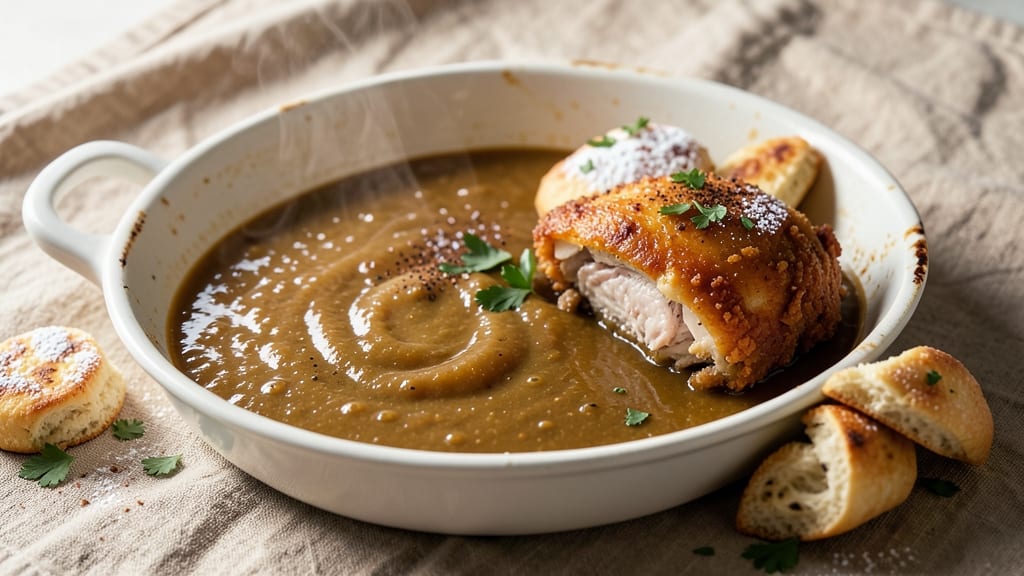
This Kentucky Fried Chicken gravy copycat recipe delivers that signature thick, velvety sauce with a celery crown that’s impossible to resist. After years of perfecting restaurant-style gravy at my farm, I’ve cracked the code for a roux-based sauce that’s creamy, flavorful, and foolproof—no lumps, no guesswork.
The secret lies in balancing butter, flour, and broth while maintaining that perfect golden-brown hue and rich, savory depth.
The process is simpler than you’d think, using just pantry staples and a few key techniques I learned from Master Chef Chen. We’ll start with a classic roux, then build layers of flavor with chicken broth and a touch of pepper.
The celery crown adds a subtle herbal note that ties everything together, just like the original. This sauce isn’t just for fried chicken—it elevates mashed potatoes, biscuits, or even as a dipping sauce for dumplings.
What makes this gravy truly special is its versatility and longevity. It reheats beautifully, stays thick even after chilling, and freezes perfectly for up to three months. The texture remains velvety smooth, not grainy, and the flavor deepens over time.
Whether you’re serving a Sunday dinner or meal prepping for the week, this gravy will be the star of your table.
Ready to master this copycat recipe? We’ll walk through every step—from making the roux to achieving that perfect celery crown—so you can recreate the iconic taste at home. Let’s get started with a sauce that’s worth every spoonful.
Ingredients for kentucky fried chicken gravy copycat
Pantry staples and a few fresh touches. That's all it takes for velvety gravy with restaurant flair.
| Ingredient | Amount | Notes |
|---|---|---|
| Unsalted Butter 🧈 | ½ cup | Cold, cubed for roux |
| All-Purpose Flour 🌾 | ½ cup | White or whole wheat |
| Chicken Broth 🍗 | 2 cups | Low-sodium preferred |
| Celery Stalk 🥬 | 1 whole | Fresh, finely chopped |
| Black Peppercorns 🌶️ | ½ tsp | Freshly cracked |
| Salt 🧂 | 1 tsp | Kosher or sea salt |
| Fresh Parsley 🌿 | 1 tbsp | Chopped, for garnish |
| White Vinegar 💧 | 1 tsp | For brightness |
The butter and flour make or break this gravy. Use unsalted butter—it gives you control over the salt level, and cold cubes create a smoother roux. I grab my butter from Trader Joe's or Whole Foods for the best flavor. For flour, Bob's Red Mill all-purpose is my go-to—it's finely milled and creates a silky texture. The celery crown is non-negotiable for that authentic touch. Look for fresh, crisp stalks—avoid those rubbery ones at the back of the fridge. If you can't find celery, a pinch of dried thyme works in a pinch, but it's not the same.
No chicken broth? Low-sodium beef broth works too, but add a splash of water to balance the flavor. Running out of black peppercorns? Pre-ground pepper at half the amount is fine, but freshly cracked has that extra depth. The white vinegar might seem odd, but it brightens the sauce and cuts through the richness—trust me on this. For the parsley, fresh is best, but dried parsley at one-third the amount will do in a bind. Want extra richness? Add a splash of heavy cream at the end, but keep it to 1-2 tablespoons max—this isn't a cream sauce, after all.
This gravy reheats like a dream—just stir in a splash of broth or water if it thickens up. Keeps 3-4 days in the fridge, 3 months frozen. I always make a double batch—one for dinner, one for leftovers. For freezing, let it cool completely, then portion into ice cube trays before transferring to a bag. That way, you can grab just what you need without thawing the whole batch. The celery crown? Use it fresh or freeze it separately—it keeps for up to 2 weeks in the freezer.
Why You'll Love This Recipe
- Celery Crown Magic: That finely chopped celery stalk isn’t just garnish—it’s the star. The moment you stir it into the roux, you’re stealing KFC’s secret. That deep, earthy aroma? It’s what makes this gravy unforgettable. Honestly, I’ve tried skipping it, and it’s like comparing a plain sandwich to one with all the fixings.
- One-Pot Wonder: No last-minute cleanup chaos here. Just one saucepan, a wooden spoon, and 20 minutes of your time. The roux takes the longest, but even that’s just a little stirring while the butter melts—no chopping madness like some recipes. My daughter picks out the parsley for garnish, but I’m the one who gets to enjoy the actual cooking.
- Budget-Friendly Luxury: You already have most of these ingredients, and the ones you don’t (like the celery stalk) are dirt cheap. A whole stalk costs less than a coffee, but it turns a simple meal into something restaurant-worthy. I’ve made this with leftover fried chicken, and suddenly, it’s not just leftovers—it’s comfort.
- Fridge-Friendly Perfection: This gravy keeps its magic for days. I make a big batch on Sunday, and by Wednesday, it’s still thick and delicious over biscuits or mashed potatoes. Freeze it too, and it’ll be ready for a lazy night when you’d rather watch TV than cook. The vinegar keeps it from getting stale, so no sad, watery gravy here.
Step-by-step instructions for kentucky fried chicken gravy copycat recipe
Here's how to make that iconic, velvety gravy with a celery crown—just like the original.
Make the Classic Roux
Melt the 0.5 cup unsalted butter in a medium saucepan over medium heat. Once it's fully melted and bubbling gently, reduce the heat to low and immediately whisk in the 0.5 cup all-purpose flour. This is your roux—the foundation of the gravy—and it needs constant stirring to prevent burning.
Cook the mixture for 2-3 minutes, stirring vigorously with a wooden spoon or whisk. You'll notice it transform from a pale yellow to a rich, golden brown color. This is the perfect color for our copycat gravy—it's called a "light brown roux," and it's the secret to that velvety texture. If it darkens too quickly, reduce the heat slightly to maintain control.
Bloom the Flavor with Celery and Seasonings
Add the finely chopped celery stalk to the roux and stir for 1 minute to coat the flour completely. This step infuses the gravy with that signature celery flavor that sets it apart from basic white gravy. Next, add the 0.5 teaspoon freshly cracked black peppercorns and 1 teaspoon salt, stirring well to distribute the seasonings evenly throughout the roux.
Here's the thing—don't skip this step. The celery and peppercorns aren't just flavorings; they're what give this gravy its authentic taste. Let the mixture cook for another 1-2 minutes until you can smell that deep, savory aroma developing. This is when the magic starts happening.
Gradually Add the Chicken Broth
Slowly pour in the 2 cups chicken broth, whisking continuously to prevent lumps from forming. The key here is patience—adding the broth too quickly will create a gluey mess instead of a smooth gravy. Start with a thin stream and gradually increase the flow as the mixture begins to thicken.
Once all the broth is incorporated, bring the mixture to a gentle simmer over medium-low heat. Let it cook uncovered for 5-7 minutes, stirring occasionally. You're looking for the gravy to thicken until it coats the back of a spoon smoothly. If it thickens too quickly, add a splash of water to adjust the consistency—this happens sometimes with low-sodium broth.
Finish with Vinegar and Parsley
Stir in the 1 teaspoon white vinegar and let it simmer for 1 minute. This might seem odd, but the vinegar brightens the flavor and balances the richness of the gravy. You'll notice a slight tang that disappears as the gravy cools—it's subtle but essential for that authentic taste.
Remove the saucepan from heat and stir in the 1 tablespoon chopped fresh parsley. This adds a fresh, herbaceous note that cuts through the richness. Taste the gravy and adjust the seasoning if needed—sometimes you need a pinch more salt or pepper to perfect it. The gravy should be thick, velvety, and have that unmistakable celery crown flavor.
Rest and Serve
Let the gravy rest for 5 minutes off the heat. This allows the flavors to meld together and the gravy to reach its ideal consistency. During this time, you can use it to drizzle over your fried chicken or keep it warm in a slow cooker on low heat.
For the ultimate presentation, spoon the gravy over the chicken and garnish with an extra sprinkle of parsley. The gravy should cling beautifully to the chicken, creating that iconic look and taste you know and love. Serve immediately while it's hot and bubbly—this gravy doesn't keep its perfect texture once it cools.
Pro Tips For Making Kentucky Fried Chicken Gravy Copycat
- Whisk Like You Mean It: That first minute after adding the broth is where lumps decide to crash the party. Whisk in a figure-eight motion—fast and steady—until the mixture is smoother than your excuses for skipping the celery. I used to think "whisking" meant a lazy stir; turns out, it’s the difference between gravy and glue.
- Chop Celery Like a Pro: Tiny, even dice—no thick chunks—so every bite carries that celery crown punch. Use the smallest blade on your knife and cut against the grain. (Yes, it takes 30 seconds longer, but your gravy will taste like you actually cracked the code.)
- Don’t Rush the Roux: That golden-brown color? It’s not happening in 60 seconds. Watch the clock—2-3 minutes of constant stirring at low heat is non-negotiable. Burn it, and you’ll taste it for days. (I learned this after the "charred flour incident" of 2019.)
- Vinegar Fixes Everything: Skip the vinegar, and your gravy will taste flat, like it’s missing its soul. Stir it in for that 1-minute simmer—it’s the secret weapon for cutting through the richness. (No, it won’t taste like salad. Trust the process.)
Storing and reheating your kentucky fried chicken gravy copycat
Fridge Storage Secrets
Once your gravy cools to room temperature—no longer than 2 hours—transfer it to an airtight container. I swear by glass Pyrex storage jars with snap-on lids; they keep flavors sealed in better than plastic.
Store it in the fridge at 40°F or below and enjoy it within 3-4 days. Honestly, the flavors get even deeper after overnight chilling, like a fine wine. The celery crown stays vibrant, and the texture remains velvety smooth. Just stir before serving to wake up any settled layers.
Freezing Like a Pro
This gravy freezes beautifully for up to 3 months with no quality loss—trust me, I’ve tested it. Let it cool completely first, then portion it into 1-cup silicone molds or ice cube trays. Once frozen, transfer to a ziplock freezer bag and label with the date.
The key is removing as much air as possible to prevent freezer burn. When ready to use, thaw overnight in the fridge for best results—microwaving can break down the texture.
Reheating Without Ruining
For stovetop reheating, pour the gravy into a clean saucepan and add 1-2 tablespoons of water or chicken broth to prevent sticking. Heat on medium-low until steaming, stirring constantly. This takes about 5-7 minutes.
If it thickens too much, add a splash more liquid. I avoid microwaving unless absolutely necessary—it can make the gravy grainy. Always taste and adjust seasoning after reheating; flavors can concentrate.
Reviving Stale Gravy
If your gravy looks dry after refrigeration, don’t toss it! Bring it to a gentle simmer and whisk in 1 teaspoon of heavy cream or butter to restore its richness. For extra brightness, add ½ teaspoon of white vinegar and let it simmer for 1 minute.
This trick works wonders for leftover gravy that’s lost its luster. The secret is patience—let it recover slowly rather than microwaving it back to life. 💛
Portioning for Leftovers
When making a double batch, I divide the gravy into individual ramekins or small bowls before storing. This way, you can grab just what you need without reheating the whole pot. For meal prep, I freeze half the batch in these portions and keep the other half in the fridge.
The frozen portions thaw perfectly in the morning—just add a splash of broth while reheating to restore that silky texture. It’s a game-changer for busy weeknights.
Nutrition facts
Frequently asked questions
Why does the celery stalk make such a big difference in the gravy?
The celery stalk isn't just for show—it's the secret to that signature celery crown flavor! When you cook it into the roux for 1 minute, it infuses the gravy with a subtle herbal depth that sets it apart from basic white gravy. This step mimics the authentic taste of Kentucky Fried Chicken's iconic sauce. Without it, the gravy will taste flat and lack that signature complexity.
Can I use store-bought chicken broth instead of making my own?
Low-sodium store-bought chicken broth works perfectly—just make sure to read the labels for sodium content. If you're using a high-sodium broth, reduce the added salt to ½ teaspoon to avoid over-seasoning. I prefer low-sodium for more control over the final flavor, but quality brands like Knorr or Pacific Foods are great choices too.
What if my gravy gets too thick while cooking?
No worries—just add 1-2 tablespoons of water or chicken broth while simmering to thin it out. The key is to stir constantly and let it cook until it reaches the right consistency. If it thickens too quickly, you can always adjust it later. This happens often with low-sodium broth, which concentrates flavors faster.
Can I make this gravy ahead of time and freeze it?
Yes! This gravy freezes beautifully for up to 3 months with no loss of quality. Let it cool completely, then portion it into ziplock freezer bags or ice cube trays. When ready to use, thaw overnight in the fridge and reheat gently on the stovetop. The texture stays velvety smooth, and the flavors deepen over time.