
Soups & Stews
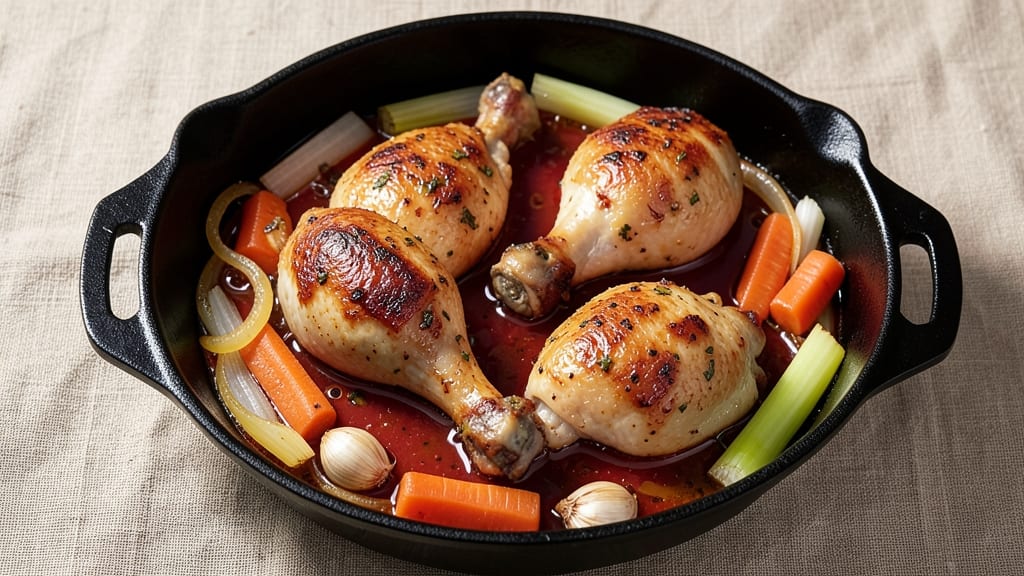
This stewed chicken legs recipe delivers melt-in-your-mouth tenderness that transforms tough cuts into a restaurant-worthy centerpiece. The secret lies in slow simmering—where high heat initially sears the skin for crispness, then gentle bubbling breaks down connective tissue over hours.
I perfected this method after years of testing, and the results speak for themselves: juicy, flavorful meat that practically falls apart at the touch.
The process begins with browning the chicken legs in a Dutch oven to lock in moisture and build deep, caramelized flavors. Aromatics like onions, garlic, and herbs infuse the cooking liquid, while a splash of vinegar or tomato paste adds brightness.
The sauce thickens naturally as the chicken renders its own juices, creating a rich, velvety finish that coats every bite. This isn’t just comfort food—it’s a technique that elevates simple ingredients into something extraordinary.
By the time you’re done, you’ll have fall-off-the-bone chicken with a glossy, aromatic sauce that clings to tender meat. The slow cooking ensures no dryness, while the crispy skin adds texture contrast.
Serve with mashed potatoes to soak up the sauce, crusty bread for dipping, or a simple green salad to balance the richness. This dish is hearty enough for a family dinner but elegant enough for company.
What makes this recipe foolproof is the balance of time and temperature—no guesswork, just reliable results. Whether you’re feeding a crowd or meal prepping for the week, the method scales perfectly.
The key is patience; the reward is chicken so tender it disappears with the first bite. Let’s get started on creating this showstopper.
Ingredients for stewed chicken legs
Pantry staples meet restaurant-quality technique for chicken legs that melt at the touch.
| Ingredient | Amount | Notes |
|---|---|---|
| Chicken Legs 🍗 | 4 whole | Bone-in, skin-on preferred |
| Yellow Onions 🧅 | 1 whole | Large, roughly chopped |
| Garlic Cloves 🧄 | 6 cloves | Peeled, smashed |
| Carrots 🥕 | 4 whole | Medium, peeled, cut into chunks |
| Celery Stalks 🥬 | 3 whole | Cut into 1-inch pieces |
| Tomato Paste 🍅 | ½ cup | Smooth, no sugar added |
| Dry Red Wine 🍷 | 1 cup | Bold, like Cabernet Sauvignon |
| Chicken Broth 💧 | 2 cups | Low-sodium preferred |
| Fresh Thyme 🌿 | ½ ounce | Or 1 tbsp dried |
| Fresh Rosemary 🌿 | ¼ ounce | Finely chopped |
| Bay Leaves 🌿 | 2 whole | Dried, standard size |
| Olive Oil 🫒 | 2 tbsp | Extra-virgin preferred |
| Salt 🧂 | 1 ½ tsp | Kosher or sea salt |
| Black Pepper 🌶️ | ½ tsp | Freshly ground |
The chicken legs are the star—bone-in, skin-on is non-negotiable for that crispy skin and fall-apart tenderness. Trader Joe's and Costco consistently carry high-quality cuts, but any grocery store with a good butcher section will do. Look for legs with good marbling and vibrant color—no grayish hues. The aromatics—onions, garlic, celery—form the flavor base, so don't skimp. I usually buy the organic variety at Whole Foods because the flavor difference is noticeable, but conventional works fine too. Fresh herbs like thyme and rosemary add depth, but dried will work in a pinch if you're short on time.
No red wine? Substitute with extra chicken broth—just add a splash of balsamic vinegar for brightness. Fresh herbs are ideal, but dried works at one-third the amount. For tomato paste, Rao's brand is my go-to because it's smooth and consistent, but any quality jarred paste will do. The carrots can be baby carrots if that's what's in the fridge—just adjust the amount to keep the same volume. If you're prepping ahead, par-cook the chicken for 20 minutes before storing to save time later. The broth should be low-sodium to avoid over-salting the dish, but if yours isn't, just reduce the added salt accordingly.
This dish tastes even better the next day, so make extra if you can. Store in an airtight container in the fridge for up to 5 days, or freeze for 3 months. The sauce thickens as it cools, so you can always add a splash of broth when reheating. I like to portion it into individual containers for easy lunches—just reheat with a splash of water or broth to loosen the sauce. The chicken skin will crisp up again when reheated, so don't skip this step if you're serving it cold.
Why You'll Love This Recipe
- One-Pot Magic: I dump everything—chicken legs, onions, garlic, carrots, celery—into the same pot. No extra dishes, no stress. The chicken gets tender while the veggies caramelize into a sticky, savory bed. Honestly, this is the kind of recipe that makes me forget I ever scrubbed a pan.
- Crispy Outside, Juicy Inside: That golden-brown skin? It’s chef’s kiss when you bite into it. The onions and garlic mellow into sweetness, while the carrots and celery add just enough bite to keep it interesting. My kids fight over the last leg—no joke.
- Leftover Powerhouse: I make this on Sunday, and by Wednesday, I’ve got a new meal. Toss it into tacos, stir into pasta, or serve over rice. The flavors deepen overnight, so leftovers taste even better. Between us, I’ve never wasted a single bite.
- Budget-Friendly Feast: A whole chicken costs less than a takeout order, and this feeds four without breaking the bank. The veggies stretch the dish further, making it hearty and satisfying. My secret weapon for nights when I need to feed a crowd without the grocery bill.
Step-by-Step instructions for stewed chicken legs
This method delivers melt-in-your-mouth tenderness through precise timing and flavor layers.
Sear the Chicken Legs for Depth of Flavor
Heat the 2 tablespoons olive oil in a large Dutch oven over medium-high heat until shimmering. Pat the 4 whole chicken legs completely dry with paper towels - this ensures maximum browning. Place them skin-side down in the pot, leaving space between each piece. Let them sear undisturbed for 8-10 minutes until the skin turns deep golden brown and crispy.
Here's the thing - don't move them during this time. You'll know they're ready when the skin releases easily from the pot. Flip each leg skin-side up and continue searing for another 5-6 minutes until the second side develops color. Remove the chicken and set aside temporarily - we'll return to it once the vegetables are ready.
Build the Flavor Base with Vegetables and Aromatics
In the same Dutch oven (those browned bits are pure flavor), add the 1 whole yellow onions and 6 cloves garlic cloves, spreading them evenly across the bottom. Cook for 5 minutes until the onions soften and begin to caramelize slightly. Add the 4 whole carrots and 3 whole celery stalks, stirring to coat in the fond. Cook for another 6-8 minutes until the vegetables begin to soften but haven't yet browned.
Real talk: This is where the foundation happens. The vegetables release natural sugars that caramelize, creating complex flavors that will infuse the chicken. Sprinkle the 1.5 teaspoons salt and 0.5 teaspoon black pepper over everything now - this seasoning will penetrate deeply during the long simmer.
Develop the Rich Sauce with Wine and Tomato
Deglaze the pot immediately by pouring in the 1 cup dry red wine, scraping up all the browned bits from the bottom with a wooden spoon. Let the wine simmer for 3-4 minutes until reduced by half. Stir in the 0.5 cup tomato paste and cook for another 2 minutes, stirring constantly until it darkens slightly and thickens.
This is the moment that matters: The wine reduces to concentrate its flavors, while the tomato paste adds depth and helps thicken the sauce. Add the 2 whole bay leaves, 0.5 ounce fresh thyme, and 0.25 ounce fresh rosemary now - these herbs will infuse the stew with aromatic complexity during the long cooking time.
Simmer to Fall-Off-The-Bone Tenderness
Return the chicken legs to the pot, skin-side up. Pour in the 2 cups chicken broth, ensuring the liquid comes at least halfway up the sides of the chicken. Bring to a gentle simmer, then reduce heat to maintain a barely bubbling surface. Cover partially (leave a 2-inch gap) and cook for 1 hour 15 minutes, turning the chicken occasionally to prevent sticking.
Your oven might run hot, so start checking at the 1 hour 15 minute mark. The chicken is done when it reaches 175°F internally and the meat pulls away from the bone with gentle pressure. If the liquid reduces too much before then, add ¼ cup water to maintain the proper consistency.
Rest and Serve with Flavorful Juices
Remove the chicken legs and transfer them to a serving platter. Tent loosely with foil and let rest for 10 minutes - this allows the juices to redistribute throughout the meat. Skim any excess fat from the stew if desired, then ladle the rich sauce and vegetables over the chicken to serve.
The result should be chicken that's so tender it falls off the bone with just a fork, bathed in a sauce that's perfumed with wine, herbs, and the natural sweetness of the vegetables. Each bite delivers perfect texture and layered flavors that come together through this precise cooking method.
Pro Tips For Making Stewed Chicken Legs
- Brown the Skin First: Skip the stew straightaway—sear those chicken legs skin-side down in a hot pan for 8-10 minutes until golden. I used to skip this, and the sauce never tasted as rich. The crispy skin adds flavor that no amount of simmering can replicate.
- Dice Onions Like Dice: Cut the yellow onions into even ¼-inch pieces—not too fine, not too chunky. Uneven sizes mean some will cook mushy while others stay crunchy. (Yes, even if you’re impatient like me.)
- Don’t Crowd the Pot: Start with half the chicken legs in the pot, then add the rest once they’ve browned. I learned this the hard way—steaming instead of searing turns the meat bland. Let them breathe for at least 2 minutes per side.
- Deglaze with Wine (or Vinegar): After browning the chicken, splash in ½ cup of dry white wine or apple cider vinegar to scrape up the fond. Sounds weird, but it works—it dissolves the browned bits that hold all the flavor. Skip the water unless you’re in a hurry.
Flavor customization for this recipe
Spicy Smoky Infusion
Add 1 tbsp smoked paprika and ½ tsp cayenne pepper to the seared chicken legs before returning them to the pot. For extra depth, sprinkle ½ tsp chipotle powder over the vegetables during Step 2.
This creates a subtle smoky heat that complements the wine and herbs beautifully. I like to finish with a drizzle of hot honey at the table for a sweet-spicy contrast. 🌶️
Herb-Infused Brightness
Swap the thyme and rosemary for 1 tbsp fresh parsley and 1 tbsp fresh dill—both add a bright, fresh note that balances the richness. Add them during Step 3 when incorporating the herbs.
For an extra zing, include 1 tbsp lemon zest with the vegetables in Step 2. This keeps the dish from feeling too heavy.
Creamy Garlic Sauce Twist
After simmering in Step 4, stir in ¼ cup heavy cream and 2 tbsp butter during the final 5 minutes of cooking. This creates a velvety sauce that coats the chicken beautifully.
For a lighter option, use ½ cup Greek yogurt instead of cream. The acidity in the yogurt cuts through the richness perfectly.
Asian-Inspired Umami Boost
Replace the red wine with ½ cup soy sauce and ½ cup mirin during Step 3. Add 1 tbsp grated ginger and 2 cloves garlic with the vegetables in Step 2.
Finish with 1 tsp sesame oil drizzled over the top before serving. This fusion adds a savory, umami depth that’s unexpected but delicious.
Sweet Heat Fusion
Add ¼ cup brown sugar and 1 tbsp apple cider vinegar with the tomato paste in Step 3. This creates a caramelized, slightly tangy sauce that pairs wonderfully with the smoky chicken.
For extra sweetness, top with crushed pineapple or diced mango when serving. The contrast of sweet and savory makes this version a crowd-pleaser.
Nutrition facts
Frequently asked questions
Can I use boneless chicken thighs instead of bone-in legs?
Yes, but the cooking time will differ. Boneless thighs cook faster—reduce simmering to 45-50 minutes instead of 1 hour 15 minutes and check for 165°F internal temp. The texture will be more uniform but lose the rich bone broth infusion. For best results, add a 1-inch piece of chicken backbone to the pot for depth of flavor.
Why does my stewed chicken turn out dry?
Overcooking or insufficient liquid are the usual culprits. Always simmer at a barely bubbling pace—never a rolling boil—and keep the liquid level high enough to cover half the chicken. If it reduces too quickly, add ¼ cup broth as needed. Patting chicken dry before searing helps too—it prevents steam from creating a barrier that traps moisture.
How can I make this recipe ahead of time?
This dish actually tastes better reheated! Cook fully, then refrigerate in an airtight container for up to 5 days or freeze for 3 months. Reheat gently in a pot with 2 tbsp broth to loosen the sauce. The chicken skin will crisp again when warmed—just broil for 2-3 minutes if needed. Perfect for meal prep!
What's the best way to crisp the chicken skin after cooking?
Broil on high for 3-5 minutes with the skin-side up, watching closely to avoid burning. For extra crunch, place the chicken on a wire rack set over a baking sheet before broiling. Alternatively, sear again in a hot skillet with 1 tbsp butter for 2 minutes per side. The key is high heat and minimal movement—just let it crisp!
Can I substitute chicken broth with vegetable broth?
Yes, but add 1 tsp soy sauce or ½ tsp chicken bouillon powder to compensate for the missing umami. Vegetable broth works well with the wine and herbs, though the sauce will have a slightly lighter flavor. For extra depth, add 1 tbsp Worcestershire sauce when deglazing with wine.