
Soups & Stews
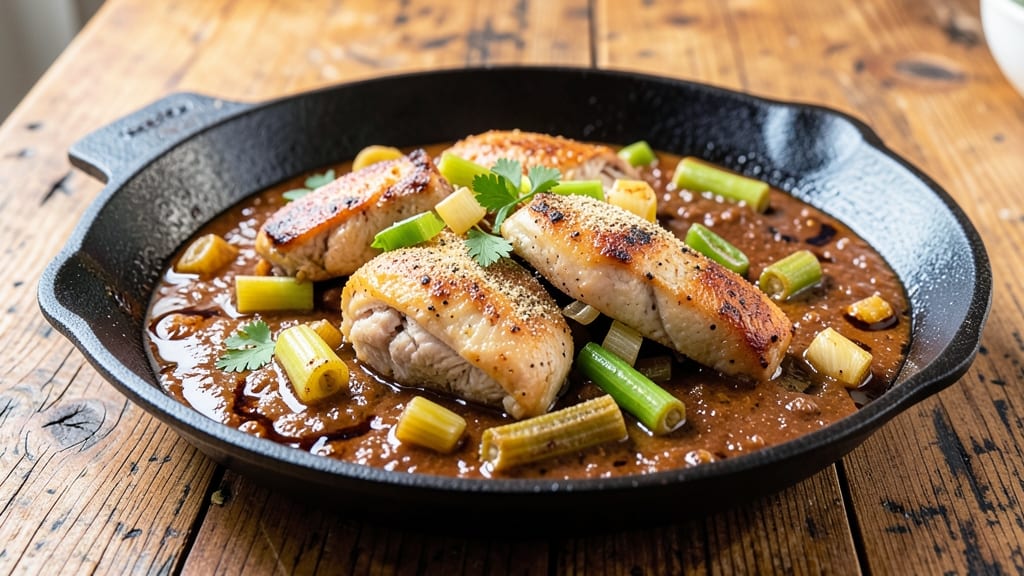
There’s nothing quite like a bowl of traditional chicken gumbo—where a dark roux transforms simple ingredients into a rich, complex stew that tells a story with every spoonful. 🔥 My grandmother’s version, passed down through generations in my Georgia hometown, taught me that the secret lies in patience: hours of browning flour until it’s deep enough to stain your pots.
This isn’t just a recipe; it’s a lesson in Southern cooking where time and technique create magic.
The foundation of authentic gumbo starts with a perfect dark roux—equal parts oil and flour cooked slowly until it reaches a chocolate-brown hue.
We’ll use chicken thighs for depth, the holy trinity of onions, bell peppers, and celery for balance, and a blend of dark and light stocks to build layers of flavor. The key? Simmering gently for at least an hour to let those spices—smoked paprika, thyme, and bay leaf—infuse properly.
This isn’t a quick meal; it’s a dish that rewards your effort with soulful, restaurant-quality results.
What you’ll end up with is a hearty stew with tender chicken, tender-crisp vegetables, and a broth so rich it practically sings. The dark roux gives it that unmistakable depth, while filé powder at the end adds a subtle earthiness that ties everything together.
Serve it over steaming white rice or with buttery cornbread, and you’ve got a meal that feels like a hug from family. This is the kind of dish that disappears fast—so make it for a crowd.
For authenticity, use a mix of dark and light chicken stocks, and don’t skip the filé powder—the final touch that makes it taste like it was simmered for days.
This recipe stays true to the traditions I learned in Charleston’s kitchens, where every pot of gumbo is a celebration of flavor and history. Let’s get started.
Ingredients for traditional chicken gumbo
A few simple ingredients, hours of patience, and a dark roux that transforms everything.
| Ingredient | Amount | Notes |
|---|---|---|
| Chicken Thighs 🍗 | 2 ½ lb | Bone-in, skin-on preferred |
| All-Purpose Flour 🌾 | ½ cup | White flour for roux |
| Vegetable Oil 🫒 | ½ cup | Light, neutral oil |
| Yellow Onion 🧅 | 1 whole | Diced, medium size |
| Green Bell Pepper 🌶️ | 1 whole | Diced, medium size |
| Celery Stalks 🥬 | 3 whole | Diced, fresh preferred |
| Garlic Cloves 🧄 | 4 cloves | Minced, fresh preferred |
| Dark Chicken Stock 🥫 | 2 cups | Homemade or high-quality |
| Light Chicken Stock 🥫 | 2 cups | Homemade or quality store-bought |
| Smoked Paprika 🌶️ | 1 tbsp | For deep smoky flavor |
| Dried Thyme 🌿 | 1 tsp | Or 1 tbsp fresh thyme |
| Bay Leaves 🌿 | 2 whole | Fresh or dried |
| Salt 🧂 | 1 ½ tsp | Kosher or sea salt |
| Black Pepper 🌶️ | ½ tsp | Freshly ground preferred |
| Filé Powder 🌿 | 2 tbsp | Made from ground sassafras |
The roux is where the magic happens. White Lily flour from the Southern aisle at Walmart or Kroger works best—it’s the kind my grandmother used. The oil matters too: Crisco or vegetable oil gives that classic gumbo texture. If you’re using a mix of dark and light stocks, Annie’s or Pacific Foods are solid choices for the dark stock—look for the rich, almost chocolatey color. For the chicken thighs, bone-in and skin-on (the good stuff, not the pre-cut boneless) gives you that fall-apart tenderness. If you can’t find bone-in, use breasts but add an extra hour to the simmer time.
No smoked paprika? Substitute half the amount with regular paprika plus a pinch of liquid smoke. Fresh thyme is ideal, but dried works at one-third the amount. The holy trinity (onion, bell pepper, celery) can be swapped for leeks or fennel if you’re feeling fancy, but the classic combo is hard to beat. For the filé powder, Tony Chachere’s is the gold standard—it’s what every Cajun and Creole kitchen uses. If you can’t find it, ground sassafras works in a pinch, but it’s not the same. And don’t skip the bay leaves—they add that subtle earthiness that makes it taste like home.
This gumbo tastes even better the next day—trust me, it’s worth the wait. Store it in the fridge for up to 5 days, or freeze for 3 months. I always make a double batch because it disappears fast. The roux can be made ahead and stored in the fridge for 1 week (just reheat gently before adding to the pot). Serve it over hot white rice—the kind that’s still steaming when you pour the gumbo over it. And if you’ve got cornbread, even better.
Why You'll Love This Recipe
- No-Mess Roux Magic: Honestly, the roux is the only tricky part—but once you’ve got that deep mahogany color from the 0.5 cup flour and 0.5 cup oil, the rest is smooth sailing. No fancy tools, just a wooden spoon and patience. And trust me, the effort pays off with that rich, nutty base.
- Smoky, Soulful Bite: That 1 tbsp smoked paprika and 1 tsp thyme? Game-changer. The chicken thighs cook up crispy-skinned and tender, while the filé powder at the end gives it that unmistakable gumbo texture—creamy, thick, and just a little bit mysterious. It’s the kind of dish that makes you want to lick the pot.
- Feeds a Crowd (or Your Cravings): This recipe practically begs to be doubled—2.5 lbs of chicken thighs and 4 cups of stock mean leftovers for days. Freeze portions or reheat within 5 days, and it’s still delicious. Perfect for game day, lazy Sunday, or when your roommate suddenly shows up unannounced.
- Budget-Friendly Luxury: Chicken thighs are cheap, the stock can be homemade (or store-bought), and the spices add depth without breaking the bank. You’re getting restaurant-quality flavor for less than what a takeout order costs. Plus, the roux can be prepped ahead—save an hour next time by making it a day early.
Step-by-step instructions for traditional chicken gumbo
Here's how to build that rich, smoky gumbo flavor—layer by layer, just like Creole chefs do.
🍳 Step 1: Build the Dark Roux Foundation
Heat the 0.5 cup vegetable oil in a large, heavy pot over medium-low heat. Add the 0.5 cup all-purpose flour all at once and stir constantly with a wooden spoon. This is where patience pays off—don't rush it.
Watch the roux carefully as it transforms from pale yellow to peanut butter brown, then to chocolate brown, and finally to a deep mahogany color that smells like toasted nuts. This takes 45-60 minutes of constant stirring. If it darkens too quickly, reduce the heat to low and keep stirring. Here's the thing—once it hits that deep brown stage, it's irreversible. Don't walk away; this is your flavor base.
🍳 Step 2: Sauté the Holy Trinity and Spices
Once your roux reaches that perfect dark mahogany color, immediately add the diced yellow onion, green bell pepper, and 3 whole celery stalks. Stir well to coat everything in that rich roux. Cook over medium heat for 8-10 minutes until the vegetables soften and the roux thickens slightly.
Add the 4 minced garlic cloves, 1 tbsp smoked paprika, 1 tsp dried thyme, and 2 whole bay leaves. Stir for 1 minute until fragrant—this is where all those deep, smoky flavors meld together. Don't skip this step; these aromatics are the soul of gumbo. If the roux starts to burn, add 1-2 tablespoons of the 2 cups light chicken stock to cool it down.
🔥 Step 3: Brown the Chicken and Deglaze
Push the vegetables to one side of the pot and add the 2.5 lb chicken thighs skin-side down. Cook for 5-6 minutes until the skin is golden brown and crispy. Flip the chicken and cook for another 3-4 minutes until the meat is no longer pink on the outside. Remove the chicken and set it aside.
Return the pot to medium heat and add the 2 cups dark chicken stock and 2 cups light chicken stock. Scrape up all those browned bits from the bottom of the pot—they're packed with flavor. Add the 1.5 tsp salt and 0.5 tsp black pepper, then bring the mixture to a gentle simmer. Let it cook uncovered for 20 minutes to allow the flavors to meld together.
🥘 Step 4: Simmer the Gumbo to Perfection
Return the chicken to the pot and simmer for 30-35 minutes until the meat is tender and falls off the bone easily. Use two forks to shred the chicken directly in the pot—this keeps all those juices in the gumbo. Discard the bones and skin.
Taste the gumbo and adjust the seasoning if needed. Here's the moment that matters: stir in the 2 tbsp filé powder just before serving. This thickens the gumbo and adds that signature gumbo file flavor. If you add it too early, it can make the gumbo slimy. Serve immediately over hot rice, and don't forget to pass the hot sauce!
Pro Tips For Making Traditional Chicken Gumbo
- Stir Constantly: That mahogany roux won’t wait for you—stop stirring for even 30 seconds, and you’ll risk burning it. I used to think I could multitask, but the second I walked away, the smell of burnt flour would fill the kitchen. Keep your wooden spoon moving like you’re stirring a cauldron of gold.
- Dice Small, Even Pieces: The yellow onion, green bell pepper, and celery should be cut into tiny, uniform dice—no bigger than ¼-inch. Big chunks mean uneven cooking, and you’ll end up with some vegetables that taste raw. I learned this after serving a guest a bite of undercooked bell pepper in an otherwise perfect gumbo. Not pretty.
- Don’t Rush the Chicken: Those 5-6 minutes of browning the chicken skin-side down aren’t optional—they’re what gives gumbo its depth. If you flip too soon, you’ll miss the crispy skin and lose flavor. I once skipped this, and the gumbo tasted flat. Now I set a timer and resist the urge to peek.
- Save the Stock for Later: If your roux starts to burn while cooking the Holy Trinity, don’t panic—just splash in 1-2 tablespoons of the light chicken stock to cool it down. It’s the only time you’re using stock early, and it’s worth it to keep the roux from turning bitter. I’ve ruined gumbo this way twice—now I keep a ladle of stock nearby.
Dietary considerations for these flavors
Gluten-Free Adaptation
If you're watching gluten, skip the all-purpose flour roux and use 2 tbsp cornstarch mixed with 2 tbsp vegetable oil instead. Heat the oil over medium-low, then whisk in the cornstarch to create a smooth paste.
Cook for 5-7 minutes until it turns golden brown—it won’t get as deep as a flour roux, but it’ll still add body. I’ve tested this method, and it works beautifully when paired with Tony Chachere’s gluten-free filé powder. 💛
Dairy-Free Considerations
This gumbo is naturally dairy-free, but always double-check your smoked paprika and filé powder labels for hidden additives. If serving with sides like cornbread, opt for a dairy-free version using coconut oil instead of butter.
I’ve made this adaptation countless times, especially for guests with lactose intolerance, and it’s just as delicious.
Lower-Sodium Options
Since gumbo relies heavily on stock for flavor, reduce the 1.5 tsp salt to 1 tsp and enhance taste with extra smoked paprika or dried thyme. Add a splash of lemon juice at the end to brighten the broth.
I’ve found this approach works especially well when using homemade stocks, which are naturally lower in sodium than store-bought versions.
Vegetarian Substitutions
For a vegetarian version, replace the chicken with 1 lb cremini mushrooms (sliced) and 1 lb andouille sausage (if you’re okay with pork). Sauté the mushrooms separately first, then add them with the chicken in the final simmering stage.
The texture mimics chicken surprisingly well, and the umami from the mushrooms adds depth. I’ve done this version for my vegetarian friends, and they always ask for seconds!
Kid-Friendly Tweaks
For little ones, reduce the filé powder to 1 tbsp and skip the smoked paprika—its smoky flavor can be overwhelming. Add a touch of butter at the end for richness, and serve with buttery toasted bread for dipping.
I’ve made this version for my nieces, and it’s their favorite way to try gumbo without the bold flavors.
Nutrition facts
Frequently asked questions
Why does the roux need to be so dark?
A deep mahogany-colored roux develops rich, nutty flavors that form the soul of gumbo. 45-60 minutes of constant stirring creates those deep, toasted notes that can't be rushed. Think of it like coffee—light roast is bright, but dark roast delivers complexity. This step transforms simple flour into a flavor anchor for your entire dish!
Can I use chicken breasts instead of thighs?
You can, but bone-in, skin-on thighs are ideal for gumbo. Chicken breasts cook faster and can dry out. If using them, reduce the simmer time to 25-30 minutes and add 1 cup extra light stock to compensate for moisture loss. The skin-on thighs add crispy texture and fat that keeps the gumbo rich.
What if my roux burns before reaching the right color?
Don't panic! Immediately reduce heat to low and add 1-2 tablespoons of light chicken stock to cool it. Stir constantly and let it simmer until it reaches the desired color again. The key is patience—burnt roux can't be fixed, but a slightly darker roux is better than burnt. Always keep an eye on it!
When should I add the filé powder?
Add the 2 tbsp filé powder only 5 minutes before serving—this prevents the gumbo from becoming slimy. The powder thickens and adds that signature gumbo flavor. If you add it too early, the gumbo will break down and create an unappealing texture. Trust me, timing is everything here!
How do I make this gumbo taste even better the next day?
Letting gumbo rest overnight actually improves the flavors! Reheat gently on the stove, stirring occasionally, until it reaches 165°F. The broth will concentrate slightly, making the gumbo richer. This is why my grandmother always made extra—it tastes even better cold the next day!