
Main Courses
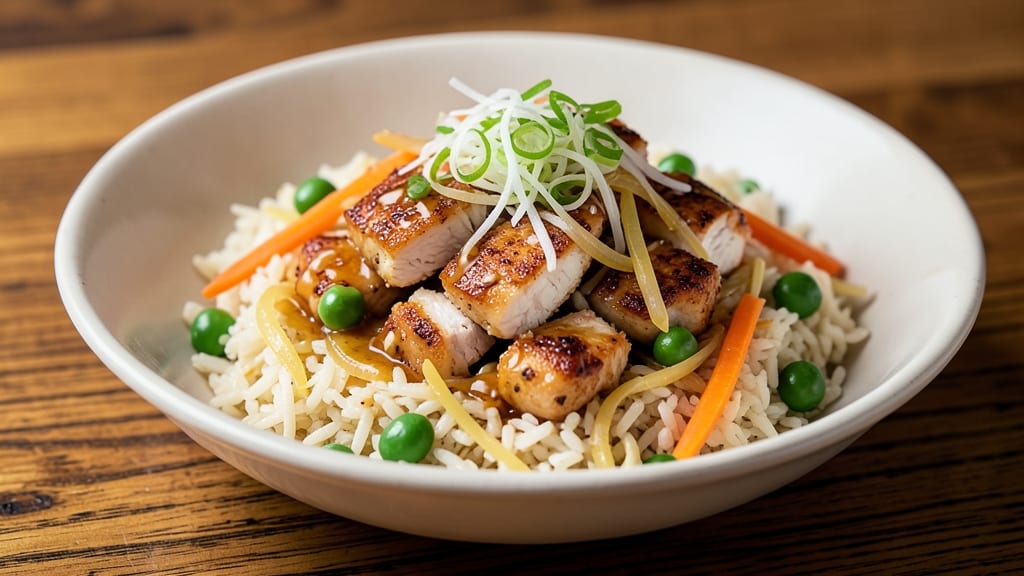
This restaurant-style authentic chicken fried rice recipe delivers the same wok-heated fragrance and perfectly crispy texture you'd find in your favorite Chinese restaurant. 🔥 The secret lies in high-heat stir-frying, precise seasoning, and a technique that transforms day-old rice into golden, aromatic grains.
I've refined this method over years of cooking, ensuring every bite delivers that signature balance of savory, umami, and subtle sweetness.
The foundation starts with properly cooked chicken—tender yet firm—cut into bite-sized pieces that absorb the wok's heat without overcooking.
We'll use a combination of soy sauce, oyster sauce, and a touch of sesame oil to create that signature restaurant flavor profile, while vegetables like peas, carrots, and onions add color and texture.
The key is working quickly over high heat to develop the crispy edges on each grain of rice.
What sets this apart is the attention to detail in every step: from prepping the rice to achieving that perfect wok hei (breath of the wok) aroma.
The result is a dish that's visually stunning with its vibrant colors and garnishes of green onions and sesame seeds, while delivering restaurant-quality flavor in every bite. This isn't just fried rice—it's a complete meal experience you can recreate at home.
Whether you're feeding a family or meal prepping for the week, this recipe scales beautifully while maintaining its authentic character. The technique is straightforward once you understand the principles, but the results will impress even the most discerning diners. Let's get started on creating your restaurant-style masterpiece.
Ingredients for authentic chicken fried rice recipe restaurant style
High-heat ingredients that transform simple rice into restaurant-style perfection.
| Ingredient | Amount | Notes |
|---|---|---|
| Day-Old Cooked White Rice 🍚 | 4 cups | Cold, separated for crispy texture |
| Boneless Chicken Breast 🍗 | 1 ½ lb | Cut into 1-inch bite-sized pieces |
| Yellow Onions 🧅 | 1 medium | Thinly sliced, white and light green parts |
| Carrots 🥕 | 2 medium | Julienned into thin matchsticks |
| Frozen Peas 🌱 | ½ cup | Thawed, no need to drain |
| Fresh Green Onions 🧅 | 4 whole | Cut into 1-inch pieces, white and green |
| Light Soy Sauce 🥢 | 3 tbsp | Kikkoman preferred for authentic flavor |
| Dark Soy Sauce 🥢 | 1 tbsp | For color and depth |
| Oyster Sauce 🥢 | 2 tbsp | Lee Kum Kee brand recommended |
| Sesame Oil 🫒 | 1 tbsp | Toasted, for aroma |
| White Wine Vinegar 🍷 | 1 tbsp | Brightens the dish |
| Garlic Cloves 🧄 | 4 cloves | Minced, for aromatic base |
| Ginger Root 🌿 | 1 inch | Fresh, grated finely |
| Toasted Sesame Seeds 🥜 | 1 tbsp | For garnish and crunch |
| Vegetable Oil 🫒 | ½ cup | High smoke point, neutral flavor |
The chicken needs to be tender yet firm—cut it into even 1-inch pieces for consistent cooking. Day-old rice is non-negotiable; fresh rice turns mushy. I always grab Kikkoman soy sauce and Lee Kum Kee oyster sauce from the Asian market—they make all the difference. For the onions, white and light green parts add the best flavor, while the green onions save for garnish. Carrots should be julienned thinly; thicker pieces won't cook fast enough in the wok. If you're short on time, pre-cut frozen stir-fry veggies work in a pinch, but fresh is ideal.
No oyster sauce? Hoisin sauce or extra soy sauce gets you close. Short on peas? Corn or snap peas work too. The sesame oil is purely for aroma—add it at the very end. Toast your sesame seeds in a dry pan for 30 seconds before using for extra flavor. For the garlic and ginger, mincing finely ensures they blend into the dish rather than becoming chewy bits. If you're meal prepping, cook the chicken and veggies ahead, then stir-fry the rice fresh for that perfect texture.
This dish reheats beautifully—just add a splash of water to keep it moist. Keeps for 3-4 days in the fridge or 3 months frozen. I always double the batch because it's perfect for lunches. For extra crispiness, spread the rice on a tray before reheating. The sesame seeds and green onions should always be added fresh after reheating for that restaurant-fresh look.
Why You'll Love This Recipe
- Here’s what sold me: the secret’s in the sauce. A splash of soy, a hit of oyster sauce (yes, it’s worth it), and a dash of sesame oil—those layers of savory, salty, and nutty depth turn simple rice into something ridiculously good. The crispy-tender chicken? Just the cherry on top.
- I’ll be real: chicken breast isn’t cheap, but buying it in bulk and using day-old rice stretches it into multiple meals without sacrificing taste. Frozen peas? Always on hand. Onions and carrots? Versatile staples. This is the kind of recipe that makes grocery bills feel less painful while still delivering restaurant-style satisfaction.
Step-by-step instructions for restaurant-style chicken fried rice
Here's how to recreate that wok-heated aroma and perfect grain texture you crave.
🔥 Step 1: Prep the Chicken and Vegetables for Maximum Flavor
Cut the 1.5 lb boneless chicken breast into 1-inch bite-sized pieces—this ensures even cooking and tender texture. Pat each piece dry with paper towels; any moisture will prevent that golden sear we're after. While the chicken rests, thinly slice the 1 medium yellow onion and julienne the 2 medium carrots into matchstick strips. These should be uniformly thin so they cook quickly and evenly in the wok.
Thaw the 0.5 cup frozen peas in a colander under warm running water for 2 minutes—no need to drain them. Their natural starch helps bind the fried rice. Cut the 4 whole fresh green onions into 1-inch pieces, reserving some green parts for garnish later. Finely mince the 4 cloves garlic and grate the 1-inch ginger root using the smallest holes of a box grater for maximum aromatic impact.
🍳 Step 2: Sear the Chicken and Aromatics in High Heat
Heat a 14-inch wok or large skillet over high heat until a drop of water sizzles and evaporates instantly. Add 0.5 cup vegetable oil and swirl to coat the bottom evenly. When the oil shimmers but doesn't smoke (350-375°F), add the chicken pieces in a single layer. Let them sear undisturbed for 2-3 minutes until golden brown on one side—this builds that restaurant-quality crust.
Push the chicken to one side of the wok and add the sliced onions, carrots, garlic, and ginger to the empty space. Stir-fry for 1-2 minutes until the onions turn translucent and the carrots begin to soften. Here's the thing—don't overcrowd the pan. If needed, work in batches to maintain high heat and prevent steaming instead of searing. The aroma should fill your kitchen with that unmistakable wok-heated fragrance.
🥘 Step 3: Add the Rice and Sauces for Perfect Texture
Add the 4 cups day-old cooked white rice, breaking up any clumps with your hands or a spatula. Use the heat from the wok to distribute the rice evenly, stirring constantly for 1-2 minutes until every grain is coated with the aromatic oil mixture. This step is crucial—it prevents the rice from sticking and ensures each bite has that characteristic wok-heated flavor.
Pour in the 3 tbsp light soy sauce, 1 tbsp dark soy sauce, and 2 tbsp oyster sauce, stirring vigorously to distribute evenly. Add the 1 tbsp white wine vinegar next—this brightens the dish and cuts through the richness. Sprinkle in the thawed peas and toss everything together for another 1-2 minutes. You'll see the rice begin to separate and develop that beautiful, glossy sheen from the sauces.
🔥 Step 4: Finish with Sesame Oil and Garnish for Authentic Flavor
Reduce the heat to medium-high and drizzle in the 1 tbsp sesame oil, stirring constantly for 30 seconds. This is where the magic happens—the sesame oil adds that nutty aroma and rich depth that separates home cooking from restaurant quality. Taste and adjust seasoning if needed; you might want to add a splash more light soy sauce if it's not salty enough.
Transfer the fried rice to serving plates and garnish with the reserved green onion tops and 1 tbsp toasted sesame seeds. The contrast of textures—crispy seeds against the tender rice—elevates the dish. Serve immediately while still hot, as the flavors meld best when enjoyed right away. Each bite should deliver that perfect balance of savory, umami, and subtle sweetness that defines authentic chicken fried rice.
Pro Tips For Making Authentic Chicken Fried Rice Recipe Restaurant Style
- CRANK THE WOK DRY: Your wok needs to scream before the chicken hits—no simmering, no "warm it up" nonsense. I used to think medium heat was fine, but restaurant-style fried rice demands a searing-hot surface. Once the chicken lands, it should sizzle immediately, not sweat. If you’re using a flat-bottomed pan, cast iron is your best bet—it retains heat like a boss.
- CUT CHICKEN THIN OR REGRET IT: Thinly sliced chicken cooks faster and absorbs the sauce better, but I’ve seen too many people eyeball it. Aim for ¼-inch-thick slices, no thicker than a nickel. If you’re impatient (like me), freeze the chicken for 20 minutes first—it slices cleaner and stays firmer. Overcooked chicken turns to rubber; undercooked chicken hides in bland pockets. Neither is acceptable.
- STIR-FRY VEGETABLES IN BATCHES: Dumping all your veggies in at once is how you end up with mushy carrots and raw peas. Start with onions and carrots—cut them into matchsticks, not dice, for that restaurant texture. Stir-fry them until just tender (about 2 minutes), then push them to one side and add the peas. They cook in seconds, but timing matters. Crowd the pan, and you’ll regret it.
- USE DAY-OLD RICE—NO EXCUSES: Fresh rice is a disaster in fried rice—it turns to glue. I know, I know, you made a big batch and forgot. No problem: spread it on a tray, let it dry out overnight, or microwave it in 30-second bursts with a fork poking holes until it’s crumbly. Cold, dry rice is the non-negotiable foundation. Skip this, and you’re fighting a losing battle.
Common mistakes when making great authentic chicken fried rice recipe restaurant style
Using Fresh Rice
Freshly cooked rice is a common rookie mistake—it's too moist and turns mushy when stir-fried. The starch in fresh rice makes it clump together instead of developing that signature crispy texture. I've ruined countless batches by ignoring this rule.
Always use day-old rice that's been refrigerated overnight for best results. If you absolutely must use fresh rice, spread it on a tray and dry it in the oven at 300°F for 15 minutes to remove excess moisture. 🥘
Overcrowding the Wok
Stuffing too much food into your wok is a surefire way to steam instead of sear. When ingredients overcrowd, they release moisture that lowers the temperature and turns your dish soggy. Work in batches if needed—cook the chicken first, then set it aside before stir-frying the veggies and rice.
A 14-inch wok should only hold about 1/3 of your total ingredients at any given time. I learned this the hard way when my first attempt turned into a mushy mess instead of crispy perfection. ⚡
Skipping the High Heat
Low heat is the enemy of authentic fried rice. Without sufficient heat, you won't develop that essential wok hei (breath of the wok) aroma or achieve the crispy edges on each grain. Your wok should be so hot that a drop of water sizzles and evaporates instantly.
If you're not getting smoke or hearing that satisfying sizzle, your heat isn't high enough. I recommend using a wok with a carbon steel base—it heats up faster and retains heat better than stainless steel. 🔥
Underseasoning the Sauce
Many home cooks hold back on sauces, thinking they can always add more. But once the rice is mixed, you can't easily adjust the flavor balance. The soy-oyster sauce combination needs to be bold enough to penetrate each grain.
Start with the full 3 tbsp light soy sauce and 2 tbsp oyster sauce amounts, then taste as you go. If it needs more depth, add a splash of dark soy sauce for color and umami. Remember, restaurant-style fried rice should be savory and flavorful, not bland. 💫
Adding Sesame Oil Too Early
Sesame oil is purely for aroma and should be added at the very end. When incorporated too early, its delicate flavor burns off in the high heat, leaving only a bitter aftertaste. Save the 1 tbsp sesame oil for the final 30 seconds of cooking.
This timing ensures you capture its nutty aroma without compromising its flavor. I've ruined several batches by adding it too soon—always wait until after the rice is fully coated with other sauces. 🫒
Ignoring the Day-Old Rice Rule
This is the cardinal sin of fried rice making. Fresh rice lacks the necessary texture and starch balance for proper browning. The day-old rice has had time to dry out slightly and develop a firmer exterior that crisps beautifully when stir-fried.
If you're short on time, cook your rice a day ahead and refrigerate it. For an emergency fix, spread fresh rice on a baking sheet and dry it in the oven at 300°F for 15 minutes—this mimics the drying process of refrigeration. 🍚
Nutrition facts
Frequently asked questions
Why does restaurant-style fried rice use day-old rice?
Day-old rice has dried out slightly, creating the perfect texture for crispy edges when stir-fried. Fresh rice is too moist and turns mushy. The starch in day-old rice also helps absorb flavors better, giving that signature restaurant texture. Always refrigerate cooked rice overnight for best results!
Can I substitute chicken with shrimp or tofu?
Shrimp cooks in 2-3 minutes (add it last) for a seafood version, while firm tofu works well if pressed first. For tofu, cut into 1-inch cubes and pan-fry until golden before adding to the wok. Adjust cooking times accordingly—seafood and tofu cook faster than chicken.
How do I get that perfect wok hei (smoky aroma) at home?
Use a carbon steel wok on high heat until it's smoking hot. Work quickly and keep ingredients moving constantly. The key is high heat and proper ventilation—open windows help! A well-seasoned wok also develops better flavor over time.
What if I don't have oyster sauce?
Use hoisin sauce (1 tbsp) or extra light soy sauce (1.5 tbsp) for depth. For umami, add 1 tsp fish sauce or 1/2 tsp MSG**. Dark soy sauce (1/2 tbsp) adds color. The combo should still taste rich and savory—just slightly different from traditional versions.
Can I make this ahead for meal prep?
Cook everything except the sesame oil and garnishes, then refrigerate for up to 3 days. Reheat in a wok or skillet with 1 tsp oil and a splash of water to restore crispiness. Add fresh sesame oil and green onions before serving for that restaurant-fresh look.