
Main Courses
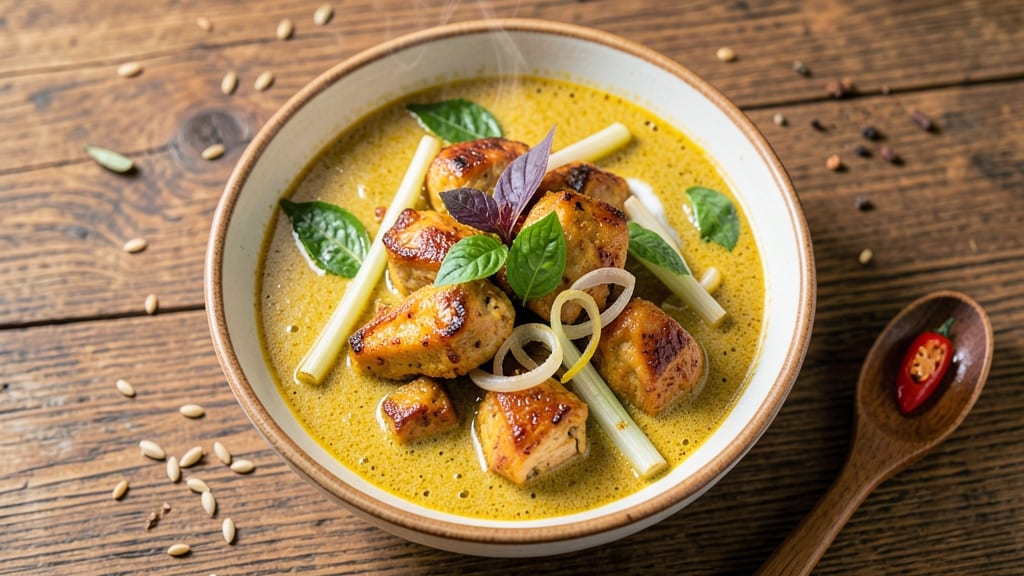
This authentic Thai yellow chicken curry recipe transports you straight to Bangkok with its vibrant turmeric hue and complex layers of flavor—creamy coconut milk, aromatic herbs, and a perfect balance of heat. The secret lies in fresh galangal, lemongrass, and kaffir lime leaves, which infuse the curry with authentic depth that store-bought pastes simply can't match. I've perfected this recipe over years of testing, ensuring every spoonful delivers that signature Thai harmony of spicy, tangy, and rich.
The process begins with building the curry paste from scratch, where turmeric gives its namesake golden color while galangal and lime leaves add their signature citrusy bite.
Chicken is seared first for depth, then simmered gently in coconut milk until tender, allowing all the flavors to meld without overpowering the delicate herbs. The key is patience—low heat ensures the curry develops its signature velvety texture rather than breaking apart.
What you'll end up with is a restaurant-quality curry that's vibrant yellow, fragrant with lemongrass, and perfectly balanced—creamy yet never heavy, spicy without being overpowering. The fresh herbs keep it bright, while the coconut milk adds luscious richness.
This isn't just a curry; it's a flavor experience that captures the soul of Thai cuisine in every bite.
Serve it over steamed jasmine rice for the full experience, or pair with a crisp cucumber salad to cut through the richness. The leftovers actually taste better the next day as the flavors deepen. Here's how to make it authentically at home.
Ingredients for authentic thai yellow chicken curry
Fresh herbs and aromatic spices bring Bangkok's vibrant flavors to your kitchen.
| Ingredient | Amount | Notes |
|---|---|---|
| Boneless, Skinless Chicken Thighs 🍗 | 1 ½ lb | Cut into 1-inch pieces |
| Fresh Galangal 🌿 | 1 inch | Thinly sliced (about 3 slices) |
| Stems Lemongrass 🌿 | 2 whole | Bruised and cut into 2-inch pieces |
| Kaffir Lime Leaves 🍋 | 4 whole | Torn into pieces |
| Fresh Turmeric 🌶️ | 1 inch | Grated (about 1 tbsp) |
| Shallots 🧅 | 4 whole | Peeled and finely chopped |
| Garlic Cloves 🧄 | 6 cloves | Peeled and minced |
| Coconut Milk 🥥 | 1 can | Full-fat, 13.5 oz |
| Fish Sauce 🍶 | 2 tbsp | Red Boat preferred |
| Palm Sugar 🍯 | 2 tbsp | Or light brown sugar |
| Thai Chili Paste 🌶️ | 1 tbsp | Adjust for heat preference |
| Vegetable Oil 🫒 | 2 tbsp | For searing chicken |
| Jasmine Rice 🌾 | 1 ½ cups | Uncooked, for serving |
| Fresh Cilantro 🌿 | ¼ cup | Chopped, for garnish |
| Lime Wedges 🍋 | 2 whole | For serving |
Galangal and kaffir lime leaves are the heart of this curry—Asian markets carry them fresh, or sub with ginger and lime zest if needed. Red Boat fish sauce is my go-to for authentic umami, but any good brand works. The turmeric should be vibrant orange; if it's dull, toast it lightly first. Shallots add sweetness, so don't skip them—Trader Joe's sells them pre-minced if you're short on time. For the lemongrass, bruise the stems with the side of your knife to release those magical oils.
No galangal? Ginger plus lime zest gets you close, though it won't be identical. Running out of kaffir lime leaves? Extra lime juice plus a few basil leaves help bridge the gap. The Thai chili paste can be swapped for 1 tsp cayenne plus 1 tsp sugar if you're avoiding it. Palm sugar? Any light brown sugar works—just dissolve it first. The coconut milk must be full-fat for that creamy texture; canned versions work fine—just shake well before opening.
Fresh herbs wilt fast, so store them in damp paper towels in the fridge for up to 3 days. The curry paste keeps for 1 week in the fridge or 3 months frozen. I always make double—freeze half in ice cube trays for quick future meals. The rice? Cook it ahead and reheat with a splash of water to keep it fluffy. Leftovers taste even better the next day as flavors meld.
Why You'll Love This Recipe
- No Chopping Nightmare: I swear by this recipe because the prep is actually minimal. Slice the chicken thighs into bite-sized pieces—done. Bruise the galangal and turmeric with the side of a knife (no peeling required, honestly). The lemongrass and kaffir leaves just get a rough chop, but you can even buy pre-cut stems if you’re in a rush. Five minutes of work, and you’ve got the aromatic base ready to simmer.
- Golden, Bright, Addictive: That first spoonful of curry paste—fresh turmeric and galangal—paints everything golden. The lemongrass and kaffir lime leaves add a citrusy depth that lingers, while the chicken thighs stay juicy and tender. It’s the kind of flavor that makes you pause mid-bite, even if you’ve made it a dozen times before.
- Weeknight to Party Fix: This curry is my secret weapon for lazy Tuesdays and when friends drop by unannounced. Serve it over jasmine rice with a side of cucumber salad for a no-fuss dinner, or pile it onto toast with a fried egg for brunch. The leftovers? Even better the next day—just reheat and add a splash of coconut milk.
- Budget-Friendly Comfort: Chicken thighs are forgiving and affordable, and you’re using whole spices (no pricey jars here). A single stalk of lemongrass and a few galangal slices stretch across multiple meals—freeze the rest. The curry’s rich, satisfying flavor means you’ll eat it up without guilt, and the leftovers keep for days. My wallet and my taste buds thank me.
Step-by-step instructions for authentic Thai yellow chicken curry
Here's how to build this vibrant, aromatic curry that balances heat, sweetness, and herbal brightness.
Prepare the Chicken and Aromatics
Cut the 1.5 lb boneless, skinless chicken thighs into 1-inch pieces and set aside. In a large bowl, combine the 1 inch fresh galangal (thinly sliced), 2 whole stems lemongrass (bruised and cut into 2-inch pieces), 4 whole kaffir lime leaves (torn), and 1 inch fresh turmeric (grated). This aromatic bundle forms the curry's golden foundation.
I like to bruise the lemongrass by gently pounding it with the side of my knife—this releases its citrusy oils. The galangal and turmeric should be finely chopped so they dissolve into the sauce rather than remaining as distinct pieces. This prep ensures every bite carries that signature Thai yellow color and depth of flavor.
Sear the Chicken and Build the Curry Base
Heat the 2 tbsp vegetable oil in a heavy pot over medium-high heat until shimmering. Add the 4 whole shallots (peeled and finely chopped) and cook for 3-4 minutes until they soften and turn golden. Add the 6 cloves garlic (peeled and minced) and cook for 30 seconds until fragrant—don't let it brown or it'll turn bitter.
Push the shallots and garlic to the sides of the pot, add the chicken pieces in a single layer, and let them sear undisturbed for 2-3 minutes until golden brown on one side. Flip and repeat on the other side. This step creates a rich, nutty flavor that forms the backbone of the curry. Remove the chicken and set aside.
Develop the Curry Paste and Simmer
In the same pot, reduce heat to medium and add the prepared galangal-lemon grass-turmeric mixture. Stir for 1 minute until the raw aroma gives way to a warm, earthy scent. Add the 1 tbsp Thai chili paste and cook for 30 seconds, stirring constantly to prevent burning.
Pour in the 1 can coconut milk and scrape up any browned bits from the bottom of the pot. Add the 2 tbsp palm sugar and 2 tbsp fish sauce, then return the chicken to the pot. Bring to a gentle simmer and let it cook uncovered for 20-25 minutes, stirring occasionally, until the sauce thickens slightly and the chicken is tender.
Finish with Fresh Herbs and Lime
Taste the curry and adjust seasoning—add more fish sauce if it needs saltiness or more palm sugar if it needs sweetness. Stir in the 0.25 cup chopped fresh cilantro and let it wilt slightly into the sauce. Remove from heat and let it sit for 5 minutes to allow the flavors to meld.
Serve the curry immediately over 1.5 cups cooked jasmine rice, garnished with 2 whole lime wedges on the side. The lime's bright acidity cuts through the richness of the coconut milk, balancing the dish perfectly. This curry tastes even better the next day as the flavors deepen, so it's perfect for meal prep too.
Pro Tips For Making Authentic Thai Yellow Chicken Curry
- CHAR THE AROMATICS LOW: I learned this the hard way—blasting galangal and lemongrass on high heat turns them bitter fast. Once the oil shimmers, drop the heat to medium-low and let those aromatics sweat for 8-10 minutes until the galangal softens and releases its citrusy perfume. That’s when the curry starts building its soul.
- SLICE GALANGAL THIN: Thick chunks of galangal hide in the background while thin slices (about 1/8-inch) dissolve into the sauce. Peel first, then slice against the grain—it’s fibrous, so patience here means better flavor later. (Yes, even if you’re impatient like me.)
- PAT THE CHICKEN DRY: Wet chicken thighs steam instead of sear, and that’s a one-way ticket to bland curry. After cutting, blot them with paper towels, then season with salt and let them sit 10 minutes. The crust will form faster, and the meat stays juicy—no one wants rubbery chicken in their yellow curry.
- TOAST KAFFIR LIME LEAVES: Skip this, and the leaves just float like decorative paper. Crisp them lightly in a dry pan for 10 seconds per side—just until fragrant. Then tear them into the sauce at the end. The aroma hits differently, and the texture adds a subtle crunch that makes the curry feel restaurant-level. (Your future self will notice.)
Essential equipment for perfect results
Heavy-Bottomed Pot
Invest in a 5-6 quart heavy-bottomed pot—I use my All-Clad stainless steel—to handle the curry's simmering heat without scorching. The thick base distributes heat evenly, preventing hot spots that can burn your delicate galangal and lemongrass.
A Dutch oven works perfectly too, especially if you're also cooking rice in the same pot. 🔥
Curry Paste Mortar
For authentic texture, grind your curry paste in a traditional Thai mortar and pestle—available at Asian markets—or use a high-quality food processor like the Cuisinart DLC-2BC.
This ensures the paste develops the right consistency, blending galangal, lemongrass, and turmeric into a smooth, vibrant base. Avoid blenders—they can overheat and ruin the delicate flavors. ✨
Fine-Mesh Strainer
A stainless steel fine-mesh strainer (like the OXO Good Grips) is essential for separating the aromatic bundle from the curry sauce. This lets you infuse the broth with galangal and lemongrass oils without leaving fibrous bits in your dish.
I strain mine directly into the simmering pot for maximum flavor extraction. 💫
Measuring Spoons
Precision matters with Thai curry—small measuring spoons (like the OXO Good Grips 1/8 tsp to 1 tbsp set) help you balance fish sauce, palm sugar, and chili paste perfectly. I keep mine within arm's reach while cooking to adjust seasoning on the fly.
A red laser thermometer (like the Thermoworks Thermapen ONE) also helps monitor the oil's temperature during searing. 🌡️
Wooden Spoon
A long wooden spoon (I prefer bamboo) is your best tool for stirring the curry without scratching the pot or burning your hands. Wood conducts heat poorly, so it won't overheat like metal utensils.
Use it to scrape up those flavorful browned bits from the bottom—those are packed with umami goodness. 🍵
Lime Zester
While not mandatory, a zester (like the Microplane) lets you add fresh lime zest to your curry for an extra layer of brightness. A quick pass over the lime's outer layer adds citrusy depth without the liquid.
I also use it for the kaffir lime leaves' rind if I can't find fresh leaves. 🍋
Nutrition facts
Frequently asked questions
Why does authentic Thai yellow curry have that bright yellow color?
The vibrant yellow hue comes from fresh turmeric and the caramelization of shallots during cooking. The galangal and kaffir lime leaves also contribute to the depth of color while adding their signature citrusy, earthy flavors. Using powdered turmeric won't give the same authentic color or flavor profile.
Can I substitute ginger for galangal in this recipe?
Yes, but the flavor won't be identical. Use 1-inch ginger (about 2 tbsp grated) plus 1 tsp lime zest> to mimic galangal's citrusy, peppery bite. For the best results, find fresh galangal at Asian markets—it's worth the effort for that authentic Thai taste.
How do I adjust the heat level in this curry?
Start with 1 tbsp Thai chili paste> for medium heat. For milder curry, reduce to ½ tbsp> and add ½ tsp sugar> to balance. For extra spice, add 1-2 fresh Thai chilies>, sliced, during the final 5 minutes> of cooking. Always taste before serving!
What's the best way to store leftovers?
Let the curry cool completely, then store in an airtight container> in the fridge for up to 4 days>. The flavors actually improve overnight! Reheat gently on low heat, adding 1-2 tbsp water> to prevent drying out. Freeze for up to 3 months>—portion into single servings for easy reheating.
Can I make this curry in an Instant Pot?
Yes! Sauté the shallots, garlic, and chicken first, then add all remaining ingredients except coconut milk. Pressure cook for 12 minutes>, quick-release, then stir in coconut milk and simmer on high for 5 minutes>. The Instant Pot version cooks faster but may need slightly more fish sauce for depth.