
Main Courses
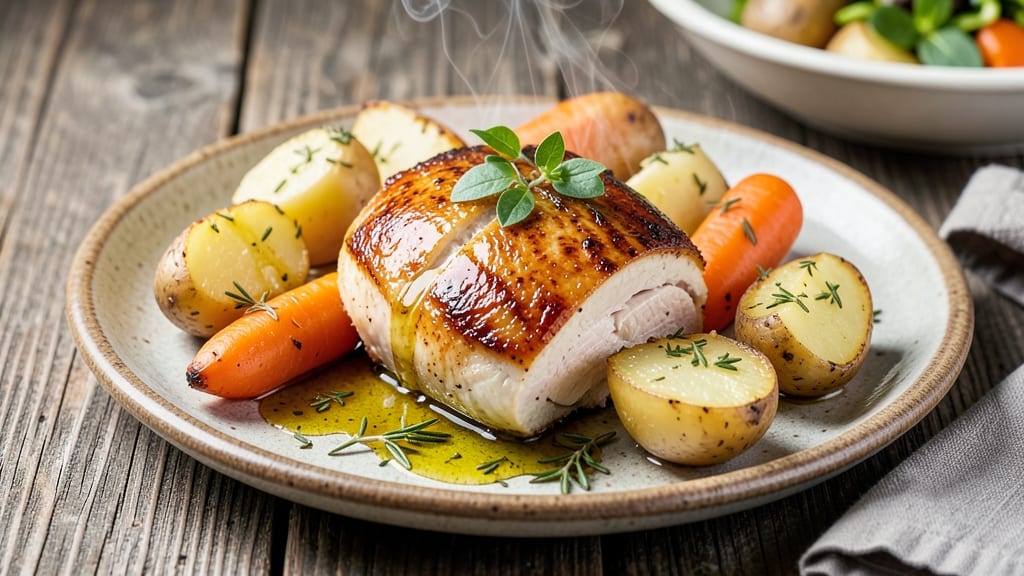
Baked chicken breast with potatoes and carrots transforms a weeknight dinner into a restaurant-worthy meal with minimal effort. The secret lies in a one-pan roast where tender, juicy chicken meets perfectly crispy potatoes and sweet, caramelized carrots—all seasoned with aromatic herbs. I developed this recipe after years of balancing protein and sides, ensuring every bite delivers satisfying texture and flavor without the fuss of multiple dishes.
What sets this dish apart is the herbed crispiness achieved through a simple technique: tossing the vegetables in olive oil and fresh herbs before roasting at 375°F for about 40 minutes.
The chicken, seasoned with salt, pepper, and garlic powder, cooks alongside the vegetables, absorbing their savory aromas while staying moist and flavorful. No need for complicated marinades or last-minute prep—just one pan, one oven, and a meal that feels special.
The result is a harmonious plate where golden-brown chicken rests atop crispy potatoes and tender carrots, their edges caramelized to perfection. The herbs infuse the entire dish with a bright, fresh aroma that elevates even the simplest ingredients.
This recipe is designed for those who want a wholesome, balanced meal without sacrificing flavor or convenience.
Perfect for family dinners, meal prep, or when you're craving comfort food that doesn’t require hours in the kitchen. The leftovers reheat beautifully, making it an ideal solution for busy schedules. Let’s get started with a dish that’s as satisfying as it is simple.
Ingredients for baked chicken breast with potatoes and carrots
Twelve ingredients, one pan, and a meal that rivals restaurant quality with minimal effort.
| Ingredient | Amount | Notes |
|---|---|---|
| Boneless, Skinless Chicken Breast 🍗 | 1 ½ lb | Pounded to even thickness |
| Baby Potatoes 🥔 | 1 ½ lb | Halved, unpeeled for texture |
| Carrots 🥕 | 1 lb | Whole, scrubbed and trimmed |
| Extra-Virgin Olive Oil 🫒 | ¼ cup | For tossing vegetables |
| Fresh Rosemary 🌿 | ¼ cup | Finely chopped, stems removed |
| Fresh Thyme 🌿 | ⅛ cup | Leaves only, finely chopped |
| Garlic Powder 🧄 | 1 tbsp | Freshly ground preferred |
| Kosher Salt 🧂 | 1 ½ tsp | Diamond Crystal preferred |
| Ground Black Pepper 🌶️ | ½ tsp | Freshly ground for best flavor |
| Dried Oregano 🍃 | 1 tsp | For additional herb depth |
| Fresh Parsley 🌿 | ⅛ cup | Chopped, for garnish |
| Lemon Juice 🍋 | 1 tbsp | Freshly squeezed |
The chicken breast is the foundation—look for evenly sized pieces at the meat counter to ensure consistent cooking. Whole Foods or local butchers often carry higher-quality cuts with better marbling. Pounding the breasts to even thickness guarantees juiciness, and I always season them first before adding to the pan. The potatoes and carrots should be firm and fresh, with no soft spots. Baby potatoes add a delightful crispiness, while whole carrots caramelize beautifully without overcooking. Fresh herbs like rosemary and thyme elevate the dish, so I recommend purchasing them from the grocery store's produce section just before cooking to preserve their potency.
No fresh rosemary? Dried rosemary at one-third the amount works in a pinch, though fresh provides superior aroma. Substitute dried thyme for fresh, but reduce to half the quantity since dried herbs are more concentrated. For garlic powder, garlic salt won't do—it throws off the seasoning balance. The olive oil should be extra-virgin for its fruity depth, though regular olive oil suffices if that's what you have. If you're short on time, pre-cut frozen vegetables can replace fresh, though they won't caramelize as beautifully. The lemon juice adds a bright finish, so freshly squeezed is ideal, but bottled lemon juice in a pinch won't ruin the dish.
This one-pan roast reheats beautifully—simply cover with foil and warm in the oven for 10-15 minutes. The leftovers keep for 4-5 days in the fridge, making this an ideal meal prep option. For longer storage, freeze the entire pan (without the lid) for up to 3 months. When reheating from frozen, add 5-10 minutes to the warming time. The herbs and lemon juice can be added fresh after reheating to revive their brightness.
Why You'll Love This Recipe
- One-Pan Magic: I swear by this recipe because it’s literally one pan, one oven, and zero stress. Toss the chicken, potatoes, and carrots together with olive oil and rosemary—no chopping boards full of mess, no pots to scrub later. The potatoes caramelize right alongside the chicken, and the carrots get that sweet, tender crunch without any fuss.
- Herb-Packed Perfection: That fresh rosemary? It’s the secret weapon. The needles infuse the chicken with a bright, piney aroma while the potatoes soak up the flavor like a sponge. Honestly, the first time I made this, my partner asked for seconds before the plate even hit the table—no sauce, no garnish, just pure, herby goodness.
- Meal Prep MVP: Between us, this is my go-to for busy mornings. Bake a big tray on Sunday, and you’ve got lunch or dinner covered for days. The chicken stays juicy when reheated, the potatoes hold their shape, and the carrots? They actually taste better the next day—sweet and tender, not sad or rubbery. (Yes, even on a Tuesday night.)
- Budget-Friendly Feast: Skinless chicken breasts and seasonal veggies won’t break the bank, but it feeds a crowd without the price tag. I’ve served this to six people for under $15, and no one ever questions the leftovers. The rosemary makes it feel fancy, but the ingredients? Pure pantry staples. That’s the kind of recipe that actually saves you money.
Step-by-step instructions for baked chicken breast with potatoes and carrots
This one-pan roast delivers perfectly crispy vegetables and juicy chicken with minimal effort.
Prepare the Chicken and Vegetables
Begin by preheating your oven to 425°F. While it heats, place the 1.5 lb boneless, skinless chicken breast between two sheets of plastic wrap and pound it gently to an even ½-inch thickness using a meat mallet. This ensures even cooking and prevents dryness in the center.
In a large bowl, combine the 1.5 lb baby potatoes (halved), 1 lb carrots (whole, scrubbed), 0.25 cup extra-virgin olive oil, 0.25 cup finely chopped fresh rosemary, 0.125 cup finely chopped fresh thyme, 1 tbsp garlic powder, 1.5 tsp kosher salt, and 0.5 tsp ground black pepper. Toss until the vegetables are evenly coated and the oil glistens. Spread them in an even layer on a rimmed baking sheet.
Season and Position the Chicken
Place the pounded chicken breast on top of the vegetables, nestling it into the potatoes and carrots. Sprinkle the chicken with an additional 0.5 tsp kosher salt, 0.25 tsp ground black pepper, and 1 tsp dried oregano. This step ensures the chicken absorbs the herbed flavors while roasting.
Real talk: Don't overcrowd the pan. If your baking sheet is large enough, arrange the vegetables in a single layer so they crisp up properly. The chicken should sit directly on top, not buried beneath the veggies.
Roast Until Golden and Tender
Transfer the baking sheet to the preheated oven and roast for 25-30 minutes until the chicken reaches an internal temperature of 165°F and the edges of the potatoes and carrots turn deep golden brown. Here's the thing—you'll know it's ready when the chicken releases easily from the bone and the vegetables are tender enough to pierce with a fork.
About halfway through roasting (after 15 minutes), drizzle the 1 tbsp lemon juice evenly over the chicken and vegetables. This adds brightness and prevents the chicken from drying out. The citrus also helps caramelize the vegetables further, enhancing their natural sweetness.
Rest and Garnish for Serving
Remove the baking sheet from the oven and let the chicken rest for 5-10 minutes before serving. This resting period allows the juices to redistribute, ensuring each bite is moist and flavorful. During this time, the vegetables continue to crisp slightly, intensifying their texture.
Garnish with the 0.125 cup chopped fresh parsley just before serving. The parsley adds a vibrant pop of color and freshness that balances the rich, herbed flavors of the roasted vegetables and chicken. Serve immediately with crusty bread or a simple green salad to round out the meal.
Pro Tips For Making Baked Chicken Breast With Potatoes And Carrots
- Trim the Potatoes: Quarter the baby potatoes lengthwise instead of slicing them—this keeps their shape and prevents them from turning to mush. I learned this the hard way after making a mushy potato pile that looked more like mashed than roasted.
- Salt the Chicken First: Season the chicken breasts before they hit the pan or baking dish—let them sit for 10 minutes while you prep the veggies. This guarantees the salt penetrates instead of just sitting on top, which is especially important for lean chicken that dries out easily.
- Don’t Crowd the Pan: Space the chicken breasts at least ½ inch apart on the tray—if they’re touching, they’ll steam instead of brown. I used to cram them in, and the result was sad, pale chicken. Trust me, a little extra time rearranging now saves you from dry bites later.
- Par-Cook the Carrots: Toss the carrots in cold water for 5 minutes before draining and roasting—this softens them slightly so they finish cooking while the chicken rests. Sounds weird, but it works: you end up with tender carrots without overcooking the chicken. (Yes, even if you’re impatient like me.)
Dietary considerations for these flavors
Gluten-Free Adaptation
The original recipe is naturally gluten-free, but if you're using pre-made seasoning blends or store-bought herbs with additives, double-check labels. The key ingredients—chicken, potatoes, carrots, olive oil, fresh herbs, and spices—are all gluten-free staples.
For extra safety, I always opt for Diamond Crystal kosher salt and Penzeys brand dried oregano, both certified gluten-free. The lemon juice and garlic powder are also safe choices. 🌾
Dairy-Free Options
This dish requires no dairy, making it perfect for lactose-intolerant diets or vegan adaptations (if you swap chicken for tofu or tempeh). The herbed olive oil and lemon juice provide enough richness without needing cheese.
For a vegan version, replace the chicken with extra-firm tofu marinated in 1 tbsp soy sauce, 1 tbsp olive oil, and 1 tsp smoked paprika, then press and slice before roasting. 🥕
Low-Carb Modifications
To reduce carbs, swap ½ lb of baby potatoes for ½ lb cauliflower florets (cut into similar sizes). The cauliflower will crisp beautifully and absorb the herbed oil just like potatoes. For extra flavor, toss the cauliflower with an additional ½ tsp garlic powder and ¼ tsp onion powder.
This keeps the dish hearty while cutting net carbs by about 40 grams per serving. 🥬
Allergen-Friendly Swaps
If you're avoiding sulfites, use fresh herbs instead of dried (they contain no added sulfites). For FODMAP-sensitive diets, replace the garlic powder with ¼ tsp asafoetida powder (a low-FODMAP spice) and reduce onions entirely.
The carrots are naturally low-FODMAP, but if you're sensitive, opt for green beans instead—they roast just as well with the same herbed seasoning. 🌿
Protein Alternatives
For a plant-based version, use 1.5 lb firm tofu or chickpeas (drained and patted dry). Press tofu for 15 minutes to remove excess water, then slice into cutlets. Toss chickpeas with 1 tbsp olive oil, 1 tsp smoked paprika, and ½ tsp cumin before roasting alongside the vegetables.
Both alternatives hold up well to the herbed flavors and add satisfying texture. 🌱
Nutrition facts
Frequently asked questions
Why do you pound the chicken breasts before baking?
Pounding the chicken to ½-inch thickness ensures even cooking and prevents dryness in the center. Uneven thickness means some parts will overcook while others stay underdone. The gentle pounding also helps the seasoning penetrate more effectively for better flavor distribution.
Can I use regular potatoes instead of baby potatoes?
Yes, but you'll need to cut them into 1-inch chunks for even cooking. Baby potatoes cook faster and develop crispier edges, but regular potatoes work well too. Just increase roasting time by 5-10 minutes to ensure they're fully tender.
How do I know when the chicken is fully cooked?
Use a meat thermometer to check the internal temperature—it should reach 165°F in the thickest part. The chicken should also release easily from the bone and have no pink coloring when cut open. If you don't have a thermometer, cut into the thickest part to verify.
Can I make this recipe ahead of time?
Assemble the dish and refrigerate for up to 24 hours before baking. Add 10-15 minutes to the roasting time if starting from cold. For longer storage, freeze the assembled pan (uncovered) for up to 3 months. Thaw overnight in the fridge before reheating.
What if my carrots turn mushy instead of caramelized?
Overcrowding the pan or roasting at too low a temperature causes mushiness. Use a single layer of vegetables and roast at 425°F for crispy edges. For extra caramelization, broil for 2-3 minutes at the end, watching closely to avoid burning.