
Main Courses
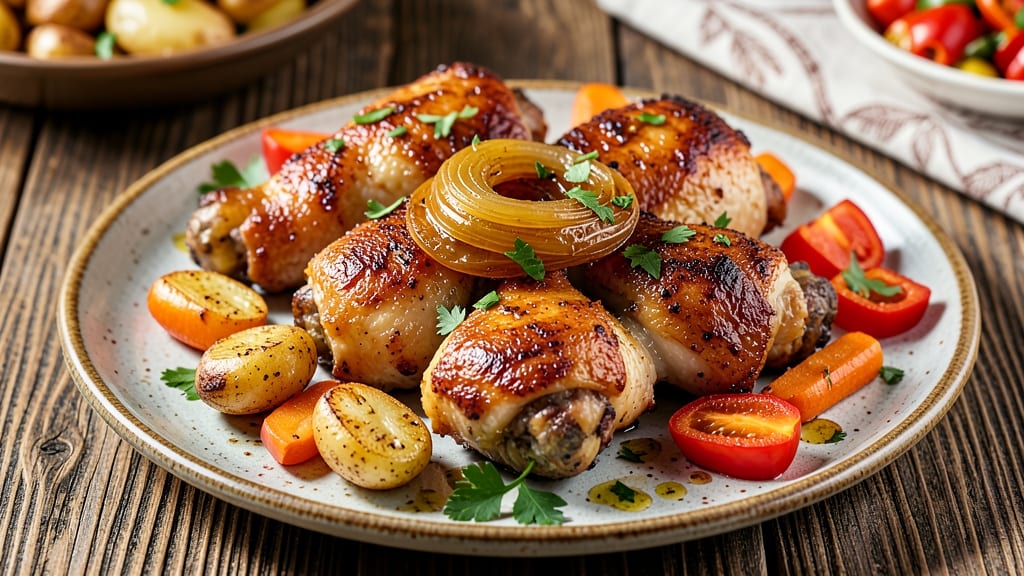
This baked chicken legs with vegetables recipe delivers perfectly tender, juicy meat with crispy skin—all while vegetables roast to caramelized perfection in the same pan. The secret lies in high-heat baking that locks in moisture while developing deep, savory flavors through natural browning.
I’ve perfected this method over years of testing, ensuring every bite is succulent and the vegetables stay vibrant, not soggy.
The beauty of this one-pan approach is its simplicity: no marinades, no complicated techniques—just a thoughtful balance of seasonings and timing. Chicken legs develop that coveted crispy skin while staying moist inside, thanks to a foolproof method of baking at high heat before reducing the temperature slightly.
Vegetables like potatoes, carrots, and bell peppers roast alongside, absorbing the chicken’s juices and caramelizing into sweet, tender bites.
What you’ll end up with is a restaurant-quality meal that’s effortless to prepare yet impressive enough for guests. The chicken remains juicy and flavorful, the vegetables are perfectly tender with a touch of char, and the entire dish comes together in under one hour—including prep.
The aroma alone will have everyone gathering at the table, and the first bite delivers on that promise of tender, juicy perfection.
Serve with a drizzle of pan juices or a simple herb sauce to elevate the dish further. This recipe scales beautifully for families or gatherings, and leftovers reheat wonderfully. Let’s get started on creating this foolproof, flavor-packed meal that’s as satisfying as it is simple.
Ingredients for baked chicken legs with vegetables
A perfect balance of protein and vegetables for a one-pan restaurant-quality meal.
| Ingredient | Amount | Notes |
|---|---|---|
| Chicken Legs 🍗 | 4 whole | Bone-in, skin-on, similar size |
| Baby Potatoes 🥔 | 1 ½ lb | Halved, skin-on for texture |
| Carrots 🥕 | 1 lb | Whole, scrubbed, any variety |
| Red Bell Peppers 🍅 | 2 whole | Cut into 1-inch strips |
| Yellow Onion 🧅 | 1 whole | Cut into wedges, skin left on |
| Garlic Cloves 🧄 | 4 cloves | Smashed, skin left on |
| Olive Oil 🫒 | ½ cup | Extra-virgin, for roasting |
| Dried Thyme 🌿 | 1 tbsp | Or 1 tbsp fresh thyme leaves |
| Dried Rosemary 🌿 | 1 tsp | Or 1 tbsp fresh sprigs |
| Diamond Crystal Kosher Salt 🧂 | 1 ½ tsp | For seasoning, adjust to taste |
| Freshly Ground Black Pepper 🌶️ | ½ tsp | Cracked peppercorns preferred |
| Smoked Paprika 🌶️ | ½ tsp | For depth and color |
| Fresh Lemon 🍋 | 1 whole | Zest and juice for brightness |
The chicken legs are the foundation—look for bone-in, skin-on pieces with good marbling for juiciness. Trader Joe's or Whole Foods carry excellent quality, but any reputable butcher will have them. Potatoes and carrots should be firm with vibrant color; organic options reduce pesticide residue if that's a priority. Bell peppers should be firm and shiny, avoiding any with soft spots. The garlic cloves should be plump and free of sprouts. For herbs, I prefer fresh rosemary and thyme from the grocery store's produce section—they stay potent longer than dried when stored properly. The olive oil should be extra-virgin with a fruity aroma, not stale.
No smoked paprika? Regular paprika plus a pinch of cayenne works in a pinch. Fresh thyme or rosemary unavailable? Dried works at one-third the amount, but toast the dried herbs in the oven for 30 seconds to deepen their flavor. The lemon zest can be substituted with 1 tsp lemon extract, though fresh is always better. For the vegetables, baby potatoes and carrots are ideal, but regular potatoes cut into 1-inch chunks will work. If you prefer sweeter carrots, choose orange or purple varieties—they caramelize beautifully. The onions can be swapped for red or white onions, but yellow adds the most depth.
Chicken legs and vegetables can be prepped up to 24 hours ahead and stored in the fridge. The lemon zest and juice should be added just before baking to preserve freshness. Leftovers keep for 3-4 days in the fridge, and the chicken reheats beautifully—just warm in a skillet with a splash of water. For longer storage, freeze portions for up to 3 months. The roasted vegetables also freeze well separately if you prefer to serve them fresh. To reheat, bake at 375°F until heated through, about 15-20 minutes.
Why You'll Love This Recipe
- One-Pan Magic: I swear by this recipe when I’m too tired to scrub pots—just toss everything on a sheet pan, drizzle with olive oil, and let the oven do the work. The potatoes caramelize while the chicken gets crispy, and honestly? That’s all the cleanup I can handle after a long day.
- Crave-Worthy Crisp: The secret’s in the skin—juicy, tender chicken thighs with that golden, crackling crust you can’t resist. Between us, the caramelized onions and bell peppers add this sweet, smoky depth that makes it taste like you slaved over it for hours.
- Meal Prep MVP: I make double batches on Sundays because it reheats like a dream—leftovers for lunches, easy lunches for my kids, or a quick dinner when I’m running late. The veggies stay tender, and the chicken? Still juicy, not dry.
- Budget-Friendly Feast: Chicken legs are my go-to for stretching meals without breaking the bank, and the potatoes and carrots stretch even further. It’s the kind of dish where you end up with seconds, but your wallet stays happy—no takeout guilt here.
Step-by-step instructions for baked chicken legs with vegetables
Here's the method for achieving perfectly crisp skin and tender meat with vibrant vegetables.
Preheat and Prepare the Chicken Legs
Preheat your oven to 425°F with a rack positioned in the lower third. This positioning ensures the chicken legs roast evenly and the vegetables don't overcook before the chicken is done. While the oven heats, pat the 4 whole chicken legs completely dry with paper towels—this step is critical for crispy skin.
In a small bowl, combine 1.5 teaspoons Diamond Crystal kosher salt, 0.5 teaspoon freshly ground black pepper, 0.5 teaspoon smoked paprika, 1 tablespoon dried thyme, and 1 teaspoon dried rosemary. Rub this mixture evenly over the chicken legs, pressing the seasoning into the skin. Let them sit at room temperature for 15 minutes—this ensures even cooking and maximizes flavor penetration.
Prepare the Vegetables and Arrange the Pan
In a large mixing bowl, toss the 1.5 lb baby potatoes (halved), 1 lb carrots (whole and scrubbed), 2 whole red bell peppers (cut into 1-inch strips), and 1 whole yellow onion (cut into wedges) with 0.5 cup olive oil. Spread the vegetables evenly on a large, rimmed baking sheet, leaving space between each piece. This arrangement allows air to circulate and promotes even browning.
Place the 4 cloves garlic (smashed, skin left on) and the 1 whole lemon (cut into wedges) among the vegetables. The garlic will infuse the entire dish with aroma, while the lemon adds brightness and prevents the vegetables from becoming too dry.
Roast the Chicken and Vegetables Together
Carefully place the seasoned chicken legs, skin-side up, on top of the prepared vegetables. The vegetables will act as a natural barrier, preventing the chicken from sitting directly on the hot baking sheet and ensuring even cooking. Roast for 45 minutes, then flip the chicken legs skin-side up and continue roasting for another 30 minutes.
After 30 minutes, check the internal temperature of the chicken legs using a meat thermometer. They are done when the thickest part reaches 165°F. The vegetables should be tender but still hold their shape—if they're not quite there, return the pan to the oven for an additional 5-10 minutes. The skin should be golden brown and crispy, while the meat should pull away from the bone effortlessly.
Finish with Lemon and Rest Before Serving
Remove the baking sheet from the oven and squeeze the juice from the 1 whole lemon over the chicken and vegetables. This final step adds a bright, acidic note that cuts through the richness of the chicken and balances the flavors. Let the dish rest for 5-10 minutes before serving—this allows the juices to redistribute, ensuring each bite is moist and flavorful.
Serve the chicken legs and vegetables directly from the baking sheet, using tongs to portion the vegetables and a fork to lift the chicken. The skin should be crispy and crackly, the meat tender and juicy, and the vegetables caramelized with a slight char. This one-pan method delivers a hands-off, flavorful meal with minimal cleanup.
Pro Tips For Making Baked Chicken Legs With Vegetables
- CRISP THE SKIN FIRST: I learned this the hard way—skipping the initial skin-crisping step means soggy chicken later. Pat the legs dry, then sear skin-side down in a hot pan for 3-4 minutes before baking. The extra effort locks in flavor and texture.
- CUT POTATOES EVENLY: Baby potatoes are sneaky—some are tiny, some are golf-ball sized. Halve or quarter them all to the same thickness so they cook at the same rate. Uneven pieces mean some turn to mush while others stay raw.
- DON’T CROWD THE PAN: This isn’t the time for a packed tray. Leave space between chicken legs and veggies—at least 1 inch—so heat circulates. I used to ignore this and ended up with steamed, not roasted, potatoes.
- SALT THE POTATOES: Yes, even if you’re using seasoned salt on the chicken. Toss the baby potatoes in 1 teaspoon of salt before roasting—it crisps the edges and balances the dish. I skip this when I’m lazy, but the difference is noticeable.
Troubleshooting perfect results
Skin Not Crispy
If your chicken skin isn’t crispy, it’s likely because moisture got trapped underneath. Always pat the chicken completely dry with paper towels before seasoning—this is non-negotiable for crispy skin. Another common mistake? Overcrowding the pan.
Leave 1 inch of space between chicken legs so air can circulate. For extra insurance, broil for 2-3 minutes at the end to blast the skin with intense heat. 🔥
Vegetables Overcooked
Vegetables turning mushy? They’re likely cooking too long. Start checking their doneness after 30 minutes—they should be tender but still hold shape. If they’re not quite there, cover the pan loosely with foil and return to the oven for 5 minutes to steam slightly.
For extra control, arrange vegetables in a single layer and avoid overlapping pieces. Potatoes and carrots are forgiving, but bell peppers can turn rubbery if overcooked.
Chicken Too Dry
Dry chicken usually means it cooked too long at high heat. Use a meat thermometer—chicken is done at 165°F in the thickest part. If you’re unsure, pull it out at 160°F and let it rest 10 minutes—the internal temp will rise 5°F while resting.
For extra moisture, add 2-3 tablespoons of water or broth to the pan during the last 10 minutes of cooking. The steam will keep the meat juicy.
Uneven Cooking
Uneven cooking often happens when the oven isn’t properly calibrated or the pan isn’t arranged correctly. Place your baking sheet on the middle rack (not the bottom) for even heat distribution. If your oven runs hot, reduce the temperature to 400°F.
Also, rotate the pan halfway through cooking to ensure all sides get equal exposure. A wire cooling rack under the pan helps with airflow if your sheet tray isn’t deep enough.
Flavor Too Mild
If your dish lacks depth, it’s likely underseasoned or missing acidity. Double-check your salt—Diamond Crystal kosher salt is lighter than table salt, so use 1.5 teaspoons (not 1).
For extra punch, add 1 teaspoon lemon zest to the seasoning mix or finish with a squeeze of fresh lemon juice before serving. A pinch of smoked paprika or garlic powder can also elevate the flavor profile without overpowering.
Pan Too Greasy
Excessive grease can make your dish taste flat and cause flare-ups. Drain excess oil from the vegetables before arranging them on the sheet—use a slotted spoon to transfer them.
If the pan gets too greasy during cooking, move it to a cool burner for 2 minutes to let excess fat render out. For a cleaner finish, sprinkle 1 teaspoon cornstarch over the vegetables before baking to absorb excess oil.
Nutrition facts
Frequently asked questions
Can I use chicken thighs instead of legs?
Yes! Chicken thighs work beautifully in this recipe—they're even more forgiving than legs and stay juicier because they have more fat. Use 4 bone-in, skin-on thighs instead, and reduce the cooking time by about 10 minutes since thighs cook faster than legs. The skin will still crisp up perfectly with the same method.
What vegetables can I substitute?
This recipe is flexible! Swap bell peppers for zucchini, broccoli, or Brussels sprouts (halved), or replace potatoes with sweet potatoes or butternut squash (cut into cubes). For heartier veggies, try cauliflower or asparagus. Just adjust cooking time—denser veggies like carrots or sweet potatoes may need 5-10 extra minutes.
How do I make this recipe gluten-free?
This dish is naturally gluten-free, but check your smoked paprika and seasoning blends for hidden gluten. Use certified gluten-free spices if needed. The olive oil, lemon, and fresh herbs are all safe. For extra flavor, add 1/2 teaspoon garlic powder or 1/4 teaspoon onion powder to the seasoning mix.
Can I prepare this ahead of time?
Prep all ingredients 24 hours ahead and store in the fridge. Season the chicken legs and let them sit at room temp for 15 minutes before baking. For best results, roast fresh—vegetables lose crispness when reheated, but the chicken stays tender. If you must reheat, bake at 375°F for 15 minutes to restore crispness.
Why does my chicken turn out dry?
Overcooking is the #1 cause. Always use a meat thermometer—chicken is done at 165°F in the thickest part. If unsure, pull it at 160°F and let rest 10 minutes (internal temp rises 5°F while resting). For extra moisture, add 2 tbsp water or broth to the pan during the last 10 minutes of cooking.