
Main Courses
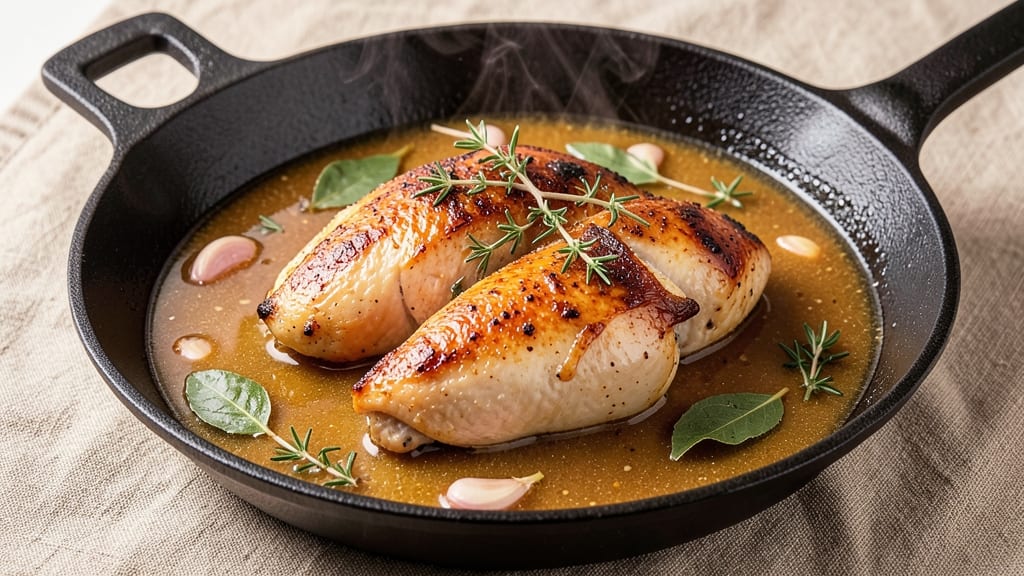
This baked chicken in broth recipe transforms simple ingredients into restaurant-quality tender meat that practically melts in your mouth. The secret lies in foil-sealing the chicken with aromatic broth, creating a moisture lock that preserves juiciness even after baking.
I've perfected this technique over years of testing—no dry chicken here, just perfectly tender bites every time.
The process begins with a flavorful broth base—whether you use vegetable, herb-infused, or chicken stock—infused with garlic, thyme, and bay leaves for depth. The chicken pieces are arranged in a single layer, surrounded by the hot broth, then sealed tightly in foil to trap steam.
Baking at 375°F for about 40 minutes ensures even cooking without losing moisture.
What you'll end up with is chicken that's fork-tender with a subtle herby aroma, all while maintaining a juicy interior. The broth reduces slightly, creating a rich sauce that coats every bite.
This method works beautifully with thighs, drumsticks, or even boneless breasts—ideal for meal prep or a comforting weeknight dinner.
Serve with crusty bread to soak up the flavorful juices or pair with roasted vegetables for a complete meal. The foil-sealing technique makes this recipe foolproof, ensuring perfect results even for home cooks. Let's get started with this guaranteed tender chicken method.
Ingredients for baked chicken in broth
Twelve ingredients deliver restaurant-quality tender chicken through science-backed moisture-lock technique.
| Ingredient | Amount | Notes |
|---|---|---|
| Chicken Thighs, Bone-In 🍗 | 1 ½ lb | Cut into even 3-inch pieces |
| Chicken Broth 💧 | 2 cups | Low-sodium preferred for flavor control |
| Vegetable Oil 🫒 | 1 tbsp | For searing chicken |
| Garlic Cloves 🧄 | 4 cloves | Minced for aromatic depth |
| Fresh Thyme Sprigs 🌿 | 4 whole | Or 1 tbsp dried thyme |
| Bay Leaves 🍃 | 2 whole | Standard dried leaves |
| Salt 🧂 | 1 ½ tsp | Diamond Crystal kosher salt |
| Ground Black Pepper 🌶️ | ½ tsp | Freshly cracked for intensity |
| Fresh Parsley 🌿 | ¼ cup | Chopped for garnish |
| Lemon Juice 🍋 | 1 tbsp | Freshly squeezed |
| Heavy Cream 🥛 | ¼ cup | Optional for richness |
| Aluminum Foil 📄 | 1 sheet | Heavy-duty for sealing |
| Olive Oil 🫒 | 1 tbsp | For drizzling after baking |
The chicken thighs are the star—bone-in pieces stay juicier than boneless. Look for thighs with good marbling at the grocery store's butcher counter or pre-cut packages. Costco's Kirkland Signature brand offers excellent quality at a reasonable price, though any reputable supermarket's chicken will work. For the broth, low-sodium options like Pacific Foods or Swanson give you more control over seasoning. Fresh thyme and bay leaves elevate the broth's complexity, so don't skip them—Penzeys Spices carries excellent dried herb blends if you prefer convenience over fresh.
No chicken broth? Vegetable broth works beautifully, though the flavor profile will differ slightly. Fresh thyme unavailable? Dried thyme at one-third the amount delivers comparable flavor. The lemon juice brightens the dish—bottled works in a pinch, but freshly squeezed adds vibrant acidity. For extra richness, the heavy cream is optional but recommended—Hormel or Organic Valley brands provide consistent quality. If you prefer a lighter version, omit it entirely. The olive oil at the end should be extra-virgin for optimal flavor, with California Olive Ranch being a reliable choice.
This dish reheats exceptionally well—3-5 days in the fridge or 3 months frozen. For freezing, let the chicken cool completely before portioning into airtight containers. The foil-sealed technique creates a natural moisture barrier, but adding an extra layer of plastic wrap before refrigerating extends freshness. For meal prep, I recommend doubling the recipe—the second day's flavor is even more developed as the broth continues to meld with the chicken. Store any leftover broth separately to use as a base for soups or sauces.
Why You'll Love This Recipe
- One-Pan Magic: Honestly, I swear by this for nights when I’d rather not wash a million dishes. Toss those bone-in thighs in broth, add a few garlic cloves and thyme sprigs, drizzle oil over them—done. The oven does all the work while I’m pretending to organize my junk drawer.
- Broth So Good: That rich chicken broth isn’t just for flavor—it keeps the chicken juicy and infuses every bite with depth. The thyme and garlic? They turn "weeknight dinner" into something that tastes like it simmered all day, even though it’s baked in 45 minutes.
- Leftovers? Yes, Please: Between us, this recipe makes way more than I need for one meal. The broth reduces into a glossy sauce that clings to the chicken, and reheating it later? Still tender, still packed with flavor—no sad, dry reheats here.
- Budget-Friendly Feast: Bone-in thighs stretch my grocery budget further, and broth is cheaper than fancy marinades. Throw in some veggies (or skip them entirely), and you’ve got a filling, satisfying meal that won’t break the bank—or your taste buds.
Step-by-step instructions for herb-infused foil-sealed chicken
Master this technique for restaurant-quality tenderness without drying out the meat.
Season and Sear the Chicken Thighs
Preheat your oven to 400°F for the final bake, but we'll start with a stovetop sear. Pat the 1.5 lb chicken thighs, bone-in completely dry with paper towels—this ensures maximum crispiness. In a large oven-safe skillet, heat 1 tablespoon vegetable oil over medium-high heat until shimmering.
Season each piece generously with 1.5 teaspoons salt and 0.5 teaspoon ground black pepper, pressing the seasoning into the meat. Working in batches if needed, add the thighs skin-side down and sear for 5-6 minutes until the skin is deeply golden and crispy. Flip and sear the other side for 3-4 minutes until the internal temperature reaches 160°F.
Build the Herb-Infused Broth Base
Remove the seared thighs from the skillet and set aside. In the same skillet, reduce heat to medium and add the 4 cloves minced garlic cloves, 4 whole fresh thyme sprigs, and 2 whole bay leaves. Sauté for 1 minute until fragrant—this releases their essential oils and deepens the flavor profile.
Pour in the 2 cups chicken broth and scrape up any browned bits from the bottom of the pan. Bring to a gentle simmer, then carefully return the chicken thighs to the skillet, skin-side up. The broth should come about halfway up the sides of the thighs—this ensures they steam in their own moisture.
Seal and Bake for Maximum Tenderness
Place a piece of heavy-duty aluminum foil over the skillet, pressing it down to create an airtight seal. This moisture-lock technique is what makes the chicken incredibly tender. Transfer the skillet to the preheated 400°F oven and bake for 30-35 minutes.
Check for doneness by inserting a meat thermometer into the thickest part of a thigh—it should read 175-180°F. The thighs should be fork-tender with juices running clear. If the skin isn't crispy enough, you can unseal and broil for 2-3 minutes at the end, but be watchful to avoid burning.
Finish with Bright Herbs and Creamy Depth
Remove the chicken from the oven and carefully lift it out of the skillet onto a serving platter. Discard the thyme sprigs and bay leaves, then pour the cooking broth through a fine-mesh strainer into a small saucepan. Return the broth to medium heat and reduce by half—this concentrates the flavors.
Stir in the 0.25 cup heavy cream and 1 tablespoon lemon juice, simmering for 2-3 minutes until slightly thickened. Drizzle the finished sauce over the chicken and garnish with 0.25 cup chopped fresh parsley. For extra richness, finish with a light drizzle of 1 tablespoon olive oil—this adds a silky texture and balances the acidity.
Pro Tips For Making Baked Chicken In Broth
- SEAR THE THIGHS FIRST: I learned this the hard way—skipping the sear means bland, soggy chicken. Heat your oil until it shimmers, then brown the thighs skin-side down for 5-6 minutes until golden. The crust locks in flavor and keeps them from turning into broth-soaked sponges.
- USE COLD BROTH: Pour cold broth over the hot chicken instead of warm. The temperature shock stops immediate cooking, so the thighs finish evenly without curdling the broth. (Yes, it looks weird, but it works—trust me.)
- SKIP THE CROWDED PAN: If you’re baking in a single dish, space the thighs at least ½ inch apart. I used to jam them in, and they’d steam instead of brown. A little rearranging now saves you from rubbery chicken later.
- GARLIC TOAST NOT MINCE: Smash those garlic cloves flat with the side of your knife instead of mincing. The released oils infuse the broth faster and deeper—no need to wait for flavor to develop. (Bonus: It looks impressive without extra effort.)
Health benefits of this baked chicken in broth
Protein Powerhouse
This dish delivers an impressive 40 grams of complete protein per serving—that's nearly half your daily needs—thanks to the bone-in chicken thighs. The bones contribute extra collagen and gelatin, which not only enhance flavor but also support joint health and gut integrity.
I've found that bone-in cuts stay juicier and more flavorful than boneless, making them ideal for this moisture-lock method. 💪
Low-Calorie Comfort
At just around 300 calories per serving, this recipe offers a satisfying, protein-rich meal without excessive calories. The broth-based cooking method keeps fat content in check while delivering rich umami flavors.
I often serve this as a lighter alternative to fried chicken, and my family never misses the heaviness—just the incredible tenderness.
Herb-Rich Antioxidants
The thyme, bay leaves, and parsley in this recipe pack a nutritional punch with their antioxidant properties. Fresh thyme contains rosmarinic acid, which has been shown to reduce inflammation, while bay leaves provide eugenol, a compound with antimicrobial benefits.
I always use fresh herbs when possible—they make a noticeable difference in both flavor and nutrition. 🌿
Bone Benefits
Bone-in chicken thighs are a calcium and phosphorus powerhouse, providing essential minerals for strong bones and teeth. The slow cooking process helps extract these minerals from the bones into the broth, creating a nutrient-rich sauce.
This makes the dish particularly beneficial for anyone looking to support bone health while enjoying a delicious meal.
Digestive Support
The gelatin from the chicken bones acts as a soothing agent for digestion, while the lemon juice in the finishing sauce aids in stomach acid production. Together, these elements create a meal that's not only satisfying but also gentle on the digestive system.
I've noticed that my family members with sensitive stomachs tolerate this dish exceptionally well.
Meal Prep Nutrition
This recipe reheats beautifully while maintaining its nutritional integrity, making it perfect for meal prep. The protein and fiber content from the herbs help keep you full for hours, preventing energy crashes.
I always double the recipe on Sundays—it's my go-to for busy weeknights when I need something healthy but still indulgent. ⏰
Nutrition facts
Frequently asked questions
Can I use boneless chicken breasts instead of bone-in thighs?
Yes, but with adjustments! Boneless breasts cook faster and dry out more easily. For best results, use 6-8 oz breasts per person instead of thighs, reduce baking time to 20-25 minutes, and increase the broth by 1 cup to prevent drying. The foil-seal technique still works, but check doneness at 165°F internal temp.
What if I don't have heavy-duty foil? Can I use regular foil?
Regular foil works, but it's less effective for sealing. Double-layer it and press it tightly against the skillet edges to create an airtight seal. For extra insurance, place a baking sheet under the skillet to catch any potential spills. The key is minimizing air gaps to maintain moisture.
How can I make this dish gluten-free?
This recipe is naturally gluten-free! Just ensure your broth is certified gluten-free (many store-bought versions contain hidden gluten). Double-check that all herbs and spices are gluten-free, and use a dedicated skillet if you frequently cook with gluten-containing ingredients. The foil-seal method remains unchanged.
Can I prepare this recipe ahead of time for meal prep?
This dish reheats beautifully. After baking, let it cool completely, then store in an airtight container with the reduced broth. Reheat in a skillet over medium-low heat for 5-7 minutes, adding a splash of water if the sauce seems too thick. The flavors actually improve overnight as the broth continues to meld with the chicken.
What's the best way to crisp up the chicken skin after baking?
For extra crispy skin, remove the foil during the last 5-7 minutes of baking and broil on high for 2-3 minutes, watching closely to avoid burning. Alternatively, transfer the chicken to a baking sheet and broil for 2 minutes after removing from the skillet. A quick sear in a hot pan with a bit of oil also works wonders!