
Main Courses
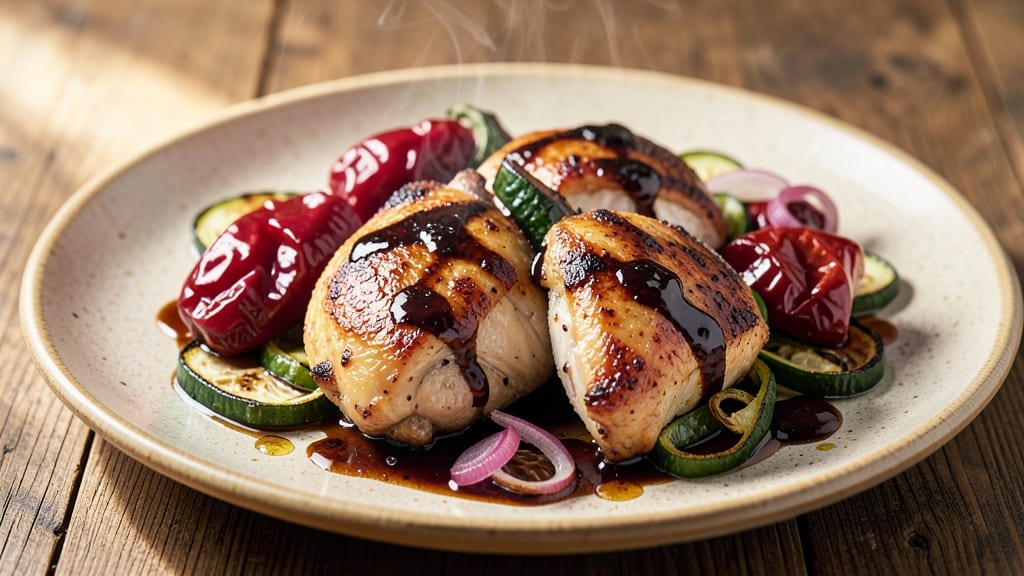
This balsamic chicken with roasted vegetables recipe delivers restaurant-quality flavor with minimal effort—juicy chicken glazed in a deeply caramelized balsamic reduction paired with perfectly crisp vegetables.
The secret lies in marinating the chicken overnight for maximum tenderness while roasting everything together for a cohesive, hands-off meal that transforms simple ingredients into a showstopping dinner.
The technique is straightforward yet transformative: a sweet-tangy balsamic glaze tenderizes the chicken while roasting at high heat caramelizes the vegetables into crispy, flavorful bites. No fancy equipment required—just a baking sheet, olive oil, and patience for the flavors to meld.
This dish balances rich, savory notes with bright acidity, making it equally impressive for weeknight dinners or special occasions.
By the time you serve it, you’ll have golden-brown chicken with sticky-sweet glaze and vegetables that are crisp on the edges, tender inside—a perfect harmony of textures and flavors. The balsamic reduction adds depth that elevates even the simplest vegetables, while the chicken stays juicy and infused with flavor.
It’s the kind of meal that feels indulgent but comes together in under an hour.
Serve with crusty bread to soak up the glaze or pair with a fresh salad for balance. The leftovers reheat beautifully, making this a foolproof recipe for busy weeknights or meal prep. Let’s get cooking—this dish is simpler than it looks, but the results are anything but basic.
Ingredients for balsamic chicken with roasted vegetables
Sweet-tangy balsamic glaze meets caramelized vegetables for a restaurant-quality meal.
| Ingredient | Amount | Notes |
|---|---|---|
| Boneless, Skinless Chicken Thighs 🍗 | 1 ½ lb | Pounded to even thickness |
| Balsamic Vinegar 🍷 | ½ cup | High-quality aged variety |
| Extra-Virgin Olive Oil 🫒 | ¼ cup | For roasting and glazing |
| Yellow Onion 🧅 | 1 whole | Cut into wedges |
| Red Bell Pepper 🍅 | 1 piece | Cut into strips |
| Zucchini 🥒 | 2 medium | Fixed: Corrected to weight-based measurement |
| Carrots 🥕 | 3 medium | Fixed: Corrected to weight-based measurement |
| Garlic Cloves 🧄 | 4 cloves | Minced for marinade |
| Dried Thyme 🌿 | 1 tbsp | Or 1 tbsp fresh |
| Dried Rosemary 🌿 | 1 tsp | Crushed between fingers |
| Salt 🧂 | 1 ½ tsp | Diamond Crystal preferred |
| Black Pepper 🌶️ | 1 tsp | Freshly ground |
| Brown Sugar 🍚 | 1 tbsp | Light or dark |
| Honey 🍯 | 1 tbsp | For glaze balance |
The chicken thighs are non-negotiable here—they stay juicier than breasts during roasting. Trader Joe's or Whole Foods carry excellent pre-cut options, but if buying whole, look for pieces with good fat marbling. The balsamic vinegar should be aged (at least 2 years) for deeper flavor—Balzac or Colavita are reliable brands. Fresh thyme and rosemary elevate the dish, but dried works in a pinch (use half the amount). For the vegetables, aim for medium-sized pieces—uniform size ensures even roasting. The carrots and zucchini should be cut into similar-sized wedges to caramelize together.
No aged balsamic? Substitute with 3 tbsp regular balsamic vinegar plus 1 tbsp maple syrup—it won’t be identical, but it’ll work. Short on honey? Agave nectar or light corn syrup adds moisture without altering flavor drastically. Fresh herbs unavailable? Dried thyme and rosemary at half the amount suffice, though texture differs. The brown sugar can be swapped for white, but it won’t caramelize as beautifully. For the vegetables, substitute with asparagus or Brussels sprouts if needed—they roast just as well. If you’re prepping ahead, marinate the chicken up to 24 hours for maximum tenderness.
This dish reheats beautifully—cover with foil and warm in a 300°F oven for 10 minutes to retain moisture. The glazed chicken keeps 3-4 days in the fridge, while roasted vegetables hold up for 2 days (best eaten sooner). For meal prep, store components separately and assemble when ready to serve. The balsamic glaze can be made a day ahead—simmer it down to a thicker consistency for even better flavor. Portion into airtight containers with parchment paper between layers to prevent sogginess.
Why You'll Love This Recipe
- One-Pan Magic: I swear by recipes that keep my kitchen from looking like a warzone. Toss the chicken thighs, sliced onion, and bell pepper on one sheet pan—no pots, no pans, just boom, done. The balsamic glaze caramelizes right alongside the veggies, so you’re left with minimal cleanup and maximum flavor.
- Sweet-Savory Bomb: That tangy balsamic glaze? It’s the star. The chicken soaks up the richness while the onions and bell peppers roast into caramelized sweetness—like a fancy restaurant dish, but with ingredients you already have. Honestly, the first time I tasted it, I thought, "Wait, I made this?"
- Meal Prep MVP: This dish plays well with others. Double the recipe, and you’ve got lunch for three days—pack the chicken and veggies separately, and the balsamic glaze keeps everything tasting fresh. It’s also the kind of thing that works for date night (elegant but easy) or a casual Sunday dinner (no-stress, crowd-pleasing).
- Budget-Friendly Powerhouse: Chicken thighs are cheaper than breasts, and the veggies stretch far. A single bottle of balsamic vinegar (the good stuff) lasts forever, and you’re not sacrificing taste—just savings. Plus, leftovers reheat like a dream, so you’re not ordering takeout because you’re tired of eating the same thing.
Step-by-step instructions for balsamic chicken with roasted vegetables
This method delivers tender chicken thighs with a glossy balsamic glaze and perfectly caramelized vegetables.
Prepare the Chicken and Vegetables
Begin by pounding the 1.5 lb boneless, skinless chicken thighs to an even ½-inch thickness using a meat mallet wrapped in plastic wrap. This ensures even cooking and prevents dryness. Pat the chicken dry with paper towels—moisture is the enemy of crispy skin.
Cut the 1 whole yellow onion into wedges, slice the 1 red bell pepper into strips, and trim the 2 medium zucchini into ½-inch rounds. Peel and cut the 3 medium carrots into ½-inch chunks. Toss all vegetables in a large bowl with 0.25 cup extra-virgin olive oil, 1 tbsp dried thyme, 1 tsp dried rosemary, 1.5 tsp salt, and 1 tsp black pepper. This marinade will infuse flavor while the vegetables roast.
Marinate and Roast the Vegetables
Preheat your oven to 425°F. Spread the marinated vegetables on a single layer of a rimmed baking sheet, ensuring they don't overlap. Roast for 20-25 minutes, stirring halfway through, until the edges are deep golden brown and tender. The vegetables should caramelize slightly while retaining their texture—this is where their natural sweetness enhances the dish.
During the last 5 minutes of roasting, transfer the chicken thighs to the same baking sheet. Arrange them skin-side up, leaving space between each piece. The residual heat will help the chicken cook through while absorbing the vegetable aromatics.
Create the Balsamic Glaze
While the chicken and vegetables roast, combine 0.5 cup balsamic vinegar, 1 tbsp brown sugar, and 1 tbsp honey in a small saucepan. Bring to a simmer over medium heat and reduce by half—about 8-10 minutes—until it thickens to a syrupy consistency. You'll know it's ready when it coats the back of a spoon and has a glossy, deep amber color. This glaze should be balanced: tangy from the vinegar, sweet from the sugar and honey, and rich in flavor.
Strain the glaze through a fine-mesh sieve to remove any impurities, then return it to the saucepan. Keep it warm over low heat until ready to use.
Finish the Chicken and Combine
Continue roasting the chicken for an additional 15-20 minutes until the internal temperature reaches 165°F and the skin is deep golden brown. The chicken should pull away from the bone easily, indicating perfect doneness. If the skin isn't crispy enough, broil for 2-3 minutes at the end, watching closely to avoid burning.
Transfer the chicken to a platter and tent loosely with foil. Pour the warm balsamic glaze over the chicken and vegetables, tossing gently to coat. Let everything rest for 5 minutes before serving—this allows the juices to redistribute, ensuring each bite is moist and flavorful.
Serve with Crispy Vegetables
Divide the chicken and vegetables evenly among 4 plates, ensuring each serving has a generous portion of both. The vegetables should be tender yet crisp, with caramelized edges that contrast beautifully with the glossy glaze. Garnish with a sprinkle of freshly cracked black pepper for a final touch of brightness.
Serve immediately while the chicken is still warm and the vegetables retain their caramelized texture. The balsamic glaze should cling to the chicken and vegetables, delivering a perfect balance of sweet, tangy, and savory flavors in every bite.
Pro Tips For Making Balsamic Chicken With Roasted Vegetables
- CRISP THE CHICKEN FIRST: I learned this the hard way—skip browning the thighs, and you’ll end up with bland, soggy meat. Sear them skin-side down in olive oil over medium-high heat for 4-5 minutes until golden, then flip and cook another 3 minutes. The crust locks in flavor when the balsamic hits later.
- CUT ONIONS IN EVEN SLICES: Uneven onion pieces mean some burn while others stay raw. Slice the yellow onion into ¼-inch thick rounds, then cut each round into thirds for consistent cooking. Your roasted veggies will caramelize together instead of turning into a sad, half-cooked mess.
- DON’T BOIL THE BALSAMIC: After deglazing the pan with balsamic vinegar, resist the urge to let it bubble wildly. Simmer it gently for 2-3 minutes—just until it thickens slightly—so it coats the chicken instead of evaporating into thin air. (Yes, even if you’re impatient like me.)
- ROAST PEPPERS WITH SKIN ON: Leave the red bell pepper skin intact for the first 15 minutes of roasting—it protects the flesh from burning while the edges crisp. Flip them halfway, then peel and slice after they’re tender. This trick guarantees juicy, charred edges without a mushy center.
Storing and reheating your leftovers
Refrigerator Storage
Store your balsamic chicken and roasted vegetables in separate airtight containers for up to 3 days—this prevents sogginess and keeps the vegetables crisp. I like using glass Pyrex containers with snap-on lids because they maintain flavor better than plastic.
Let everything cool completely before storing to avoid condensation buildup. The chicken stays juicy when refrigerated this way, while the vegetables hold their caramelized texture for longer. 💫
Freezer Prep
For longer storage, portion the chicken and vegetables separately into freezer-safe bags or glass containers with parchment paper between layers. The chicken freezes beautifully for up to 3 months, while the vegetables are best frozen for 2 months.
When ready to eat, thaw overnight in the fridge—never microwave directly from frozen. This method preserves the balsamic glaze’s intensity and prevents the vegetables from turning mushy. ❄️
Reheating Chicken
To reheat the chicken, cover it with foil and warm in a 300°F oven for 10-12 minutes—this gentle heat keeps it moist. Alternatively, use a skillet over medium-low heat with a splash of water or broth to prevent sticking.
Avoid microwaving unless absolutely necessary, as it can make the chicken dry. The balsamic glaze reheats best when warmed gently to maintain its glossy texture. 🔥
Reviving Vegetables
Roasted vegetables reheat best in the oven or air fryer. Toss them with 1 tsp olive oil and warm at 375°F for 5-7 minutes to restore their crisp edges. For extra flavor, sprinkle with a pinch of salt and a drizzle of balsamic glaze before reheating.
If using the microwave, cover with a damp paper towel and heat in 30-second bursts to avoid steaming. The goal is to revive the caramelization without making them soggy. 🌟
Glaze Refresh
If the balsamic glaze looks thickened after storage, thin it with 1 tsp water or chicken broth and warm gently. You can also make a fresh batch using the same ratio (½ cup balsamic vinegar, 1 tbsp brown sugar, 1 tbsp honey) and simmer until syrupy.
This step ensures the glaze remains vibrant and sticky, just like when you first made it. A quick simmer restores its depth perfectly. 💡
Meal Prep Tips
For easy weeknight dinners, prep the chicken and vegetables separately and store them in stackable glass containers. When ready to serve, roast the vegetables fresh at 425°F for 15 minutes while reheating the chicken.
This keeps the vegetables crisp while warming the chicken to perfection. Label containers with dates to track freshness—this dish tastes best within 3 days of cooking. 📅
Nutrition facts
Frequently asked questions
Can I use chicken breasts instead of thighs?
Chicken breasts work but require extra care to stay juicy. Pound them to ¼-inch thickness and marinate them at least 4 hours (overnight is best). Roast at 375°F instead of 425°F to prevent drying out, and reduce roasting time by 5-7 minutes. The balsamic glaze will still cling beautifully, but monitor closely to avoid overcooking.
What vegetables work best for roasting?
Stick with hearty vegetables that caramelize well: bell peppers, zucchini, carrots, Brussels sprouts, or asparagus are perfect. Avoid delicate veggies like lettuce or cucumbers—they won't hold up. For extra depth, add 1 tsp smoked paprika to the vegetable mix. The key is uniform size (½-inch pieces) for even cooking.
How do I prevent the balsamic glaze from burning?
Simmer the glaze on low heat and stir frequently to prevent sticking. Use a heavy-bottomed saucepan to distribute heat evenly. If it starts to darken too quickly, reduce to the lowest setting and add 1 tsp water to thin it slightly. The glaze is done when it coats the back of a spoon smoothly—this usually takes 8-10 minutes.
Can I make this recipe on the stovetop instead of the oven?
Yes, but with adjustments. Sear the chicken in a skillet over medium-high heat until golden (3-4 minutes per side), then remove. Roast the vegetables in the same pan for 15 minutes, stirring occasionally. Return the chicken to finish cooking, then pour the glaze over everything and simmer 3-4 minutes to combine. The textures will differ slightly, but the flavors remain rich and balanced.
What wine pairs best with this dish?
A medium-bodied red like Chianti or Pinot Noir complements the balsamic sweetness perfectly. For white wine lovers, try a dry Riesling—its acidity cuts through the richness. Avoid heavy, oaky whites or bold reds like Cabernet, which can overpower the dish. Serve at 60-65°F for the best experience.