
Main Courses
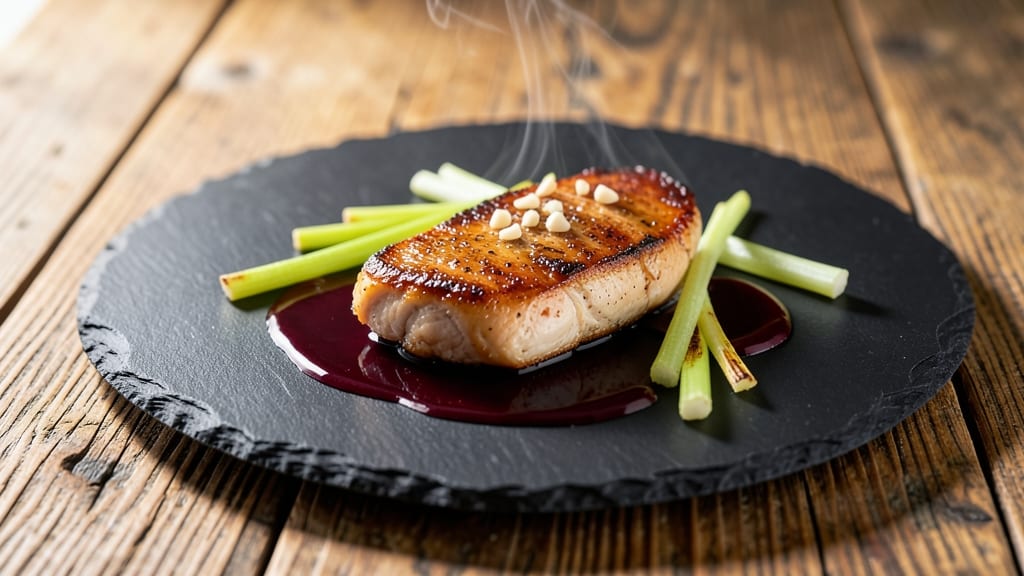
Transforming humble chicken tongues into silky-smooth bites with crispy celery crowns requires patience and precision—two things that pay off with restaurant-quality results. This technique starts with thorough cleaning and parboiling to remove impurities while preserving the meat's natural tenderness.
The key lies in slow braising, which breaks down connective tissue into melt-in-your-mouth perfection while keeping the exterior crispy.
What sets this dish apart is the celery crown—a delicate garnish that adds visual appeal and subtle crunch. After braising, the tongues are seared to lock in juices, then topped with thin celery strips that crisp to golden perfection.
This method ensures every bite delivers both texture contrast and deep, savory flavor without overpowering the natural taste of the meat.
The final presentation transforms this dish from rustic to refined, with the crispy celery crown acting as both garnish and flavor enhancer. Serve with a simple red wine reduction or roasted root vegetables to complement the rich, tender meat.
This recipe proves that with the right technique, even less familiar cuts can become a showstopper.
Perfect for special occasions or when you want to impress guests with an unexpected yet elegant main course. The process may seem involved, but the results are worth every step—silky-smooth meat with a satisfying crunch in every bite. Let’s get started on creating this standout dish.
Ingredients for chicken tongue
Precision-cleaned tongues and delicate celery crowns transform humble ingredients into restaurant-worthy elegance.
| Ingredient | Amount | Notes |
|---|---|---|
| Chicken Tongues 🐔 | 1 ½ lb | Fresh, cleaned, trimmed |
| Celery Strips 🧅 | 1 cup | Thinly sliced, 1/8-inch thick |
| Red Wine 🍷 | 1 cup | Bold dry variety, like Cabernet |
| Chicken Broth 💧 | 2 cups | Homemade or high-quality store-bought |
| Olive Oil 🫒 | ¼ cup | Extra-virgin, for searing |
| Garlic Cloves 🧄 | 6 cloves | Peeled, smashed for infusion |
| Carrots 🥕 | 2 whole | Medium, peeled, sliced |
| Onion 🧅 | 1 whole | Yellow, peeled, quartered |
| Fresh Thyme 🌿 | ¼ cup | Leaves only, stems removed |
| Bay Leaves 🍃 | 2 whole | Dried, for depth of flavor |
| Salt 🧂 | 1 ½ tsp | Diamond Crystal kosher salt |
| Black Peppercorns 🌶️ | ½ tsp | Freshly cracked, coarse grind |
| Unsalted Butter 🧈 | 2 tbsp | Cold, for crisping celery crown |
| All-Purpose Flour 🌾 | ½ cup | For dredging celery strips |
The chicken tongues demand meticulous preparation—source from specialty butchers or high-end grocers like Whole Foods or D'Artagnan to ensure freshness. Look for tongues with minimal offal and a vibrant pink hue; avoid any with a gamey odor. The celery crown requires crisp, fresh celery—Trader Joe's or local farmers' markets provide the best quality. For optimal texture, slice the celery strips uniformly at 1/8-inch thickness using a mandoline. The red wine should be a bold, dry Cabernet Sauvignon—avoid sweet varieties that will overpower the dish's savory profile. Fresh thyme and bay leaves elevate the braising liquid; Penzeys Spices offers premium dried options if fresh isn't available.
Substitutions require careful consideration to maintain balance. If red wine is unavailable, dry white wine or additional chicken broth works, though the dish will lack depth. For celery crown crispiness, frozen celery works in a pinch, but thaw and pat dry thoroughly to prevent sogginess. Fresh thyme can be substituted with dried thyme at one-third the quantity, but the flavor won't be as vibrant. The carrots and onion serve as aromatic vegetables—substitute with parsnips or fennel for variation, though cooking times may differ. For the celery crown, flour-dredged strips are non-negotiable; breadcrumbs will absorb moisture and fail to crisp properly. If butter isn't available, olive oil or ghee can be used, though texture may vary slightly.
Store cleaned tongues in the refrigerator for up to 3 days before cooking, sealed in a container with paper towels to absorb moisture. The braised tongues reheat beautifully—simmer gently in the braising liquid for 10-15 minutes until warmed through. Celery crowns must be prepared fresh; they lose crispness within 1 hour of frying. For make-ahead convenience, blanch the tongues and store them in the braising liquid for up to 2 days, then complete the cooking process when ready to serve. The crispy celery crown should be assembled just before plating to maintain its delicate texture.
Why You'll Love This Recipe
- Let’s be real: chicken tongues aren’t cheap, but they’re way cheaper than filet mignon, and they deliver the same kind of restaurant-worthy satisfaction. Plus, the celery crowns use up those sad, wilted stalks in the back of your fridge. You’re not just saving money—you’re reducing waste.
- No-Pan-Fry Hassle: I love that this isn’t one of those dishes where you’re stuck scrubbing a pan for hours. The braising happens in a Dutch oven, and the crispy celery gets its golden crunch in a separate skillet—one sheet pan, one spatula, done. My kitchen stays cleaner than my in-laws’ guest bathroom after a dinner party.
- Red Wine Magic: That cup of bold Cabernet isn’t just for sipping—it’s the secret weapon here. Deglazing with it after searing the chicken tongues? Chef’s kiss. The acidity cuts through the richness, and the lingering notes make the sauce sing. Honestly, the dish tastes even better the next day when the flavors meld.
- Make-Ahead Champion: Between work and errands, I don’t always have time to cook from scratch on weeknights. These tongues? I blanch them ahead, store them in the braising liquid for up to two days, then finish them in a pinch. The texture stays perfect, and I still get to serve something special without stressing. (Yes, even on a Tuesday night.)
Step-by-step instructions for silky-smooth chicken tongue with crispy celery crown
Mastering this dish requires precise technique to balance tender meat and crispy garnish.
Parboil and Season the Chicken Tongues
Place the 1.5 lb chicken tongues in a large pot and cover with cold water by 2 inches. Add 1.5 tsp salt and 0.5 tsp black peppercorns, then bring to a gentle simmer over medium-high heat. This should take about 10 minutes—the water should bubble steadily but not boil vigorously.
Once simmering, reduce heat to medium-low and cook for 45 minutes, skimming any foam that rises to the surface. The tongues are ready when they float and a paring knife slides in easily. Drain immediately and let cool slightly before proceeding. This initial parboil removes impurities and begins tenderizing the collagen-rich muscle.
Sear and Deglaze for Deep Flavor
Heat 0.25 cup olive oil in a Dutch oven over medium-high heat until shimmering. Add the cooled chicken tongues and sear for 3 minutes per side until golden brown. Remove and set aside temporarily. The goal is to develop a caramelized crust while maintaining moisture.
In the same pot, add 2 whole carrots and 1 whole onion, sliced, along with 6 cloves garlic cloves and 0.25 cup fresh thyme. Sauté for 5 minutes until softened. Pour in 1 cup red wine and scrape up all browned bits from the bottom—this deglazing captures maximum flavor. Simmer for 3 minutes until reduced by half.
Braise Until Fork-Tender
Return the seared chicken tongues to the Dutch oven. Add 2 cups chicken broth and 2 whole bay leaves, then bring to a simmer. Cover and transfer to a 325°F oven for 2 hours. The tongues are done when they're fork-tender and the braising liquid has reduced to a rich sauce.
Here's the thing—don't peek during the braising. Every time you lift the lid, you risk losing heat and extending cooking time. The slow oven temperature ensures the connective tissue breaks down completely, resulting in that signature silky texture.
Prepare the Crispy Celery Crown
While the tongues braise, heat 2 tbsp unsalted butter in a separate skillet over medium heat. Dredge 1 cup celery strips in 0.5 cup all-purpose flour, shaking off any excess. Fry in batches for 2-3 minutes per side until golden brown and crisp. The key is maintaining medium heat—too hot burns the celery, too low makes it soggy.
Transfer the crispy celery to a paper towel-lined plate to drain excess oil. These delicate crowns should be served immediately alongside the chicken tongues to maintain their crisp texture.
Finish and Serve
Remove the chicken tongues from the oven and carefully lift them from the braising liquid using tongs. Strain the sauce through a fine-mesh sieve into a clean saucepan and reduce over medium heat for 5 minutes until slightly thickened. The finished dish should feature tender, silky chicken tongues with a glossy sauce and crispy celery crowns.
Serve immediately with the reduced sauce spooned over each portion. The contrast between the velvety tongues and crispy celery creates the perfect balance of textures. For best results, serve with crusty bread to soak up any remaining sauce.
Pro Tips For Making Chicken Tongue
- Skim the Foam: That first 10 minutes of simmering? The foam rising is game-changing. I used to ignore it, and my tongues ended up cloudy-tasting. Now I skim it religiously—it’s mostly impurities, not flavor. A fine-mesh strainer makes this mess-free.
- Sear Cold Tongues: Don’t skip letting the tongues cool slightly after parboiling. I learned this the hard way—hot tongues just steam in the oil instead of searing. A quick 5-minute rest on a rack over a bowl (to drain) guarantees that golden crust.
- Don’t Crowd the Celery: The celery strips need room to crisp, not steam. Fry them in batches—no more than 3 strips at a time—or they’ll turn greasy instead of golden. Overcrowding is the #1 reason crispy celery crowns fail.
- Use Bold Wine: That cheap red wine you grabbed? Swap it. A bold, dry Cabernet (or similar) adds layers of flavor the generic stuff can’t match. I used to cut corners here, and the sauce always tasted flat—now it’s rich and complex.
Regional styles of chicken tongue
Southern Comfort Style
In the South, chicken tongues are often braised with a touch of smoked paprika and a splash of apple cider vinegar to add depth. I like to swap the red wine for ½ cup apple cider vinegar and stir in 1 tsp smoked paprika during the braising phase.
This creates a tangy, slightly smoky sauce that pairs perfectly with the tender meat. Serve with buttery cornbread to soak up the rich, slightly acidic liquid. 🔥
French Market Approach
French-inspired versions often emphasize delicate herbs and a lighter touch. I replace the 1 cup red wine with 1 cup dry white wine and add 1 tbsp Dijon mustard to the braising liquid for brightness.
The celery crown gets a flour dredge with 1 tbsp cornstarch mixed into the flour for extra crispiness. This version is elegant and pairs beautifully with a crisp Sauvignon Blanc.
Asian-Inspired Fusion
For an Asian twist, I marinate the tongues in 2 tbsp soy sauce and 1 tbsp honey before searing, then braise with 1 cup coconut milk instead of chicken broth. The celery crown gets a quick stir-fry with 1 tsp sesame oil and 1 tsp grated ginger after frying.
Garnish with sliced green onions for a fresh, umami-rich dish that feels entirely different from the classic version.
Italian Rustic Version
In Italy, chicken tongues often appear in rustic, hearty dishes. I use 1 cup tomato passata instead of red wine for the braising liquid and add 1 tsp dried oregano and 1 bay leaf for earthy notes.
The celery crown gets a sprinkle of grated Parmesan after frying for a salty, cheesy contrast. Serve with a side of creamy polenta to soak up the tomato-infused sauce.
Modern Minimalist Style
For a contemporary take, I simplify the braising liquid to just 2 cups chicken broth and 1 tsp high-quality salt, then finish with a splash of lemon juice before serving. The celery crown becomes a delicate garnish with just a light dusting of flaky sea salt.
This version highlights the natural flavors while keeping the dish elegant and refined—perfect for a modern dinner party. ✨
Nutrition facts
Frequently asked questions
Why do chicken tongues need parboiling before cooking?
Parboiling removes impurities and begins tenderizing the collagen-rich muscle, ensuring silky texture later. This step cleans the tongues and prepares them for searing and braising without overcooking the exterior. Skipping it can leave the meat tough and chewy.
What’s the best way to check if chicken tongues are fully cooked?
They’re done when they float in the liquid and a paring knife slides in easily. Fork-tenderness confirms doneness—no need to overcook! The collagen should have broken down into a velvety consistency.
Can I make the crispy celery crown ahead of time?
No—it must be fried fresh to maintain crispness. The celery strips absorb moisture quickly and lose their golden crunch within 1 hour of frying. Prepare them just before serving for the best texture.
How do I avoid soggy celery strips when frying?
Keep the heat at medium and fry in small batches. Pat the celery dry thoroughly before dredging, and use a paper towel-lined plate to drain excess oil immediately. Overcrowding the pan lowers the temperature and ruins crispiness.